
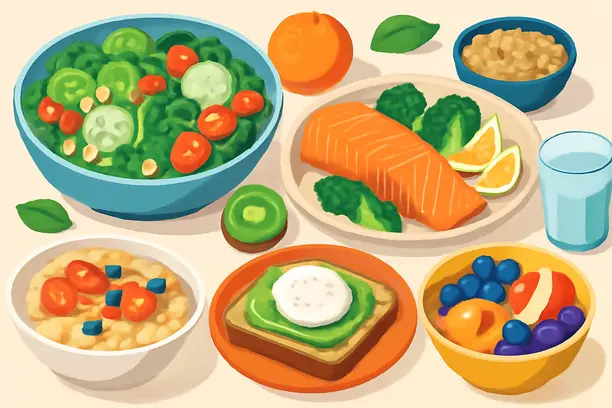
7-Day 1900-Calorie Sample (full-day, per-meal breakdown)
1900 calorie meal plan options provide a practical balance—enough fuel to keep you energized, yet structured enough to support weight maintenance or gradual fat loss. Below, you’ll find a full week of meals with clear calorie and macro breakdowns, combining lean proteins, whole carbs, healthy fats, fiber, and moderate sodium. This shows exactly how the plan works in real life.
Day 1
- Breakfast: Greek yogurt (6 oz) with 1/2 cup berries, 1 tbsp chia seeds, 1 slice whole grain toast
360 calories | 28g protein | 48g carbs | 9g fiber | 7g fat | 320mg sodium - Lunch: Grilled chicken salad (3 oz chicken breast, 2 cups mixed greens, 1/2 avocado, cherry tomatoes, 1 tbsp vinaigrette)
370 calories | 30g protein | 17g carbs | 9g fiber | 17g fat | 420mg sodium - Dinner: Baked salmon (4 oz), 1 cup quinoa, 1 cup steamed broccoli
510 calories | 38g protein | 55g carbs | 8g fiber | 15g fat | 480mg sodium - Snacks: 1 medium apple with 2 tbsp almond butter; 1 hard-boiled egg
660 calories | 16g protein | 70g carbs | 12g fiber | 32g fat | 260mg sodium
Day 2
- Breakfast: Oatmeal (1/2 cup dry oats) with 1 tbsp peanut butter and banana slices
350 calories | 11g protein | 58g carbs | 7g fiber | 10g fat | 90mg sodium - Lunch: Turkey and hummus wrap (3 oz sliced turkey breast, whole wheat wrap, 2 tbsp hummus, spinach, cucumber)
400 calories | 26g protein | 33g carbs | 7g fiber | 15g fat | 570mg sodium - Dinner: Stir-fried tofu (4 oz) with mixed veggies (1.5 cups) and 1/2 cup brown rice
430 calories | 20g protein | 57g carbs | 7g fiber | 13g fat | 400mg sodium - Snacks: Cottage cheese (1/2 cup) with pineapple; 15 almonds
720 calories | 20g protein | 48g carbs | 4g fiber | 32g fat | 430mg sodium
Batch-Prep Tips & Customizable Swaps
Cooking extra quinoa, chicken, or brown rice once means easy lunches all week. Want more variety? Swap proteins—try tofu, lean beef, or beans—and experiment with grains like farro or barley.
Need gluten-free? Use certified GF wraps and breads. Allergic to nuts? Sunflower seed butter works beautifully. Going vegetarian? Replace animal proteins with tofu, lentils, or tempeh in similar portions.
Nutrition & Tracking Table Example (per day average):
- Calories: ~1900
- Protein: 85–110g
- Carbohydrates: 200–220g
- Fiber: 25–35g
- Fat: 55–70g
- Sodium: 1200–1800mg
Quick Swaps for Each Meal
- Oatmeal: Try cooked millet or buckwheat for a change of pace.
- Chicken: Swap in edamame or tempeh for plant-based protein.
- Almond butter: Use pumpkin seed butter if you’re avoiding nuts.
- Rice: Try riced cauliflower to lighten up carbs.
For detailed vegetarian and Indian variations, explore our 7-day vegetarian Indian diet plan for inspiration.
Batch-cooking these staples and using quick swaps lets you maintain structure while adjusting for taste and dietary needs, making this meal plan enjoyable for the whole family.
Always check labels for sodium content and allergens, and tweak seasonings or additions to fit your personal health goals. Source: Academy of Nutrition and Dietetics
How to Personalize 1900 Calories: TDEE, goals, and macros
To make a 1900-calorie meal plan work for you, personalization is everything. Your body, goals, and activity level aren’t the same as anyone else’s—so why should your plan be?

Step 1: Calculate Your TDEE
Your Total Daily Energy Expenditure (TDEE) estimates how many calories you burn each day, factoring in age, weight, height, sex, and activity. Start with the Harris-Benedict equation:
- Women: BMR = 655 + (9.6 × weight in kg) + (1.8 × height in cm) − (4.7 × age in years)
- Men: BMR = 66 + (13.7 × weight in kg) + (5 × height in cm) − (6.8 × age in years)
Next, multiply your BMR by an activity factor—1.2 if you’re mostly sedentary, 1.375 for light exercise—to get your TDEE. If it’s near 1900 calories, you’re maintaining. Higher TDEE? Then 1900 means you’ll likely lose weight.
Step 2: Set Your Goal
Clarify what you’re after: fat loss, weight maintenance, or muscle building. For fat loss, aim for a daily deficit of 300–500 calories below your TDEE—it’s enough to shed fat steadily without sacrificing muscle or energy Source: CDC.
Step 3: Personalize Your Macros
Your ratio of protein, fat, and carbs matters as much as total calories. A balanced starting point for weight management looks like this:
- Protein: 25–30% of total calories
- Fat: 25–30%
- Carbohydrates: 40–50%
On 1900 calories, that breaks down to roughly 143g protein (30%), 63g fat (30%), and 143g carbs (40%). Are you active or trying to hold onto muscle? Then bump up protein. Use the USDA DRI Calculator for fine-tuning Source: USDA.
Sample Case
Meet a moderately active 32-year-old woman weighing 68 kg and 165 cm tall. Her TDEE sits around 2000 calories. Eating 1900 puts her in a safe deficit—perfect for gradual fat loss without muscle loss or dragging fatigue.
Reassess every few weeks if your weight or activity shifts. For practical guidance on dividing macros across meals, see our guide on how to divide macros into meals.
Personalizing your calorie and macro targets ensures your 1900-calorie meal plan actually fits your body’s needs and supports long-term success. Adapt as you progress for the best results. Source: NIH Body Weight Planner
Nutrition Quality: fiber, sodium and key micronutrients
Fiber: The Cornerstone of Satiety and Gut Health
You’ve probably heard fiber keeps you full—but it does a lot more than that. Aim for at least 25 grams daily if you’re a woman, and 38 grams if you’re a man. Fiber supports digestion, steadies blood sugar, and naturally curbs your appetite, making it easier to stick within your 1900-calorie target.
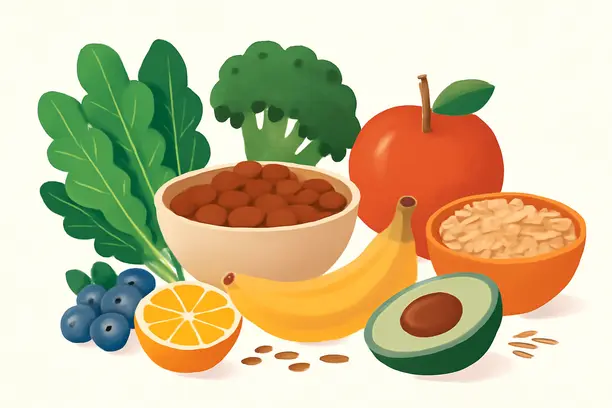
Vegetarians and those avoiding processed foods benefit most from fiber-rich choices like:
- Swapping white grains for whole grains
- Tossing beans or lentils into salads
- Snacking on fruits like berries or pears
Sodium: Stay Under the Radar
Most adults should cap sodium at 2,300 mg daily to protect heart health and blood pressure Source: CDC. Meal plans built on fresh, home-cooked whole foods naturally run lower in sodium than canned or pre-made options.
To keep sodium in check:
- Choose fresh or frozen veggies without added salt
- Buy unsalted nuts and seeds
- Read labels carefully for “no added salt”
Women and older adults should be especially cautious—sodium sensitivity and cardiovascular risk tend to climb with age.
Micronutrients: Iron, Calcium, Vitamin D, B12 & More
Meeting vitamin and mineral needs goes beyond balancing calories and macros. Women, vegetarians, and older individuals face higher risk of deficiencies in iron, calcium, vitamin D, and B12 Source: Harvard T.H. Chan School of Public Health.
Build these into your 1900-calorie plan:
- Leafy greens, beans, and fortified grains for iron
- Dairy products, fortified alternatives, tofu, and leafy vegetables for calcium
- Eggs, dairy, and fortified foods for vitamin D and B12—vegans and older adults may need supplements
For plant-forward eaters, review our balanced vegetarian diet tips and practical vegan food swaps here.
Quick Checklist: Maximizing Nutrient Intake Each Day
- Eat at least one serving of leafy greens, nuts, and legumes daily
- Choose whole grains for at least half your grain intake
- Add citrus or berries to boost vitamin C and help absorb iron
- Monitor dairy or fortified foods to hit calcium and vitamin D needs
- If vegan, go for fortified plant milks and consider a B12 supplement
Following these guidelines ensures your 1900-calorie meal plan fuels your body and supports long-term health—well beyond simple calorie counting. Learn more about balanced vegetarian eating in our guide.
Allergy & Preference Swaps (gluten-free, dairy-free, vegan, nut-free)
Adjusting a 1900-calorie meal plan for allergies or preferences doesn’t mean sacrificing nutrition. It’s about making smart substitutions that keep your macros and overall balance intact.
Gluten-Free
Replace wheat-based foods with gluten-free grains like brown rice, quinoa, or certified GF oats. Keep in mind that gluten-free breads often have less protein, so add an extra egg or some lean meat to keep macros balanced. For a comprehensive list, see our gluten-free foods guide.
Dairy-Free
Use fortified soy or pea milk—they provide comparable protein and calories. Cashew- or soy-based cheeses work well, though they’re usually lower in protein. Balance that by adding seeds, nuts, or legumes elsewhere. Always pick unsweetened plant milks to avoid excess sugars Source: NHS.
Vegan
Swap all animal proteins for plant-based options like lentils, tofu, tempeh, or seitan. Replace eggs with scrambled tofu or chickpea flour omelets. Use agave or maple syrup instead of honey—just keep an eye on added sugars. For weight loss-focused vegan plans, review our vegan diet plan.
Nut-Free
Use sunflower or pumpkin seeds for crunchy fats and protein. For nut butters, seed butters are your friend. Always check for cross-contamination on packaged foods labeled “nut-free” Source: Food Allergy Research & Education.
Sample Swaps in Practice
- Gluten-free breakfast: Oatmeal made with GF oats plus boiled eggs instead of whole grain toast.
- Nut-free snacks: Apple slices paired with sunflower seed butter instead of peanut butter.
- Vegan lunch: Lentil salad with quinoa and vegetables, dressed simply with olive oil and lemon juice.
Macros can shift subtly with these swaps, especially protein. Tracking ingredients and adjusting portions keeps meals balanced and on target for your 1900-calorie goal.
Macro tracking is the best way to ensure each swap fits your plan—keeping nutrition strong and meals enjoyable. Learn more in our ingredient substitutions guide and our broader macro-balanced eating guide.
Food Safety & Meal-Prep Storage (temps, timing, reheating)
Keep Your 1900-Calorie Meal Plan Safe: Key Principles
Food safety during meal prep isn’t glamorous, but it’s just as important as the quality of your ingredients. Proper cooking, storage, and reheating prevent foodborne illness and keep meals fresh all week long.

Batch Cooking: Temperatures and Timing
Cook proteins thoroughly: Use a thermometer to make sure chicken and turkey hit 165°F (74°C), while beef, pork, and fish should reach at least 145°F (63°C).
Cool quickly: Move hot foods into shallow containers to speed cooling. Don’t leave cooked meals at room temperature for more than 2 hours—that’s when bacteria thrive in the “danger zone” of 40–140°F (4–60°C) Source: FDA.
Storing Your Meals: Refrigerator & Freezer Guidelines
Refrigerate promptly: Place meal-prepped foods in airtight containers within 2 hours of cooking.
Storage timelines: Cooked proteins last 3–4 days in the fridge; cooked grains and vegetables stretch to 4–6 days. Freeze anything you won’t eat within these windows Source: CDC.
Safe Reheating Tips for the Week
Heat leftovers thoroughly: Reheat foods to 165°F (74°C), making sure heat spreads evenly. Microwaves can heat unevenly, so stir and check temperatures.
Reheat only once: Repeated cooling and reheating invite bacteria. Only take out what you’ll eat right away.
Plan to consume more perishable items earlier in the week, saving frozen or shelf-stable meals for later days. For additional meal prep strategies that combine safety with convenience, see our expert-backed meal prep strategies for weight loss.
Proper food safety supports the effectiveness of your nutrition plan while protecting your health. For an overview on balanced meal planning, consider our balanced eating guide.
Methodology, data quality, and reviewer credentials
All nutrition data in this 1900-calorie meal plan comes from authoritative sources, primarily the USDA FoodData Central database—known for accurate and comprehensive macro- and micronutrient profiles Source: USDA FoodData Central. Each food item and recipe is analyzed by weight and volume to estimate calories, protein, carbs, fats, fiber, sodium, and micronutrients as precisely as possible.
Packaged or branded foods use official nutrition labels, while traditional recipe values reference published culinary standards. Serving sizes reflect common household measures, and composite recipes are calculated using cooked or drained weights to prevent typical calorie misestimations.
Quantity and nutrient values typically follow guidelines set by U.S. and European food authorities Source: European Food Safety Authority. Values are usually presented per 100g, with per-portion amounts provided for practical use.
Quality control includes cross-checks for input errors, omission of hidden calories (like cooking sprays), and missing nutrients. Any significant discrepancies between food database values and packaging prompt a thorough review by an experienced registered dietitian or nutritionist with advanced credentials. Profiles or affiliations of these reviewers can be shared upon request to maintain transparency.
While every effort is made to ensure accuracy, individual nutritional needs and responses vary. These plans serve as guides and aren’t intended as medical advice. Consult a healthcare professional before making significant dietary changes, especially if you have medical conditions or special nutritional needs.
For those seeking to understand calorie management and optimize nutrient adequacy, explore our resources on effective calorie deficit strategies and tips on satisfying calorie-controlled meals.
Sources
- CDC – Losing Weight
- CDC – Salt and Sodium
- CDC – Food Safety: Clean and Refrigerate
- Academy of Nutrition and Dietetics – Sample Menus for Healthy Eating
- Academy of Nutrition and Dietetics – Ingredient Substitutions for Special Diets
- FDA – Safe Food Handling
- USDA FoodData Central
- Harvard T.H. Chan School of Public Health – Vitamin B12
- USDA – DRI Calculator
- NHS – Food Allergies and Intolerances
- Food Allergy Research & Education – Food Allergy Substitutions
- European Food Safety Authority – Nutrition
- NIH – Body Weight Planner