

Quick-Start Arm Routines (Seated and Standing)
Arm exercises for seniors can deliver real strength and confidence with short, safe routines that fit your body and your schedule. You want stronger arms for daily life—but long, complicated workouts or joint pain keep getting in your way.
Disclosure: This article contains affiliate links. We may earn a commission at no extra cost to you.
Seated Arm Routine: Build Strength Safely from Any Chair
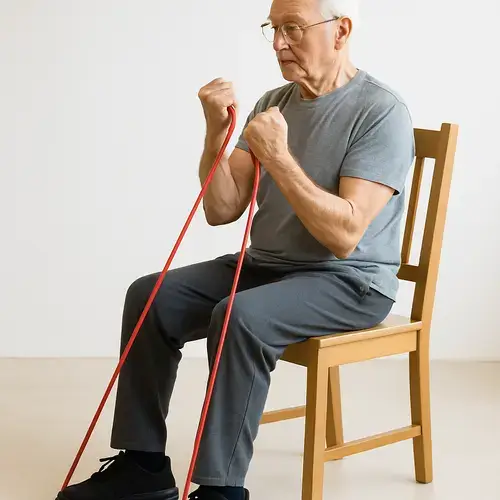
This chair-based routine includes simple, practical arm exercises for seniors with two challenge levels for each move. Each exercise targets your biceps, triceps, and shoulders, supporting better daily function and making routine tasks easier.
Choose Level A (just your body and a sturdy chair) if you want an equipment-free option, or Level B if you have light resistance bands or dumbbells available.
- Seated Bicep Curl
Level A: Sit upright, arms by your sides. Slowly bend elbows to curl your fists toward your shoulders, then lower.
Level B: Hold light dumbbells or resistance bands and perform the curl as above.
Tip: Keep elbows close to your body throughout to maintain good form. - Chair Triceps Push-back
Level A: Sitting tall, push your arms straight behind you, squeezing the backs of your arms, then return forward.
Level B: Add light weights or loop a band under the seat for extra challenge.
Tip: Avoid arching your back and move slowly to protect your shoulders. - Seated Shoulder Press
Level A: Raise fists from shoulders upward overhead, keeping wrists neutral. Lower gently.
Level B: Use resistance tools as above.
Tip: Stop if you feel any sharp or persistent shoulder pain; partial range of motion is perfectly acceptable.
Prescription: Begin with 1–2 sets of 8–12 reps per exercise, resting as needed. When 12 reps feel manageable without pain or excessive fatigue, add a third set or try the Level B variation to progress safely.
Looking for more sitting-based workouts? Explore our guide to safe and effective chair exercises for seniors to expand your routine.
Standing Arm Routine: Energize, Balance & Strengthen
Once you’re comfortable with seated exercises, try this gentle standing circuit designed to emphasize posture, balance, and upper-body strength. Choose options that fit your space and ability.
- Standing Arm Circles
Level A: Stand with arms extended to the sides, make small circles (10 forward, 10 back).
Level B: Hold light objects such as cans or light weights.
Tip: Keep your neck relaxed and maintain a soft bend in the elbows to avoid strain. - Banded/Bottle Rows
Level A: With arms by your sides, pull elbows back while squeezing shoulder blades.
Level B: Use a resistance band anchored at chest height or small water bottles for resistance.
Tip: Perform slow, controlled movements, focusing on squeezing your back muscles at the end of each rep. - Standing Wall Push-Ups
Level A: Place hands on a wall and perform gentle push-ups.
Level B: Step further from the wall or use a lower surface, like a table, for more challenge.
Tip: Keep a straight line from head to heels to engage your core and protect your back.
Prescription: Start with 2 rounds of 8–10 reps per exercise. Rest 30–60 seconds between moves. Progress by increasing rounds, reps, or resistance gently as you gain strength and confidence. Pairing these arm movements with brief daily activity and full-body routines boosts overall results. For more, see our article on calisthenics routines adapted for seniors.
For a structured, joint-friendly program especially for women, consider these guided 7-minute arm workouts for seniors. They fit busy schedules and focus on safety, so you can build strength without stress. To stay motivated, review practical strategies for staying engaged with daily exercise.
Safety, Pain Monitoring, and Condition-Specific Cautions
Red Flags and Readiness Checks
Before starting arm exercises for seniors, watch for warning signs that may increase injury risk or health complications. You’ll want to avoid exercising if you experience new or unexplained chest pain, irregular heartbeats, resting shortness of breath, unexplained swelling, or you’re recovering from recent surgery without medical clearance. Make sure your workout environment is clear of hazards and well-lit to prevent falls.
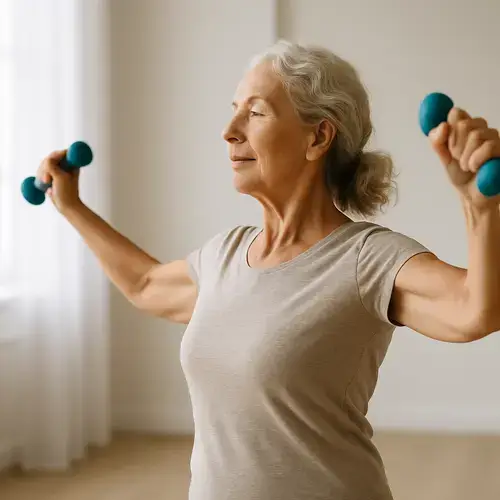
If you have chronic conditions like osteoporosis, arthritis, or diabetes, you’ll need to tailor your exercise plan accordingly and consult a professional as needed Source: National Institute on Aging.
Pain Thresholds: What’s Safe vs. When to Stop
Mild muscle fatigue and soreness are normal with strength training, but sharp, stabbing, electric, or radiating pain is not. Stop immediately if you feel:
- Sudden or severe joint pain, especially in shoulders, elbows, or wrists
- Numbness, tingling, or weakness in your hand or arm
- Swelling or bruising during exercise
- Dizziness, lightheadedness, or chest discomfort
Start slowly with controlled movements and avoid breath-holding to maintain stable blood pressure. If pain persists beyond 24–48 hours or worsens with activity, seek guidance from your healthcare provider or physical therapist Arthritis Foundation.
Condition-Specific Modifications and Checklist
- Arthritis: Warm up joints gently; use light weights or soft resistance bands. Opt for seated exercises if gripping is difficult.
- Osteoporosis: Avoid high-impact or jerky motions; execute slow, smooth reps focusing on good form. Seated overhead presses with light weights are usually safe.
- Shoulder Issues: Avoid overhead lifts, deep arm raises, and behind-the-back moves. Stick to pain-free ranges and consider wall push-ups or isometric holds.
- Cardiac Conditions/High Blood Pressure: Avoid tight gripping of weights and extreme effort. Breathe out on exertion and inhale on relaxation. Stop if feeling faint or overly winded.
- Diabetes: Monitor blood sugar before and after exercise; keep carbohydrates on hand in case of hypoglycemia.
For a comprehensive, gentle program designed for women, the 7-Minute Ageless Body Secret offers time-efficient workouts targeting strength while minimizing injury risk.
Monitor and Modify as You Go
Check in with your body each set, adjusting weight, pace, or rest as needed, especially on days when symptoms are more pronounced. Use an exercise log to track pain, balance, or fatigue changes for best safety. When you’re uncertain, seek clinician feedback. Prioritize consistent, sustainable routines over rapid gains.
For guided, safe arm workouts tailored to older adults and designed to be completed in under 10 minutes, try these quick, at-home arm routines for seniors. They include tailored cues and modifications emphasizing safety and comfort.
More beginner tips and motivational advice can be found in our guide on starting workouts at home.
Warm-Up, Cool-Down and Breathing Cues
Gentle Warm-Up: Prepping Your Muscles and Joints
Begin each session with 3–5 minutes of dynamic warm-up moves that gently increase circulation and range of motion in your arms, shoulders, and back. Try shoulder rolls, slow arm swings, gentle side bends, or wrist rotations before starting strength work. Warming up helps prevent injury and prepares your muscles for safe movement.
Cool-Down Essentials
After your arm workout, wind down with gentle stretches and slow breathing. Basic stretches might include clasping hands behind your back for a chest opener, reaching one arm overhead and gently bending at the elbow to stretch your triceps, or using a wall for light shoulder stretches. Hold each stretch for 15–20 seconds without bouncing.
Deep, slow breathing promotes relaxation and helps gradually return your heart rate and blood pressure to resting levels. Focus on exhaling fully and relaxing your shoulders as you cool down.
Breathing Cues During Exercise
Proper breathing protects against blood pressure spikes and helps prevent strain. Always exhale on effort—such as when lifting or pushing—and inhale on the return or relaxation phase. Avoid holding your breath and create a comfortable, even rhythm throughout each set. Practice pursed-lip breathing if you are short of breath or have lung conditions.
Progression, Motivation, and Staying Consistent
Progress depends on your starting point, overall health, and how often you exercise. Most seniors will notice improved arm strength within 4–8 weeks when performing arm exercises 2–3 times a week. Track changes in your daily activities—lifting bags, reaching shelves, or managing household tasks—to see real-world improvements.
When a routine starts to feel too easy, gently increase reps, sets, or choose slightly heavier resistance tools to keep building strength. Add new movements, try standing variations, or combine arm routines with other gentle workouts to avoid boredom and stay challenged.
Motivation Strategies for Long-Term Success
- Set small, realistic goals—such as performing 10 push-backs daily or improving range of motion over two weeks.
- Pair exercise with another enjoyable routine (like listening to music or calling a friend).
- Record your progress in an exercise journal or app to visualize improvements.
- Reward yourself for consistency with non-food treats or positive affirmations.
If motivation wanes, revisit our practical tips for staying active and energized. Community classes, virtual programs, or short video sessions can also help keep exercise fresh.
FAQs About Arm Exercises for Seniors
- Can I do arm exercises every day?
Most seniors benefit from 2–3 sessions each week, allowing muscles to recover between workouts. Light daily movement is fine, but avoid intense strength training of the same muscles every day. - What if I don’t have any equipment?
Bodyweight, water bottles, or resistance bands are enough. Use cans, towels, or even just your body to get started. - I have arthritis—are any moves off-limits?
Focus on gentle, low-resistance moves in pain-free ranges. Avoid moves that aggravate your joints, and talk to a physical therapist for personalized modifications. - Can arm exercises help with balance and posture?
Yes! Strong arms and shoulders support posture, help prevent falls, and make daily tasks like carrying groceries or getting up from a chair easier and safer.