

How to fit breakfast into your daily calorie goal
Healthy breakfast for weight loss is the key to keeping you full and satisfied while supporting your calorie goals and preventing hunger or overeating later in the day.
Disclosure: This article contains affiliate links. We may earn a commission at no extra cost to you.
Fitting a healthy breakfast for weight loss into your daily calorie goal isn’t just about eating less. It’s about making informed, satisfying choices that match your body’s needs and your overall energy budget.
Most adults aiming for weight loss typically consume between 1,200 and 2,000 calories daily. Your individual needs depend on age, sex, activity level, and health status. Tools like the NIH BMI & Calorie Calculator or a session with a registered dietitian can help you nail down a realistic target.
A good rule of thumb? Dedicate about 20% to 25% of your total daily calories to breakfast. This range generally supports weight loss while keeping appetite in check.
Here’s what that looks like in practice:
- 1,200-calorie plan: breakfast ≈ 240–300 calories
- 1,500-calorie plan: breakfast ≈ 300–375 calories
- 1,800-calorie plan: breakfast ≈ 360–450 calories
- 2,000-calorie plan: breakfast ≈ 400–500 calories
Sticking within these ranges prevents accidental calorie overload while giving you enough flexibility for flavorful, nutrient-dense meals.
Let’s break down two practical examples scaled by calories:
- Example A (300-calorie breakfast): 2 boiled eggs, 1 slice of whole-grain toast, half an avocado, black coffee
- Example B (400-calorie breakfast): ¾ cup Greek yogurt, ½ cup berries, 2 tablespoons chopped nuts, 1 tablespoon honey, herbal tea
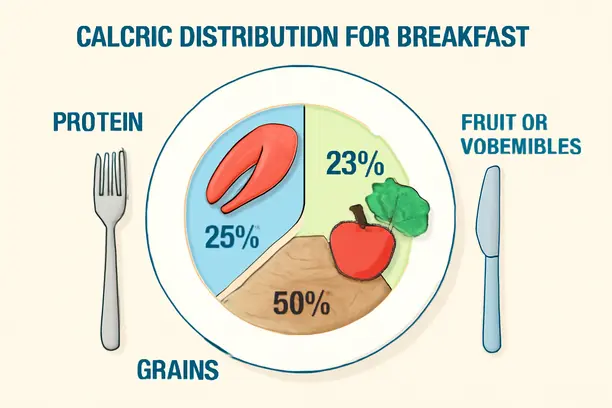
A helpful visual guide: fill about one-third to half of your plate with vegetables or fruit, allocate roughly one-quarter to protein-rich foods like eggs or yogurt, and use whole grains or healthy fats for the remainder.
This simple approach keeps portions balanced without tedious measuring. It also promotes a mix of fiber, protein, and healthy fats—nutrients known to increase fullness during weight loss (Source: Harvard T.H. Chan School of Public Health).
Want to take this further? Understanding how to structure your entire day for sustainable weight loss starts with learning more about setting and maintaining a calorie deficit.
If you’re looking for custom daily meal plans and straightforward guidance, the 30-Day Mediterranean Diet Challenge offers a practical, tasty approach aligned with proven weight loss principles.
Need quick inspiration on breakfasts that fit your calorie goals? Check out our collection of simple weight loss breakfast ideas.
Taking the guesswork out of healthy breakfasts and staying on track is easier with structured meal plans designed for consistent progress.
Explore the Mediterranean Diet Challenge with meal-by-meal guides to start your journey today.
Safety, special populations, and intermittent fasting guidance
Important Safety Considerations for Healthy Breakfasts and Intermittent Fasting
Changing your morning meal habits or starting intermittent fasting can affect your health in both positive and challenging ways. It’s important to consider your personal health profile when making significant shifts to your eating patterns.

Generally, a high-protein, high-fiber breakfast supports safe weight loss for most adults. That said, safety concerns become especially important for certain groups.
Red Flags for Special Populations
- Diabetes: Skipping breakfast or fasting may cause blood sugar fluctuations or increase hypoglycemia risk, especially if you use insulin or glucose-lowering medications. Always seek guidance from your healthcare provider before altering meal timing. Maintaining consistent carbohydrate intake at breakfast is crucial for blood sugar control (CDC).
- Pregnancy and Breastfeeding: Fasting or severe calorie restriction isn’t advised during pregnancy or breastfeeding due to increased nutrient needs. Prioritize balanced, regular meals with adequate folate, iron, and protein. The American College of Obstetricians and Gynecologists recommends eating breakfast and avoiding restrictive diets without medical advice (ACOG).
- Kidney Issues: High-protein breakfasts might strain the kidneys if you have chronic kidney disease. Work with a registered dietitian to design a safe plan.
- History of Eating Disorders: Approaches involving fasting or food restrictions can be triggering. Prioritize consistent, structured eating patterns supported by qualified professionals.
How to Safely Begin Intermittent Fasting (IF)
With medical approval, start intermittent fasting gradually. Ease into the routine so your body can adapt without unwanted side effects.
A common beginner approach is the 12:12 method—12 hours fasting followed by 12 hours eating. Over two weeks or so, you might extend to 14:10 or 16:8 fasting-to-eating windows, but only if you feel energized and well.
Here’s what to keep in mind:
- Stay well hydrated during fasting periods.
- Break your fast with a protein- and fiber-rich meal, such as eggs with spinach or Greek yogurt with berries.
- Pay attention to symptoms like headaches, dizziness, or irritability—they may signal that your fasting window is too long.
Intermittent fasting is often more sustainable when combined with a balanced meal plan like the Mediterranean diet.
For tailored day-by-day Mediterranean recipes and structure, consider the 30-Day Mediterranean Diet Challenge, designed for safe and enjoyable weight loss.
Safely Increasing Protein and Fiber for Weight Loss
Protein and fiber enhance feelings of fullness and help regulate blood sugar. However, ramping them up too quickly can cause digestive discomfort. To avoid issues, increase your intake gradually over several days and drink extra water to aid digestion.
Choose lean proteins—like eggs, low-fat Greek yogurt, or legumes—and incorporate fiber from vegetables, fruit, and whole grains. This combination promotes satiety while supporting healthy digestion and blood sugar stability.
Mini-FAQ on Healthy Breakfasts & Weight Loss
What are some fast and filling breakfast ideas for weight loss?
Try overnight oats with chia seeds and berries, Greek yogurt with nuts and a drizzle of honey, or scrambled eggs with spinach and tomatoes. These meals provide protein, fiber, and healthy fats to keep you full longer.
Can I skip breakfast and still lose weight?
Yes, for some people, skipping breakfast (as in intermittent fasting) can aid weight loss, provided total daily calorie needs are met. However, skipping breakfast may not be suitable for everyone—especially those with certain health conditions, so listen to your body and consult a healthcare provider if unsure.
How much protein should I aim for at breakfast to maximize fullness?
Dietitians recommend 15–25 grams of protein at breakfast to enhance satiety and support muscle health during weight loss. Adjust this range to your calorie allowance and preferences.