
Remember the last time you promised yourself you’d get in shape, only to feel defeated by packed gyms or complicated routines? I’ve been there too. Life moves fast, and carving out time for fitness often feels impossible—until you realize everything you need is already within reach.
What if I told you that building lean muscle, boosting energy, and improving your mood doesn’t require fancy gear or hours at the gym? Science backs it up: just 20 minutes of focused movement, five days a week, can reshape your health. Bodyweight exercises use your natural resistance to create real change, whether you’re in a studio apartment or a suburban backyard.
This isn’t about quick fixes. It’s about sustainable progress that fits your schedule. Millions have swapped crowded fitness centers for living-room routines, saving time and money while seeing results. The secret? Consistency beats complexity every time.
Key Takeaways
- No equipment needed: Your own weight provides effective resistance.
- 20-minute sessions: Achieve results with short, focused efforts.
- Mood-boosting benefits: Releases feel-good endorphins naturally.
- Total-body engagement: Works multiple muscle groups simultaneously.
- Adaptable for all levels: Modify intensity as your ability grows.
Introduction to Full Body Strength Workout at Home
Imagine burning calories while making coffee in your pajamas—it’s possible. Modern fitness isn’t about machines or mirrors; it’s about using what you already have. Research reveals that combining bodyweight movements with cardio boosts calorie burn by 30% compared to steady-state exercises alone.
Understanding the Benefits
Strength training does more than shape muscles—it rewires your metabolism. Studies show it helps maintain calorie burn for hours post-workout. Plus, it’s a natural mood booster: regular sessions reduce anxiety symptoms by up to 30% in adults.
These exercises also teach your body to work smarter. Moves like push-ups and squats engage multiple areas at once, mimicking real-life motions. This builds functional strength that makes carrying groceries or climbing stairs easier.
Why Home Workouts Work
No commute. No waiting for equipment. Just press play and move. Over 60% of people stick to routines longer when exercising privately, according to the Journal of Behavioral Medicine.
Consistency thrives when you remove obstacles. A 20-minute living-room session fits better than an hour-long gym trip for busy schedules. It’s fitness that adapts to you—not the other way around.
The Science Behind Strength Training and Weight Loss
The real magic of strength exercises happens long after you finish sweating. When you challenge your muscles, you ignite a metabolic fire that burns brighter for hours. This afterburn effect—called excess post-exercise oxygen consumption—keeps your engine revving as your body repairs and rebuilds.

Muscle Building and Metabolism Boost
Lean muscle acts like a metabolic supercharger. For every pound gained, your body burns 6-10 extra calories daily at rest. Over months, this adds up to significant fat loss without extra effort. The Mayo Clinic confirms strength training helps maintain calorie burn 72 hours post-workout—three times longer than cardio alone.
| Muscle Tissue | Fat Tissue | Metabolic Impact |
|---|---|---|
| Burns 6-10 calories/day | Burns 2-3 calories/day | 3x higher energy use |
| Improves insulin sensitivity | Stores excess energy | Reduces diabetes risk |
| Strengthens bones | No structural support | Enhances mobility |
Progressive overload—gradually increasing resistance—keeps muscles adapting. This principle turns basic movements into powerful growth triggers. Studies show it also:
- Strengthens joints by 40% compared to sedentary lifestyles
- Boosts brain-derived neurotrophic factor (BDNF) by 25%
- Improves balance in adults over 50 by 31%
Your muscle groups work as a team during compound movements. Squats engage core stabilizers while building leg power. Push-ups strengthen chest muscles and improve shoulder mobility. This synergy creates functional fitness that translates to everyday activities.
Preparing Your Home Workout Space
Ever tried yoga next to a laundry pile? Your environment shapes your success. A dedicated exercise area doesn’t require remodeling—just smart planning. Clear a 6×6 foot zone where you can stretch freely. This becomes your personal fitness hub, ready in seconds.

Essential Equipment and Alternatives
While minimal gear is needed, these tools add versatility:
- Exercise mats cushion joints on hard floors
- Resistance bands offer adjustable challenge
- Adjustable dumbbells grow with your ability
No budget? Household items work wonders. Try these swaps:
| Equipment | Household Substitute | Best For |
|---|---|---|
| 5lb weights | Water bottles | Arm exercises |
| Kettlebell | Backpack with books | Swing motions |
| Sliders | Hand towels | Core moves |
Creating a Safe Exercise Environment
Three safety essentials often overlooked:
- Check ceiling height for overhead moves
- Secure rugs with non-slip pads
- Keep pets in another room during sessions
Natural light boosts energy, while fans prevent overheating. Schedule sessions when you’re least likely to be interrupted—consistency thrives on predictability. Unlike crowded gyms, your space adapts to your rhythm.
Remember: Your best routine fits your life. A 2019 CDC study found home exercisers saved 87 hours yearly on gym commutes. That’s time for extra reps—or extra sleep!
Building a Balanced Strength Training Routine
Ever started a fitness plan only to abandon it when life gets hectic? The solution lies in strategic scheduling, not just sweat sessions. A well-designed routine becomes your roadmap—one that evolves with your energy levels and calendar.
Structuring Upper-Body and Lower-Body Circuits
Try this science-backed weekly blueprint:
- Mon/Wed/Fri: Lower-body focus (squats, lunges) + core
- Tue/Thu/Sat: Upper-body emphasis (push-ups, rows) + core
- Sunday: Core circuit + active recovery
Why this rotation? Larger muscle groups like glutes need 48 hours to rebuild. Smaller core muscles recover faster—they can handle daily challenges. A Journal of Sports Science study confirms split routines and full-body sessions yield comparable results when calories burned match.
Integrating Core Workouts
Your abs aren’t just for show—they’re your body’s natural weight belt. Daily core circuits improve posture and protect your spine during lifts. Try this approach:
“Three 5-minute core sessions spread through the day build endurance better than one marathon session.”
– Certified Personal Trainer Tip
Pair planks with dynamic moves like bird-dogs for balanced development. Remember: consistency trumps perfection. Miss a day? Simply pick up where you left off—your routine should serve you, not chain you.
Detailed Breakdowns of Bodyweight Exercises
What if your living room floor could become your ultimate training partner? Mastering fundamental movements unlocks hidden potential in everyday spaces. Let’s explore techniques that transform simple actions into muscle-building powerhouses.
Effective Lower-Body Movements
Start with the glute bridge: Lie flat, knees bent. Press through your heels to lift hips skyward. This move fires up your posterior chain while keeping your spine safe.
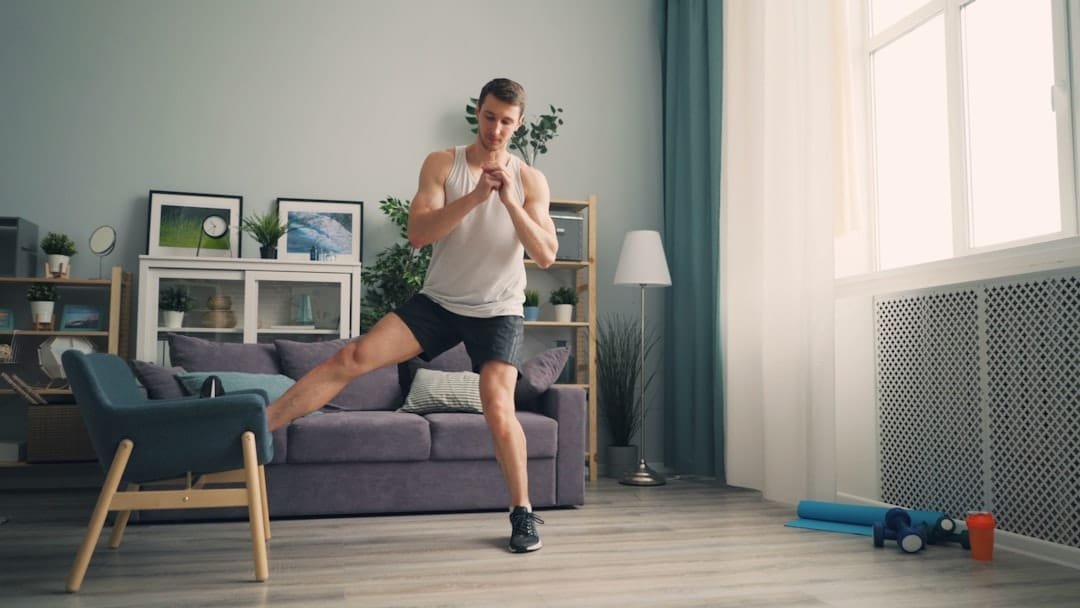
Progress to walking squats: Step sideways into a wide stance, then sink into a deep knee bend. Keep toes pointing forward to protect joints. Add intensity by lifting alternate knees during ascent.
| Movement | Muscles Worked | Form Tip |
|---|---|---|
| Side Lunge Twist | Quads, Glutes, Obliques | Keep front knee over ankle |
| Standing Leg Lift | Hamstrings, Core | Engage abdominal muscles |
| Half Lunge Walk | Calves, Hip Flexors | Maintain upright posture |
Upper-Body and Core Strengthening
Elevate standard push-ups by adding rotational elements. As you push up, rotate your torso and reach one arm toward the ceiling. This engages shoulder stabilizers and oblique muscles simultaneously.
Plank variations prove invaluable. Try lifting alternate legs while holding position—this challenges balance while strengthening deep core muscles. Remember: Quality trumps duration every time.
Proper alignment makes all the difference. During any exercise, check that your knees stay aligned with middle toes. This simple adjustment reduces injury risk while maximizing muscle activation. Your living room just became smarter than any gym machine.
Incorporating Dumbbells and Resistance Bands into Your Workout
What if household items could amplify your fitness results? While bodyweight moves build foundational strength, adding simple tools like dumbbells and resistance bands creates new challenges for your muscles. A 2010 study in The Journal of Strength and Conditioning Research found elastic bands stimulate muscle growth as effectively as traditional weights—with endless creative possibilities.
Free Weight Exercises for Added Resistance
Dumbbells let you target specific areas like shoulders and triceps with precision. Try the shoulder press: Stand tall, lift weights to ear level, then press upward until arms lock. Keep your core engaged to protect your lower back during all 8-12 reps.
For sculpted arms, triceps kickbacks deliver results. Bend forward at 45 degrees, elbows glued to your sides. Extend weights backward like you’re pushing away resistance, squeezing the back of your arms at the top. Perform 3 sets of 10-15 repetitions for noticeable definition.
Resistance Band Variations for Versatility
These stretchy tools work differently than free weights—tension increases as you move. Try banded rows: Step on the center, grip handles, and pull upward while squeezing shoulder blades. This engages your back muscles more intensely with each repetition.
| Tool | Resistance Type | Best For |
|---|---|---|
| Dumbbells | Constant | Isolation exercises |
| Bands | Accommodating | Compound movements |
| Both | Combined | Full-range challenges |
Mix tools for maximum impact. Pair banded squats with overhead dumbbell presses to engage legs, core, and arms simultaneously. Remember: controlled motions beat heavy weights every time.
Check This
- 7 Minute Workout for Women: Sculpt, Tone and Burn Fat in Record Time
- Get a Free Workout and Diet Plan
Maximizing Your Full Body Strength Workout at Home
Ever feel like you’re moving but not progressing? The solution lies in working smarter, not harder. Two game-changing approaches can break plateaus: compound exercises and single-side challenges.
Power Through Multi-Joint Movements
Think of exercises like squats with overhead reaches. These movement powerhouses engage shoulders, legs, and core at once. Studies show they burn 30% more calories than isolated moves. Your body thrives when multiple muscle groups collaborate—just like during real-world activities.
Master One-Sided Challenges
Try a single-leg deadlift. Balancing on one foot forces your core to stabilize while strengthening hips and glutes. This approach:
- Reveals strength imbalances between sides
- Improves coordination for daily tasks
- Boosts calorie burn through added effort
Certified trainers recommend checking two form essentials: keep knees aligned over toes during lunges, and maintain neutral spines during presses. A mirror or video recording helps spot alignment issues. Remember: precision beats speed every time.
Pair these strategies with consistent effort, and you’ll build functional strength that translates beyond your living room. The best part? You’re crafting a resilient body capable of handling whatever life throws your way.
FAQ
How often should I do strength training at home?
Aim for 3–4 sessions weekly, allowing rest days for muscle recovery. Alternate between upper-body, lower-body, and core circuits to avoid overtraining. Consistency matters more than daily intensity.
Can I build muscle without gym equipment?
Absolutely! Bodyweight exercises like push-ups, squats, and planks effectively target major muscle groups. For added resistance, use household items like water bottles or a backpack filled with books.
What’s the best way to boost metabolism through training?
Focus on compound movements like lunges or burpees. These engage multiple muscles, increasing calorie burn even after your session. Pair this with protein-rich meals for optimal results.
How do I protect my knees during leg exercises?
Keep your knees aligned over toes during squats or lunges. Avoid locking joints at the top. A folded towel under knees can cushion floor exercises like glute bridges.
Are resistance bands worth using?
Yes! Brands like TheraBand or TRX offer versatile options for targeting arms, legs, and core. They’re portable and ideal for adding tension without heavy weights.
What’s a quick circuit for busy schedules?
Try a 15-minute mix: 30 seconds of jump squats, push-ups, planks, and lateral raises. Repeat 3x with minimal rest. Apps like Nike Training Club offer guided routines.
How do I know if my form is correct?
Record yourself or use a mirror. Keep your spine neutral during movements like deadlifts or rows. If unsure, consult certified trainers on platforms like Peloton or Apple Fitness+.
Can strength training replace cardio for weight loss?
While it boosts metabolism, pair it with brisk walks or cycling for balanced results. The CDC recommends 150 minutes of moderate aerobic activity weekly alongside muscle-building exercises.
What’s a good starter exercise for core strength?
Begin with bird dogs or modified planks. These stabilize your spine without straining your neck. Progress to mountain climbers or Russian twists as endurance improves.
How do I stay motivated without a gym?
Set specific goals, like mastering 10 push-ups. Track progress using apps like Fitbod or Strong. Invite a friend for virtual sessions to keep accountability high.