
What Are Free Weights? Definition and Core Types
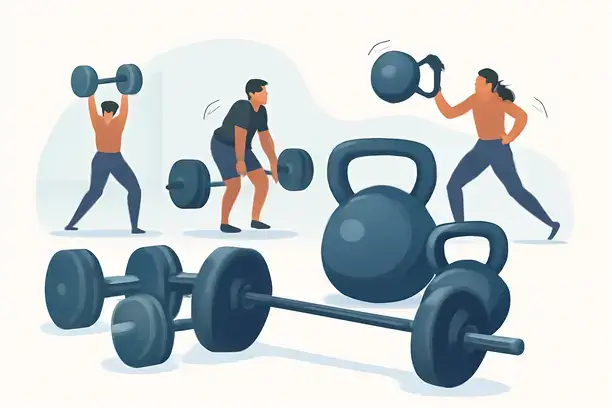
What are free weights? Free weights are versatile, portable tools used in strength training that aren’t attached to any fixed machine. Unlike resistance machines that guide your motion along predetermined paths, free weights let you choose the direction and range of movement. This means your body has to engage multiple muscle groups at once—including stabilizers and core muscles—to control balance and coordination throughout each exercise. The result? Functional strength that carries over effectively to daily tasks and athletic performance.
Here’s what falls under the free weight umbrella:
- Dumbbells: Small handheld weights perfect for single-arm or alternating exercises that work both upper and lower body.
- Barbells: Long bars you load with weight plates, essential for bilateral compound lifts like squats, deadlifts, and presses.
- Kettlebells: Ball-shaped weights with handles designed for dynamic, often explosive movements that blend strength and cardio elements.
- Weight Plates: Circular discs typically added to barbells or used on their own for resistance during lifts and carries.
- Medicine Balls: Weighted balls you can throw or hold to build power and core strength.
This freedom of movement contrasts sharply with machines, where your motion is typically locked into a fixed path and stabilizer muscles get far less action. Evidence suggests that free weights tend to produce superior functional strength and coordination gains compared to machines, which is why they’re a preferred choice for enhancing athleticism and real-world physical capacity Source: ACE Fitness.
Scientific Evidence: Free Weights vs. Machines
Muscle Activation and Neuromuscular Demand
Electromyographic (EMG) research consistently shows that free weight exercises—think barbell squats and bench presses—activate stabilizer muscles significantly more than comparable machine exercises. Why? Because free weights require you to continuously control both movement and balance, engaging muscle groups that machines often let slide.
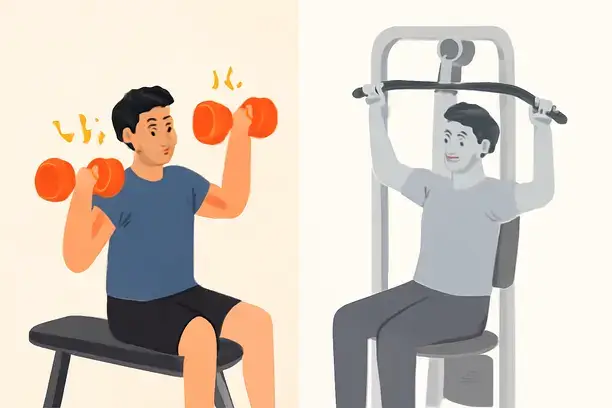
This comprehensive neuromuscular engagement doesn’t just strengthen the targeted muscles. It also sharpens the coordination critical for everyday movements and athletic performance. Machines still have their place, especially for isolating muscles or helping beginners build initial strength, but they generally can’t match the stabilizer recruitment that free weights demand Source: National Institutes of Health.
Strength and Power Adaptation: Meta-analytical Findings
Systematic reviews and meta-analyses suggest that athletes training with free weights experience modest but meaningful improvements in maximal strength and power compared to those relying exclusively on machines. Compound free weight lifts such as deadlifts and overhead presses are linked to enhanced force production, jump performance, and sport-specific power transfer—benefits you’ll see less consistently with machines Source: Journal of Strength and Conditioning Research.
Hormonal Responses and Adaptation
Free weight sessions often produce greater acute increases in anabolic hormones—including testosterone and growth hormone—compared to machine-based workouts. These hormonal surges, while temporary, support muscle repair, growth, and adaptation, particularly after intense compound lifts. For advanced trainees, such responses offer incremental advantages in hypertrophy and recovery Source: Sports Medicine.
Overall, the scientific evidence backs free weights for delivering superior neuromuscular engagement, hormonal benefits, and transferable strength compared to machines alone.
Quantifying the Benefits: Muscle Activation and Hormonal Impact
Free weights produce measurable physiological advantages that go beyond anecdotal hype. EMG studies reveal that overhead presses performed with dumbbells or barbells activate core muscles by 30–40% more than similar exercises on seated machines. This happens because free weight movements demand postural stabilization, firing up your abs, obliques, and deep spinal muscles alongside the prime movers.
Hormonal responses follow a similar pattern. Intense compound lifts with free weights elicit larger acute spikes in testosterone and growth hormone compared to machine training. These hormones play a pivotal role in muscle growth, repair, and adaptation, speeding up strength gains and hypertrophy over time Source: Journal of Strength and Conditioning Research.
In functional terms, free weights improve explosive power, force production, and movement coordination more rapidly than machine exercises. That’s because they mimic multi-joint athletic movements, requiring your nervous system to orchestrate complex muscle interactions. These qualities explain why athletes across various sports prefer free weight protocols for building functional strength and agility ACE Fitness.
If you’re after effective whole-body strength enhancements, free weights deliver broad physiological and performance benefits that are tough to beat effective training strategies.
A Systematic Guide to Free Weight Safety and Injury Prevention
Despite common concerns about injury risk, properly executed free weight training is generally as safe—or safer—than machine-based workouts, especially for experienced lifters. Research from the National Strength and Conditioning Association underscores that attention to technique and gradual progression are key to minimizing injury risk Source: NSCA.
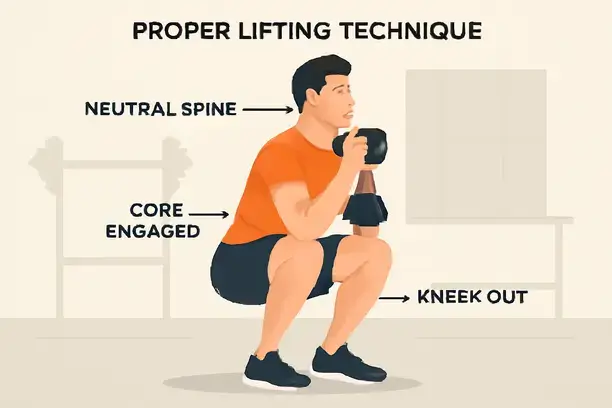
Follow this five-point form checklist to maximize safety for major lifts:
- Neutral spine: Keep your back naturally aligned without excessive arching or rounding.
- Controlled tempo: Perform movements smoothly, avoiding jerky or rushed motions.
- Full, pain-free range of motion: Lower weights only as far as your joints allow comfortably, never forcing it.
- Core engagement: Brace your abdominal and lower back muscles before each lift.
- Clear bar path: Guide weights along predictable, vertical lines close to your body.
Progress sensibly by adopting the ‘2-for-2’ rule: if you knock out two extra reps beyond your target for two workouts straight, increase weight by no more than 5–10%. This prevents injury by avoiding sudden jumps in load Source: ACSM Health & Fitness Journal.
Watch for red flags like sharp joint pain, instability, or movement restrictions. If these pop up, stop the exercise promptly and reassess before continuing. Ignoring warning signs is a fast track to chronic injury.
Incorporating evidence-based safety protocols and mindful progression ensures your free weight training stays both effective and sustainable. For additional insight on maintaining workout consistency and motivation, check out our guide on staying motivated.
Building Your Program: Progression Methodology and Periodization
Structuring Progress for Long-Term Results
If you want meaningful gains with free weights, a structured approach is essential. Beginners should start with linear progression, bumping up loads by about 2.5–5 pounds weekly on primary lifts like squats, presses, and deadlifts. This steady increment promotes consistent muscle adaptation without compromising form or recovery.
As progress slows—and it will—transitioning to periodized training cycles becomes critical. This means rotating through phases focused on hypertrophy (8–12 reps), strength (3–6 reps), and power (1–5 reps emphasizing speed and explosiveness). Each phase typically lasts 4–8 weeks and helps you sidestep plateaus and overuse injuries.
The Importance of Planned Deloads
Regular deload periods—planned reductions in training volume by 40–60% every 4–6 weeks—are essential to avoid fatigue and injury. Far from wasted time, deloads facilitate recovery and improve your training quality in subsequent weeks. Elite athletes use them routinely to maintain consistency and peak performance Source: Strength and Conditioning Journal.
Tracking Progress and Staying Motivated
Tracking benchmarks—like adding specific weights to your lifts within set periods—provides measurable motivation. Monitoring intensity with the Rate of Perceived Exertion (RPE) scale is also effective: aim for an RPE of 7–8, where reps feel challenging but controlled NSCA: RPE Scale.
For additional strategies on staying consistent, see our article on maintaining diet and workout consistency.
Tailored Guidelines: Free Weights for Seniors, Rehab, and Specific Populations
Customizing free weight programs is crucial when training seniors, individuals in rehabilitation, youth, or those with mobility challenges. Seniors should start with lighter loads—around 40–50% of their estimated one-rep max—and use slow, controlled tempos. This approach preserves joint health, reduces fall risk, and helps maintain independence through compound exercises like goblet squats and supported rows Source: National Institutes of Health.
Rehabilitation protocols emphasize joint-friendly modifications. Think light dumbbell presses, controlled step-ups, and resistance band movements that rebuild strength gently. Heavy barbell lifts are generally avoided early on to protect healing tissues and prevent joint overload. For youth athletes, the focus is mastering proper form with very light weights under strict supervision to avoid growth plate injuries CDC: Strength Training for All Ages.
When pain, injury, or restricted mobility is present, select safer exercise variants. For instance, replace traditional barbell back squats with kettlebell or dumbbell goblet squats if you’re dealing with lower back issues. Seated presses can provide stability for those with joint instability. Regular assessments ensure progress and safety remain balanced.
For detailed adaptations specific to aging or joint concerns, see our specialized guides on arm exercises for seniors with joint issues and calisthenics for seniors to enhance functional strength.
Are free weights good for you?
Yes, free weights provide effective strength, balance, and coordination benefits by demanding more muscle engagement than machines. They support functional fitness that carries over to daily activities and sports.
Do dumbbells count as free weights?
Absolutely. Dumbbells are a primary type of free weight, offering versatility in both isolated and compound movements for all fitness levels.
What is an example of a free weight exercise?
The dumbbell goblet squat is a solid example—it requires core stabilization and works multiple muscle groups simultaneously without machine constraints.
Sources
- ACE Fitness – Free Weights vs. Machines: How to Know What’s Right for You
- ACE Fitness – The Benefits of Free Weights vs. Machines
- CDC – Strength Training for All Ages
- Sports Medicine – Hormonal Responses to Weight Training
- National Institutes of Health – Muscle Activation in Free Weight Exercises
- National Institutes of Health – Strength Training Guidelines for Seniors
- Journal of Strength and Conditioning Research – Free Weights Versus Resistance Machines
- Journal of Strength and Conditioning Research – Hormonal Response to Movement Patterns
- Strength and Conditioning Journal – Importance of Rest and Recovery
- ACSM Health & Fitness Journal – Weight Training Safety
- National Strength and Conditioning Association – RPE Scale for Measuring Exercise Intensity
- National Strength and Conditioning Association – Injury Epidemiology in Strength Training