
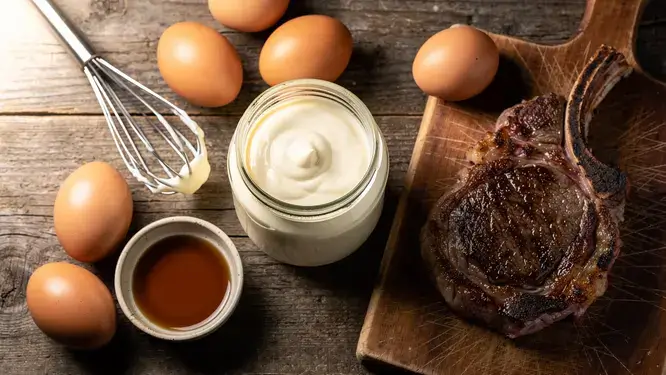
Understanding Mayo on Carnivore: The Core Rules
If you’re wondering, “can you have mayo on the carnivore diet?” — the answer comes down to ingredient purity. Most store-bought mayonnaise is off-limits because it’s made with plant-derived oils like canola, soybean, or sunflower oil, and often includes extras such as sugar, stabilizers, and emulsifiers that have no place on a strict animal-only protocol like the carnivore diet. Even products marketed as “olive oil mayo” or “avocado oil mayo” introduce non-animal fats, which puts them out of bounds for strict adherents.
To stay truly carnivore, your mayo needs to be built entirely from animal foods — with very limited exceptions for acidity. That means egg yolks, rendered animal fat (think beef tallow, duck fat, or pork lard), and salt. Some carnivore purists allow a small splash of lemon juice or vinegar to help with emulsification, though even those additions spark debate in the community. The rule is simple: if it doesn’t come from an animal, it doesn’t belong in your carnivore mayo.
What condiments are ok for a carnivore diet?
Only condiments made entirely from animal products — such as homemade mayonnaise using egg yolks and animal fat — are considered fully carnivore-compliant. Store-bought condiments typically contain plant oils, sugar, or additives and are not allowed.
The concern isn’t just about plant origins. Many carnivore advocates point to potential issues with plant-based oils, including their high concentration of polyunsaturated fatty acids (PUFAs), susceptibility to oxidation, and possible presence of anti-nutrients like lectins and phytates — particularly in refined seed oils. While some of these concerns are still being debated scientifically, excess polyunsaturated fat consumption and trans fat formation during industrial oil processing have been linked to negative health outcomes (Lipids in Health and Disease). At its core, though, the carnivore principle is about simplicity and complete elimination of plant-based ingredients.
When reviewing any label or recipe, look carefully for hidden plant additives — mustard, citric acid, gums, or any non-animal thickener will disqualify it. Bottom line: on the carnivore diet, mayo is only acceptable if you make it yourself from egg yolks and animal fat, with salt and an optional trace of acid for texture. If full compliance matters to you, commercial mayo is best left on the shelf unless every single ingredient clears the “animal only” bar.
How to Make Safe Carnivore Mayo at Home
Making carnivore-compliant mayo at home is entirely doable — but it does require care with both ingredients and technique. To revisit the central question — can you have mayo on the carnivore diet — yes, you can, as long as you control every component and follow basic food safety. Always use pasteurized eggs rather than raw shell eggs to minimize the risk of Salmonella and other foodborne pathogens. This is especially important for pregnant women, young children, older adults, and anyone with a compromised immune system, all of whom face greater risk from foodborne illness CDC.

What mayo can I eat on a carnivore diet?
Only homemade mayonnaise made with pasteurized eggs, animal fat (such as beef tallow or duck fat), and salt is fully carnivore-compliant. Strictly avoid any commercial mayo that includes plant oils, sugar, or stabilizers.
Before you start, let both your eggs and chosen animal fat — melted beef tallow, duck fat, or bacon drippings all work well — come fully to room temperature. Cold ingredients increase the chance of your emulsion breaking, which leaves you with a greasy, separated mess rather than a creamy condiment. The key emulsifier here is lecithin, a natural component of egg yolks that works by surrounding fat droplets and dispersing them evenly through the water phase of the mixture.
Start blending on low or medium speed, and — this part really matters — drizzle the melted fat in a thin, almost dripping stream for at least the first third of the total volume. Rush this step and you’ll overwhelm lecithin’s emulsifying power, causing the mayo to split. Once the initial emulsion has taken hold and the mixture looks thick and creamy, you can gradually increase your pouring speed and blend until glossy.
As soon as it’s done, transfer your carnivore mayo to a clean, airtight glass jar and refrigerate it straight away. Without commercial preservatives, homemade mayo should be kept at or below 40°F (4°C) and used within several days. Watch for any sour smell, color changes, or unusual texture — all signs of spoilage. Never leave it out at room temperature for more than two hours, or just one hour if your kitchen runs warm Foodsafety.gov.
Homemade carnivore mayo takes a little more attention than grabbing something off a shelf, but the payoff is full ingredient control. If you’re looking for more ideas on preparing nutritious, diet-friendly meals from scratch, check out these healthy dishes to make at home. When in doubt, trust your senses — and if something seems off, don’t risk it.
Choosing Your Animal Fat: A Nutritional Guide
The fat you choose for your carnivore mayonnaise affects more than just flavor — it shapes the nutritional profile and stability of the finished product. Duck fat brings a luxurious, mildly savory character and is notably rich in monounsaturated fats, which are generally regarded as heart-friendly compared to higher levels of saturated fat found in other animal fats. It also provides modest amounts of fat-soluble vitamins E and K. Bacon grease, on the other hand, delivers bold smoky flavor but carries a higher saturated fat percentage and, depending on how it’s cured, may introduce trace nitrates or nitrites — something to consider if you’re using conventional bacon NIH – Animal Fats Nutritional Value.

Beef tallow earns its popularity for good reason: its neutral flavor and high smoke point make it one of the most stable fats available, meaning it’s less prone to oxidizing at higher temperatures — an important consideration since oxidized fats affect both taste and safety NCBI – Cooking Fats and Oxidation. Lard from pasture-raised pigs stands out for its mild flavor and a naturally higher vitamin D content, though this varies depending on the animal’s diet and sun exposure NCBI – Vitamin D in Animal Fats. Each of these options fits the carnivore framework when you’re asking, can you have mayo on the carnivore diet? What matters most is the source and how it’s rendered.
- Duck fat: High in monounsaturates, subtle gamey flavor, small amounts of vitamins E and K.
- Bacon grease: Bold smoky flavor, higher saturated fat, possible nitrates/nitrites depending on processing.
- Beef tallow: Neutral flavor, highly stable for high-heat use, roughly half saturated fat.
- Lard (pastured): Mild taste, can be higher in vitamin D, softer texture at room temperature.
For the cleanest results, melt your fat gently and avoid overheating — this preserves nutrients and prevents the formation of unwanted byproducts. If you’re after the most nutrient-dense carnivore mayo possible, consider rendering your own fat or sourcing pastured, minimally processed options.
Health Considerations and Medical Warnings
Before deciding whether you can have mayo on the carnivore diet, it’s worth pausing to consider the broader health picture — particularly if you have any pre-existing conditions. A high-fat, animal-based condiment like carnivore mayo isn’t a one-size-fits-all choice. Anyone with current or past gallbladder disease — or who has had their gallbladder removed — may struggle to efficiently digest animal fats due to reduced bile production. This can lead to discomfort, bloating, or fatty stools, and typically warrants personalized guidance from a medical professional.
If you’re managing diabetes, especially type 1, shifting to a very low-carbohydrate eating pattern can affect blood glucose control and alter insulin requirements. There’s also a documented — though rare — risk of euglycemic diabetic ketoacidosis when making significant changes to macronutrient ratios or adding concentrated animal fats to the diet (NCBI – Ketogenic Diets and Diabetes Safety). Similarly, people with chronic kidney disease, a history of pancreatitis, or inherited cholesterol disorders like familial hypercholesterolemia should speak with a doctor before adopting a carnivore approach or incorporating large amounts of animal-based mayo.
Will mayo break ketosis?
No, homemade carnivore mayonnaise will not break ketosis. It contains negligible carbohydrates from egg yolks and salt, making it suitable for a ketogenic diet when consumed in moderate amounts.
Even for generally healthy individuals, the debate around saturated fat and cardiovascular health hasn’t been fully resolved. Some meta-analyses question whether saturated fat directly drives heart disease risk, but most major health authorities — including the American Heart Association and World Health Organization — still recommend keeping saturated fat below recommended levels (CDC – Guidance on Saturated Fat).
Carnivore diet advocates point to potential short-term benefits in areas like autoimmunity, mood, and body composition — but long-term clinical trials are still lacking (NCBI – Review of Carnivore Diet Evidence). Eliminating plant foods entirely also raises the risk of micronutrient gaps, particularly in vitamin C, certain B vitamins, dietary fiber, and plant compounds like polyphenols. Whether animal foods can fully compensate for all of these over the long haul remains an open question.
So while the food list answer to “can you have mayo on the carnivore diet” is fairly straightforward, the health picture is more nuanced. Everyone’s risk-benefit profile is different, and guidance from online forums is no substitute for real medical advice — especially when managing health conditions or making significant dietary shifts. For a broader look at low-carb eating, see our overview of no-carb dietary approaches.
Digestive Adaptation for High-Fat Condiments
Adding a concentrated high-fat condiment like homemade mayo to your diet can put some unexpected demands on your digestive system — especially if you’re not used to eating a lot of fat. This is one of the most common concerns that comes up for people asking, “can you have mayo on the carnivore diet?” Your gallbladder and pancreas need time to ramp up bile and digestive enzyme production, both of which are essential for breaking down and absorbing dietary fat StatPearls/National Library of Medicine.
The smartest approach is to start small. Introduce a modest amount of carnivore mayo alongside a meal, then pay attention to how you feel. Mild loose stools, bloating, or a sense of heaviness are fairly common in the early phase and don’t necessarily signal a problem — but they’re worth keeping an eye on. If symptoms linger beyond a few days, scale back the portion size or use mayo less frequently while your system catches up. Most people find that steady, gradual increases over a few weeks let them work up to larger servings without discomfort.
The type of fat matters here too. Medium-chain triglycerides (MCTs) found in coconut oil are absorbed more readily, but animal fats like beef tallow and duck fat — the staples of carnivore mayo — are primarily long-chain saturated fats, which require more bile for proper emulsification Frontiers in Physiology. Rendering your fat slowly and straining out any solids can help reduce the digestive load slightly.
Don’t underestimate hydration during this adaptation phase. Adequate water intake supports digestion and helps keep things moving. Some people also find that a digestive enzyme supplement containing lipase can ease the transition, though it’s worth checking with a healthcare provider before adding one, since individual needs vary NIDDK – Digestive Enzymes.
Finally, pay attention to what your body is telling you. Some people digest duck fat more comfortably than beef tallow — or find the opposite. This kind of personal experimentation, done patiently and methodically, is the most sustainable way to incorporate carnivore mayo as a regular part of your diet.
Sources
- CDC
- CDC – Guidance on Saturated Fat
- Foodsafety.gov
- StatPearls/National Library of Medicine
- Lipids in Health and Disease
- Frontiers in Physiology
- NCBI – Cooking Fats and Oxidation
- NCBI – Vitamin D in Animal Fats
- NCBI – Review of Carnivore Diet Evidence
- NCBI – Ketogenic Diets and Diabetes Safety
- NIH – Animal Fats Nutritional Value
- NIDDK – Digestive Enzymes