Why Arm Training Matters After 50
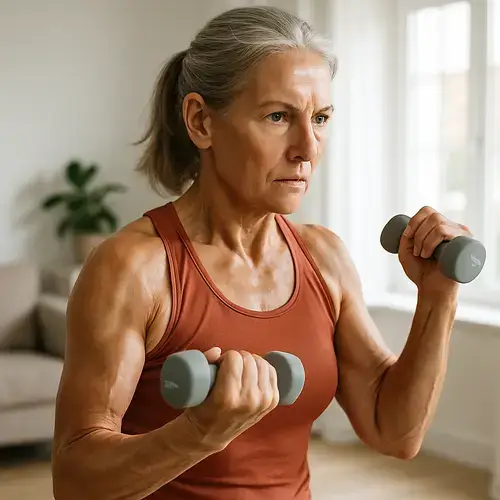
Arm workout for women over 50 is more than just a cosmetic concern—it’s essential for maintaining strength, independence, and confidence in daily life. You want arms that feel strong and capable—without spending hours or risking injury. If you’ve noticed everyday tasks getting harder, you’re not alone.
Disclosure: This article contains affiliate links. We may earn a commission at no extra cost to you.
A dedicated arm workout for women over 50 isn’t about vanity—it’s crucial for maintaining autonomy in everyday life. As we age, muscle mass naturally declines through sarcopenia, making tasks like lifting groceries, opening heavy doors, playing with grandchildren, or steadying yourself on stairs more challenging. For women in this age group, upper body strength often marks the line between thriving independently and struggling with basic mobility Source: National Institute on Aging.
Here’s what the research tells us: regular resistance training can preserve or rebuild muscle and improve functional strength in midlife women. While everyone’s timeline varies, most people notice measurable improvements—such as easier grocery bag lifting or smoother chair transfers—after four to six weeks of consistent, tailored arm exercises Source: Harvard Health Publishing.
Functional Indicators of Progress
- Bag test: Notice how many grocery bags you can comfortably carry, or track their weight week to week.
- Chair transfer: Time how quickly and easily you can stand from a chair using your arms and legs.
- Stair support: Pay attention if your reliance on the railing decreases—that’s improved arm support and balance working together.
When to Consult a Doctor
Most healthy adults over 50 can safely include light resistance or bodyweight arm exercises in their routines. That said, anyone dealing with recent injuries, severe arthritis, cardiovascular issues, or sudden weakness should talk with a healthcare provider before starting. Stop immediately if you experience chest pain, dizziness, or sharp joint pain, and get medical clearance before resuming activity Source: CDC.
Building consistency doesn’t have to be complicated. You might try incorporating workouts into daily routines, exercising with a friend, or exploring simple guided programs like the 7-Minute Ageless Body Secret, designed specifically for women over 50 requiring minimal time and no equipment. The goal goes beyond toned arms—it’s about regaining strength and confidence to move freely through your day.
Key Arm Anatomy for Exercise Selection
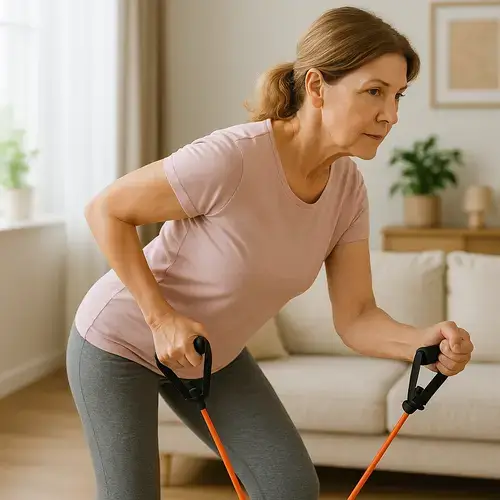
Understanding your arm’s anatomy helps make your arm workout for women over 50 both safer and more effective. Knowing which muscles you’re targeting can prevent injury and ensure balanced development. Let’s break down the key players:
Main Arm Muscles and Functions
- Triceps brachii: Located at the back of your upper arm, this muscle straightens the elbow. Exercises like triceps dips and overhead extensions emphasize the long head, while push-ups hit the medial and lateral heads.
- Biceps brachii: The front of your upper arm, responsible for elbow flexion. Bicep curls target this muscle directly, and hammer curls also engage the brachialis underneath.
- Deltoids: Think of this as your shoulder “cap” with three distinct sections—anterior (front), lateral (side), and posterior (rear) heads. Lateral raises train the side deltoid, while front raises and reverse flys hit the front and rear respectively.
- Rotator cuff: A group of four smaller muscles stabilizing the shoulder joint. Keeping these healthy is vital for safe lifting and reaching motions, especially as we age.
- Forearm flexors: These are crucial for grip and wrist stability, activated during exercises like farmer’s carries and planks.
Matching Exercises to Muscles
Here’s how common movements target specific areas:
- Bicep curls: Biceps, brachialis
- Triceps kickbacks: Triceps (all heads)
- Lateral/front raises: Anterior and lateral deltoids
- Reverse flys: Posterior deltoids, rotator cuff, upper back
- Push-ups: Triceps, deltoids, chest
- Farmer’s carry: Forearm flexors, grip, shoulders
At-Home Muscle Balance Test
Stand before a mirror and raise both arms overhead, then lower them behind your back as if putting on a coat. Notice any tightness or differences in range. Next, extend your arms sideways and rotate your palms up and down, checking for symmetry or discomfort. Addressing imbalances early helps prevent injury and guides your exercise choices for better long-term results.
If you’re looking for easy-to-follow, anatomy-based workouts, the 7-Minute Ageless Body Secret offers routines targeting all key arm muscles with joint-friendly moves, perfect for women over 50.
You’ll find detailed anatomical guides at the Mayo Clinic and the NHS exercise library for more in-depth muscle and exercise relationships.
Safe, Joint-Friendly Exercises, Regressions, and Equipment Substitutes
Joints—especially shoulders, elbows, and wrists—become more vulnerable with age, so protecting them during arm workouts is essential. Certain moves, like upright rows, chair dips, and heavy overhead presses, often stress or pinch these joints and should be approached cautiously or replaced altogether.
Joint-Friendly Exercise Alternatives
Here are safer options that still deliver results:
- Lateral raises: Perform with a slight elbow bend and light resistance to protect shoulder joints.
- Triceps kickbacks: A safer substitute for dips that still targets the triceps effectively.
- Front arm raises: Work those anterior deltoids without overhead strain.
- Overhead presses: Use a neutral grip (palms facing in) and limit your range of motion to avoid impingement.
- Biceps curls: Opt for palms-facing (hammer) curls if you experience wrist discomfort.
Regressions and Progressions for Common Exercises
Let’s talk about how to scale movements up or down based on your current fitness level:
Push-ups:
- Wall push-ups (most gentle; adjust foot distance to scale difficulty)
- Incline push-ups on a sturdy counter or table
- Knee push-ups on the floor for support
Progress by lowering the incline or adding pause reps—try 3 seconds down, 1 second up. Rest 30–60 seconds between sets.
Biceps curls:
- Seated curls using resistance bands or water bottles
- Standing curls with dumbbells or similar weights
- Slow eccentric curls with a 4-second lowering phase for added challenge
If you don’t have dumbbells, filled water bottles or canned goods work surprisingly well.
Triceps:
- Overhead extensions with a towel or light resistance band
- Chair or bench-supported triceps kickbacks
- Close-grip wall push-ups focusing on safe elbow alignment
If discomfort arises, reduce intensity or modify the motion accordingly.
Equipment Substitutes for Home Use
You don’t need a fancy gym setup to build stronger arms:
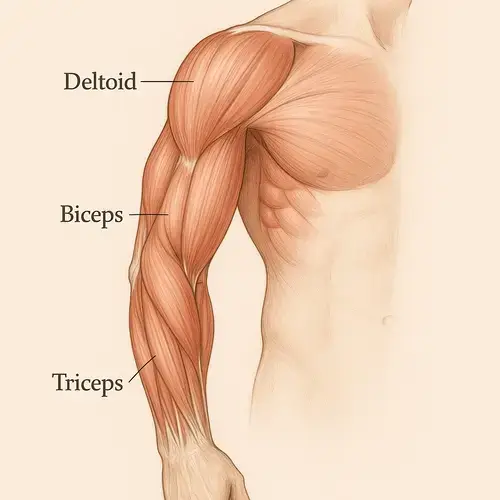
- Resistance bands: Provide gentle, progressive tension for a range of moves including curls, raises, and pull-aparts.
- Water bottles and cans: Easy-to-grip household items that make effective light weights.
- Towels: Use for isometric squeezes or as grip supports when hand stiffness is an issue.
Warm-Up and Cooldown Recommendations
A 5-minute dynamic warm-up prepares your joints and muscles for exercise:
- 30 seconds each direction of gentle shoulder circles
- Arm swings crossing in front of the chest for 30 seconds
- Wrist rolls for 30 seconds each way
- Bent-arm chest openers held for 10–15 seconds, repeated three times
After your workout, ease into a cooldown with stretches to relax muscles and joints:
- Biceps stretch against a wall with arm straight, hold 20–30 seconds
- Triceps stretch overhead, hand reaching to opposite shoulder blade, 20–30 seconds per side
- Shoulder shrugs with deep breathing for 1–2 minutes
Always move gently in warm-ups and cooldowns, never forcing a stretch, and never work through sharp pain. Staying mindful of your body’s signals helps protect your joints and promote better results long term, especially as strength and flexibility improve with consistency.
If you’re seeking simple, safe routines with built-in progressions, the 7-Minute Ageless Body Secret can be a helpful structured option as you develop your arm strength.
Creating Your Weekly Arm Routine and Tips for Staying Consistent
Building an effective arm workout for women over 50 doesn’t require hours in the gym—just consistency, smart movement choices, and a realistic schedule. A well-balanced plan will strengthen your arms, protect your joints, and support broader health goals like mobility and balance.
Sample Weekly Schedule
- 2–3 arm workouts per week: Allow at least one rest day between sessions. For example: Monday/Thursday or Tuesday/Friday.
- Each session: 20–30 minutes, including warm-up, 2–3 sets of each arm exercise, and cool-down.
- Include variety: Blend biceps, triceps, and shoulder exercises for balanced results.
Example Arm Day Session
- Dynamic warm-up (5 minutes)
- Biceps curls – 2 sets of 10–15 reps
- Triceps kickbacks – 2 sets of 10–15 reps
- Lateral raises – 2 sets of 10–12 reps
- Wall push-ups – 2 sets of 8–10 reps
- Front arm raises – 2 sets of 12 reps
- Cooldown stretching (5–7 minutes)
Consistency and Motivation Tips
- Link workouts to something you already do, like after your morning coffee or before TV in the evening.
- Track your progress with a simple journal, noting increases in weight or repetitions.
- Celebrate non-scale victories—like carrying grocery bags or playing with grandkids with less fatigue.
- Enlist a workout buddy or join an online group for added accountability.
- If time is short, remember even brief routines like the 7-Minute Ageless Body Secret offer benefits and help you stay on track.
For more guidance on motivation and workout habits, check out our tips for building workout motivation and step-by-step advice on getting back into exercise. Remember, regular arm training not only keeps you strong but also supports functional independence well into your later years.
Mini-FAQ: Common Questions About Arm Workouts for Women Over 50
- Q: How often should I train my arms after 50?
A: Aim for two to three times per week, allowing at least one day of rest between sessions to let muscles recover and reduce the risk of overuse injuries. - Q: Do I need to use heavy weights?
A: No—moderate or even light resistance is effective, especially when performed with higher reps and good form. Everyday items like water bottles or bands can work well. - Q: Can I tone my arms or is it too late?
A: It’s never too late! Consistent strength training will lead to visible improvements in muscle tone and everyday strength, even if you’re a complete beginner. - Q: What if I have arthritis?
A: Focus on joint-friendly moves, skip high-impact or deep-bending exercises, and consult your healthcare provider for customized modifications.
Taking a targeted, thoughtful approach to arm workouts will help you move with more ease, handle daily activities better, and enjoy the confidence that comes from feeling strong at any age.
Ready to start your journey toward stronger arms and greater independence? Try a beginner-friendly, joint-safe program like the 7-Minute Ageless Body Secret and see the difference it makes in your daily life!