
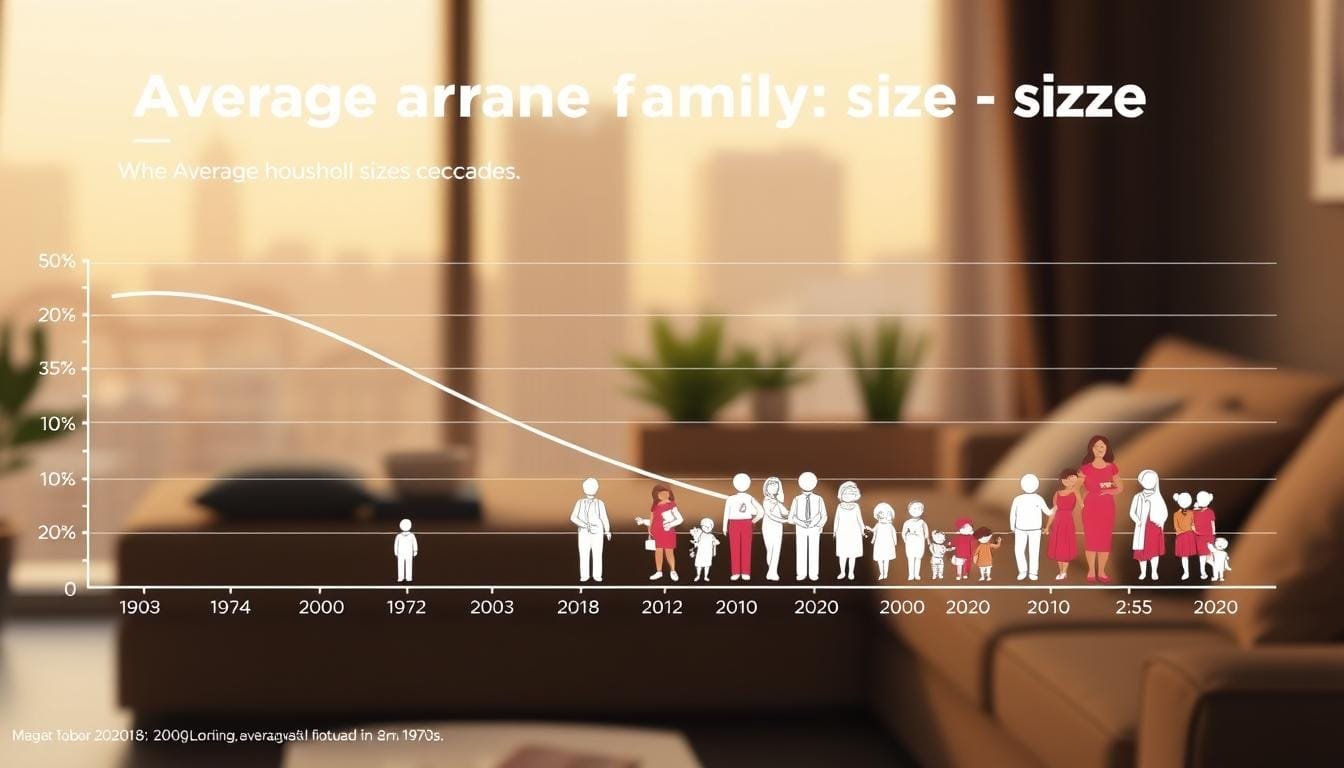
Picture this: your great-grandmother’s black-and-white photo album shows a crowded farmhouse table with 12 chairs. Fast-forward to today, and your Zoom family call fits neatly into a smartphone screen. This visual shift captures a century of transformation in how we define family structures and living arrangements—and it’s reflected in the average american family size.
In 1940, most homes buzzed with nearly four people. Now, the typical household hovers around 2.5 individuals. What caused this dramatic change? The drop in the average american family size mirrors rising education levels, career-focused lifestyles, and soaring living costs that have reshaped priorities. Young adults delay marriage, while couples often opt for fewer children—or none at all.
These shifts ripple through society. As the average american family size evolves, builders design smaller homes, cities adjust zoning laws, and schools face fluctuating enrollment. Even holiday dinners look different, with fewer faces around the table but more diverse relationships represented—a reminder that the average american family size tells a larger story about how we live and connect.
Key Takeaways
- U.S. households have shrunk by over 40% since 1900
- Economic pressures and cultural changes drive smaller living units
- Coastal cities show sharper declines than rural areas
- New family forms challenge traditional support systems
- Housing markets increasingly favor compact spaces
Overview of Historical and Current Trends in Household Size
The story of U.S. living arrangements reads like a history book, with chapters marked by economic shifts and cultural revolutions. Household patterns transformed dramatically as refrigerators replaced iceboxes and smartphones replaced landlines.
Seven Decades of Domestic Transformation
Postwar prosperity sparked the first major change. New suburbs offered smaller homes as young couples embraced independent living. By the 1970s, 1-person units became common—a trend supercharged by birth control access and career-focused lifestyles.
Recent data shows surprising twists. After decades of shrinkage, homes grew slightly larger post-2010. Rising rents and student debt pushed young adults back with parents, while aging populations required multigenerational setups.
Numbers That Redefined Living Spaces
| Year | 5+ Persons | 1 Person |
|---|---|---|
| 1940 | 27% | 8% |
| 2010 | 11% | 27% |
| 2017 | 12.5% | 28% |
This flip-flop pattern reveals how economic tides shape domestic choices. The Census Bureau notes recent upticks in shared living—a response to housing costs hitting record highs.
Understanding Average American Family Size Today
Imagine walking through a neighborhood where every front door tells a different story. Fifty years ago, most homes featured parents with kids and a white picket fence. Now, you’ll find roommates splitting rent, grandparents raising grandchildren, and professionals living solo.

Influences of Changing Family Dynamics
Three forces reshape how people live together. First, education and careers delay marriage – adults now wed seven years later than in 1960. Second, financial pressures make smaller units practical. Last, cultural acceptance nurtures new family types like cohabiting partners and chosen families.
The numbers tell a vivid tale. In 1960, 44% of married couples had kids at home. Today, that figure sits at 19%. Shared housing has surged too – 1 in 5 adults under 35 now live with non-relatives.
Insights from the U.S. Census Bureau
Recent surveys reveal striking patterns. The U.S. Census Bureau tracks how economic and social shifts alter living arrangements:
| Category | 1960 | 2017 |
|---|---|---|
| Family Households | 85% | 65% |
| Married Couples | 75% | 48% |
| With Children | 44% | 19% |
This transformation affects everything from school districts to furniture sales. As the United States evolves, so do the ways people build their closest bonds.
Economic, Housing, and Lifestyle Influences
What happens when paychecks can’t keep up with mortgage rates? Modern living arrangements reveal surprising answers. Financial realities now shape where and how people live more than ever before.
Money Talks in Domestic Decisions
Young adults face a perfect storm. Student debt collides with rent spikes, keeping 7.68 million 25-34-year-olds at their parents’ address. Builders respond to this squeeze by creating larger homes – new single-family houses grew 20% since 1990 despite shrinking household sizes.
This housing paradox reflects dual pressures. Affluent buyers want offices and gyms, while others stretch budgets through shared spaces. The Census Bureau notes 23% more housing units since 1997, yet many struggle to find affordable options.
Remote Work Reshapes Rooms
Zoom calls revolutionized home design. 27.6 million remote workers now need dedicated workspaces – a 300% jump since 2019. Dining rooms become conference centers, while basements transform into productivity zones.
This shift creates new priorities. Homebuyers seek flexible layouts over square footage. Renters prioritize strong WiFi over closet space. As work-life boundaries blur, houses multitask harder than ever before.
| Year | Median Home Size | Adults at Home |
|---|---|---|
| 1990 | 1,910 sq ft | 4.1 million |
| 2022 | 2,299 sq ft | 7.68 million |
These numbers tell a modern truth: homes now serve as offices, schools, and sanctuaries. How we live keeps rewriting the rules of where we live.
Demographic Shifts and Changing Household Composition
Think of a city block where studio apartments outnumber three-bedroom homes. This urban snapshot mirrors a national reality: U.S. households now favor solo living and creative partnerships over traditional setups. Between 1960 and 2017, nonfamily units jumped from 15% to 35% of all homes – a revolution in how people coexist.

Rise of Solo Living and New Partnerships
Nearly 1 in 3 homes now shelter just one person. Two forces drive this shift: silver-haired empty nesters and ambitious twenty-somethings. Older adults often maintain independence after spouses pass, while younger generations view solo living as proof of self-sufficiency.
Millennials rewrite the rules through necessity. 61% of under-25 household leaders share spaces with non-relatives – think coworkers splitting rent or unmarried partners cohabiting. “We’re building families through friendship,” explains a recent urban planning report.
| Age Group | With Parents | Nonfamily Homes |
|---|---|---|
| 18-24 | 46% | 61% |
| 25-29 | 26% | 38% |
| 65+ | 3% | 28% |
Life Stage Living Patterns
Household types shift like seasons across lifetimes. Under-35s increasingly bunk with parents or roommates – 35% in 2017 versus 32% seven years prior. Midlife brings smaller family units, while golden years often mean downsizing to solo spaces.
Economic realities shape these choices. Many thirty-somethings juggle student loans and childcare costs, making multigenerational living practical. Meanwhile, fixed-income seniors prioritize affordability over square footage. Each generation navigates unique challenges in crafting their ideal living arrangements.
Insights from Census Bureau and Community Surveys
Decades of doorbell rings and survey clicks reveal how we live. The U.S. Census Bureau acts as our national timekeeper, tracking housing patterns through economic booms and cultural shifts. Their American Community Survey provides real-time snapshots – like catching lightning in a data bottle.
Patterns That Defy Predictions
Recent numbers tell a twisty tale. From 2010-2017, adults aged 18-34 grew by 4.2 million. But new households crawled forward at 3% – slower than a 2000s tortoise. Why the mismatch? Rising rents and student debt kept roommates bunking together and adult children at home.
Modern surveys capture realities old forms missed. Improved methods now track cohabiting partners and multigenerational homes accurately. Coastal cities show different trends than farm towns – proof that local economies shape living spaces.
These community survey insights help builders design smarter apartments and cities plan better services. When the next U.S. Census knocks, it’s not just counting people – it’s mapping how we reinvent home.
Worth exploring
- Healthy Meals for Family of 4: Easy, Affordable, and Delicious Ideas
- Family Swim Lessons: Unlock Aquatic Skills & Confidence
FAQ
How has household size changed since the 1940s?
Since the 1940s, the number of people per home has dropped significantly. In 1940, households averaged around 3.3 individuals. By 2022, that figure fell to roughly 2.5, influenced by urbanization, smaller family units, and shifts in marriage timing.
What’s considered a typical family size today?
Recent Census Bureau reports show most homes include about 3 people. However, this varies widely. Many now consist of unmarried couples, single parents, or adults living alone, reflecting evolving social norms.
How do economic factors shape living arrangements?
Rising housing costs and student debt have led many young adults to delay moving out or share spaces. Remote work also encourages larger homes for office needs, while affordability challenges push multigenerational living.
Why are single-person households increasing?
Nearly 30% of U.S. homes have just one occupant. Aging populations, delayed marriages, and greater financial independence contribute to this trend. Urban areas, with amenities for solo living, see higher rates.
How reliable is Census Bureau data on household trends?
The Census Bureau uses rigorous methods, including the American Community Survey, to track shifts. Its large sample size and consistent approach make it a trusted source for understanding population changes over decades.
Does age affect how households form?
Yes. Younger adults often delay starting families due to education or career priorities, while older adults increasingly live alone longer. These patterns reshape the mix of multigenerational versus single-age homes.
Has remote work influenced household composition?
Absolutely. Work-from-home flexibility allows people to prioritize space over location. Some opt for larger homes in affordable areas, while others live with roommates to balance costs and social needs.