
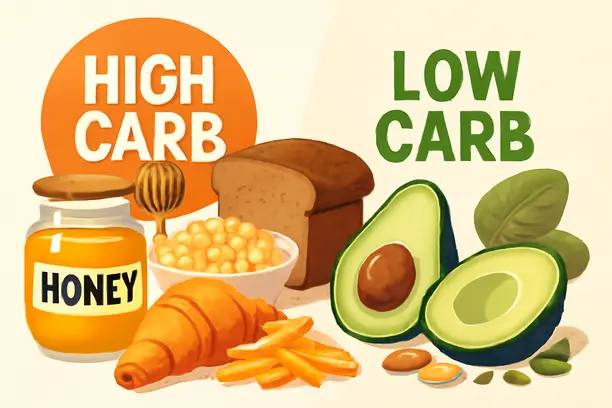
How different low‑carb/Keto styles treat honey (strict vs. flexible)
Can you have honey on low carb diet? The sweet truth is, it depends on how strict your low-carb or keto plan is—honey is high in carbs, but tiny amounts may fit flexible approaches, while strict keto usually requires avoiding it altogether.
Disclosure: This article contains affiliate links. We may earn a commission at no extra cost to you.
Whether honey works on a low-carb or keto diet depends mostly on how strict your approach is. Honey packs about 17 grams of net carbs per tablespoon—that’s a lot when you’re trying to stay in nutritional ketosis.
Ultra-Strict Keto (≤20g Net Carbs/Day): This is the most rigorous approach, often used for therapeutic or medical reasons. A single tablespoon of honey can eat up your entire day’s carb budget—or come dangerously close. That kind of spike usually knocks you straight out of ketosis Source: Diet Doctor.
Moderate Low-Carb (20–50g Net Carbs/Day): Here you’ve got a bit more wiggle room. A teaspoon of honey—around 6 grams of carbs—might fit if you’re careful. You’ll need to track closely, though, and save it for strategic moments like post-workout recovery Source: Healthline.
Liberal Low-Carb (50–100g Net Carbs/Day): These plans are more forgiving. If you’re active or cycling carbs, you might manage up to a tablespoon now and then. Just watch how your body responds—everyone’s tolerance is different.
Real-World Use Cases: When Honey Might Fit
- Post-Workout Carbohydrates: On cyclical or targeted keto, a small hit of honey after heavy training can help refill glycogen without wrecking fat adaptation—if you time it right.
- Special Occasions: Those on flexible plans might make room for honey at family gatherings or social events, keeping the diet sustainable over the long haul.
Matching your plan to your metabolism and goals matters more than rigid rules. For help staying satisfied while cutting carbs, check out our guide on how to feel full on a calorie deficit.
Common Keto and Low-Carb Variants Compared
- Standard Keto (SKD): 20–25g net carbs/day; honey’s usually a no-go.
- Targeted Keto (TKD): 20–50g net carbs/day with workout carbs; limited honey might work.
- Cyclical Keto (CKD): Includes 1–2 higher-carb days weekly; honey fits into refeed days.
- Liberal Low-Carb (non-ketogenic): Up to 100g net carbs/day; moderate honey’s more doable, especially if you’re active.
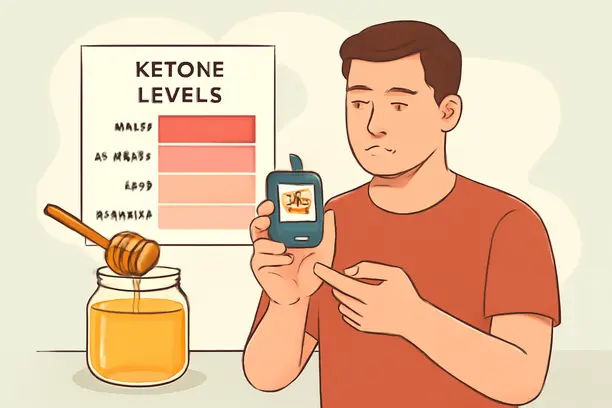
Your personal carb budget will shift depending on age, gender, activity level, and how sensitive you are to insulin. Testing your blood sugar and ketones helps you dial things in Source: American Diabetes Association.
Including honey is a balancing act between your net carb target and how strict you need to be. Many structured plans—like the 14-Day Rapid Soup Diet—skip honey altogether to lock in metabolic benefits, though flexible approaches can work it in occasionally.
Carb content of honey and its immediate effect on ketosis
Honey’s pretty carb-dense. One tablespoon delivers roughly 17 grams of net carbs—mostly glucose and fructose. That’s a big chunk of your daily limit if you’re staying between 20 and 50 grams.
Your blood sugar jumps fast, too. Glucose levels climb within 15 to 30 minutes and usually peak around the one-hour mark. That spike triggers insulin, which puts the brakes on ketone production—often within two hours. How hard this hits you depends on your metabolism and what else you’ve eaten Source: NCBI.
Everyone’s response is a little different. Insulin sensitivity, liver glycogen stores, even your gut bacteria—they all play a role. Some research hints that honey might cause a gentler spike than white sugar, but it’s still too much for strict keto Source: Healthline.
Testing yourself can be eye-opening. Here’s a simple way to do it:
- Fast for 8–10 hours to set a baseline.
- Measure your blood glucose and ketones with a fingerstick meter.
- Eat one tablespoon of honey (about 17g net carbs).
- Recheck at 30 minutes, 1 hour, and 2 hours.
This experiment shows exactly how honey affects your ketosis and blood sugar, so you can make smarter choices. For low-carb meal strategies that keep glucose steady, the 14-Day Rapid Soup Diet offers structured plans that account for natural sugars.
Staying on track with your carb goals doesn’t have to feel restrictive. Small tweaks and the right meal structure can make a big difference.
Who should avoid honey: diabetes, NAFLD, and cardiometabolic risk
If you’re dealing with type 2 diabetes, insulin resistance, or non-alcoholic fatty liver disease (NAFLD), honey’s best left on the shelf. Its high sugar load can cause nasty blood glucose spikes and worsen metabolic trouble.
People with poorly controlled diabetes—say, an HbA1c above 7%—or frequent sugar swings should be especially cautious. Even tiny amounts of honey can stir up instability. Added sugars, natural or not, can deepen insulin resistance and feed liver fat buildup Source: NCBI.
Notice fatigue or brain fog after eating carbs? Blood sugar readings all over the map? Skip the honey. A continuous glucose monitor can help you spot problem foods fast.
Talk to your doctor before bringing honey—or any sweetener—back into your diet. Many clinicians recommend cutting all added sugars until your diabetes or liver markers improve and post-meal glucose stabilizes Source: American Diabetes Association. Programs like the 14-Day Rapid Soup Diet are designed for safe, sugar-free resets that support metabolic health and curb sweet cravings.
If your metabolic risk is low, you might handle a tiny bit of honey once in a while. But if you fall into a high-risk category, strict limits—or total avoidance—are your best bet for protecting organ health and maximizing improvements Source: CDC.
For a full list of foods to avoid on a low-carb diet, read our expert guide on what not to eat on keto.
Evidence review: claimed benefits and limits of honey (cough, wound healing, antioxidants)
Honey’s been used for centuries to soothe coughs, heal wounds, and deliver antioxidants. But when you’re on low-carb or keto, you’ve got to weigh those perks against the metabolic cost of all that sugar.
Can honey really help with coughs?
Clinical trials show honey can calm nighttime coughs in kids over one year old—better than placebo and some over-the-counter meds. It’s not a cure, though, and never give it to babies under 12 months (botulism risk). In adults, the evidence is thinner: some symptom relief, but no clear edge over simpler remedies Source: NCBI.
What about wound healing?
Moderate-quality research backs medical-grade honey’s antibacterial and healing power for certain acute wounds and mild burns. But that jar in your pantry? It’s not standardized or sterile—don’t use it as a substitute for proper medical treatments Source: Cochrane Review.
Are the antioxidants worth it?
Honey does contain antioxidants like phenolic acids and flavonoids—amounts vary by flower source and processing. It can add a little to your antioxidant intake, but the high fructose and glucose content sends blood sugar soaring, which cancels out the benefits if you’re watching carbs or aiming for ketosis Source: Harvard T.H. Chan School of Public Health.
Quick Summary
- Cough Relief: Works for kids over 1; less clear for adults.
- Wound Healing: Effective with medical-grade honey, not for eating.
- Antioxidants: Present but modest—whole fruits and veggies deliver more.
- Contraindications: Avoid in infants and people sensitive to blood sugar.
- Low-Carb Fit: Honey’s carb load usually clashes with strict keto limits.
For fat loss and metabolic gains, cutting added sugars typically wins. Structured, low-glycemic programs like the 14-Day Rapid Soup Diet emphasize meals that keep your energy steady without the glucose roller coaster.
Let’s keep this doable: you don’t need to give up all flavor to see results—just make your sweetener choices work for your goals.
If you want to test honey: step‑by‑step monitoring for glucose and ketones
Not sure how honey messes with your ketosis or blood glucose? A simple three-day trial can give you real data to personalize your approach. You’ll track blood glucose and ketones to see exactly how your body responds.
Day 1: Establish Baseline
Grab a reliable finger-prick meter—Keto Mojo or Abbott Precision Xtra work great. Record fasting blood glucose and ketone levels first thing in the morning. Check again before dinner to confirm things are stable. Stick to your usual low-carb meals.
Day 2: Introduce Honey
After an overnight fast, eat one teaspoon of honey (about 7 grams of carbs) with a regular meal. Measure glucose and ketones at one hour and two hours post-meal. Notice any fatigue or brain fog? Keep everything else the same—same foods, same timing. You can adapt this method to test other sweeteners, too.
Day 3: Recovery and Evaluation
Go back to your usual diet without honey. Measure fasting glucose and ketones again. If your levels bounce back to baseline and you feel fine, occasional small honey amounts might be okay for you. But if glucose goes above 140 mg/dL (7.8 mmol/L) or ketones drop below 0.5 mmol/L, honey’s disrupting your metabolism—avoid it. When in doubt, talk to your doctor Source: NCBI.
- Test selection: Use blood meters for accuracy; urine strips aren’t reliable once you’re fat-adapted.
- Acceptable responses: Minor, short-lived fluctuations are normal; rapid recovery and no symptoms are what you want.
- When to stop: Any bad symptoms or lasting high blood sugar? Stop the trial and get medical advice.
This experiment’s only for generally healthy adults. If you’ve got diabetes or take glucose-lowering meds, talk to your healthcare provider first. For more low-carb meal ideas that skip the sweeteners, check out our easy low-carb dinner recipes.
Choosing honey and alternatives: quality, adulteration, and sweetener tradeoffs
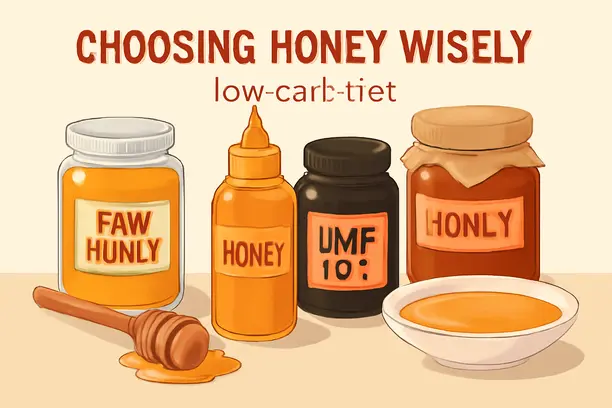
Quality matters when it comes to honey. Raw honey keeps more enzymes and bioactive compounds, while processed versions might be filtered, pasteurized, or blended with cheap syrups. True Manuka honey carries UMF or MGO ratings to show antibacterial strength—look for certification from New Zealand authorities.
Adulterated honey’s everywhere. It’s often cut with corn or rice syrups, which ruins nutritional value and can spike your blood sugar even more. Red flags: dirt-cheap prices, super-uniform flavor, pours too easily, no origin label. The FDA suggests choosing raw, unfiltered honey from a single floral source when you can Source: FDA.
Reading Labels and Comparing Sweeteners
Pure honey labels just say “honey”—no additives. Knowing the type (like clover or acacia) and region helps you spot higher quality. For low-carb sweeteners, skip blends with maltodextrin or dextrose—they sneak in extra carbs.
If you’re serious about staying very low-carb, consider plans like the 14-Day Rapid Soup Diet, which uses sweetener alternatives that won’t spike your blood sugar.
Raw vs. Processed Honey: Health and Carb Impact
Raw honey delivers enzymes and antioxidants, but it’s got the same carb hit as processed honey—about 17 grams of net carbs per tablespoon. Both can wreck ketosis if you overdo it.
Small amounts of raw honey might fit flexible low-carb plans, but “diabetic honey” products often hide questionable additives—don’t fall for the marketing Source: Healthline.
Popular Low-Carb Sweeteners: Weighing the Choices
- Erythritol: Nearly zero calories, doesn’t raise blood sugar or insulin, and it’s tooth-friendly. Large doses can upset your stomach; some folks are sensitive even at lower amounts.
- Stevia: Comes from the stevia leaf (rebaudioside A compound); zero carbs and very sweet. Some people taste a bitter or licorice-like aftertaste. Generally well tolerated.
- Monk Fruit (Luo Han Guo): Natural, zero carbs, minimal aftertaste. Pricier than other options but clean and effective.