
Practical meal plans with portions, calories, and macronutrients
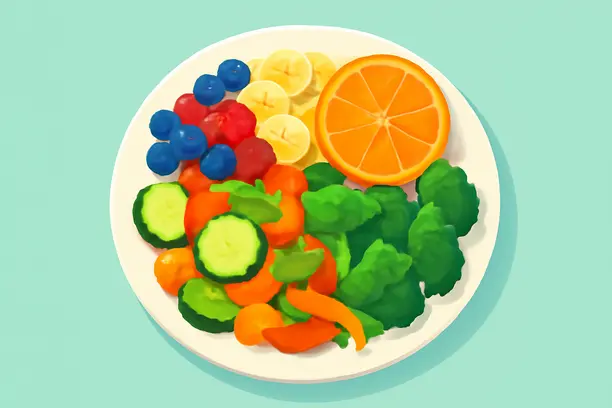
Healthy meal plan with fruits and vegetables ideas don’t have to be bland or complicated—you can create colorful, balanced meals that boost nutrition and satisfaction. This approach helps you enjoy a variety of produce daily while managing portions, calories, and macronutrients without feeling deprived.
Disclosure: This article contains affiliate links. We may earn a commission at no extra cost to you.
A practical healthy meal plan with fruits and vegetables focuses on clear guidance about how much and what to eat. For most adults, consuming about 1.5 to 2 cups of fruit and 2 to 3 cups of vegetables daily aligns with common nutrition guidelines.
Well-rounded meal plans combine plant foods with adequate protein, whole grains, and healthy fats to meet calorie and macronutrient needs. Below are examples of daily, three-day, and seven-day menus, including portions (in cups or grams), estimated calories, and key macronutrient values.
These menus are based on Mediterranean-style eating, easily adapted to omnivorous, vegetarian, or vegan preferences.
Example: Single-Day Meal Plan (1,500–1,600 kcal)
- Breakfast:
- Greek yogurt (150g) with ¾ cup mixed berries (120g)
- 1 small banana (100g)
- 1 tbsp chia seeds
- Calories: ~320 | Carbs: 48g | Protein: 15g | Fat: 8g | Fiber: 8g
- Lunch:
- 2 cups mixed greens (80g), ½ cup chickpeas (85g), 1 cup cherry tomatoes (150g), ¼ cup cucumber (35g), ¼ avocado, 2 tsp olive oil, lemon juice
- 1 slice whole grain bread (40g)
- Calories: ~420 | Carbs: 50g | Protein: 12g | Fat: 15g | Fiber: 13g
- Snack:
- 1 medium apple (150g) + 20g walnuts
- Calories: ~190 | Carbs: 20g | Protein: 2g | Fat: 13g | Fiber: 4g
- Dinner:
- 1.5 cups roasted vegetables (zucchini, bell pepper, cauliflower; 220g) with 100g grilled chicken or baked tofu
- ½ cup cooked quinoa (92g)
- Calories: ~570 | Carbs: 54g | Protein: 35g | Fat: 19g | Fiber: 10g
- Daily Total: ~1,500 kcal | Carbs: 172g | Protein: 64g | Fat: 55g | Fiber: 35g
For plant-based preferences, chicken can be replaced with tofu or lentils. To save money, frozen vegetables and canned legumes are excellent options that retain nutrition when rinsed to reduce sodium levels Source: CDC.
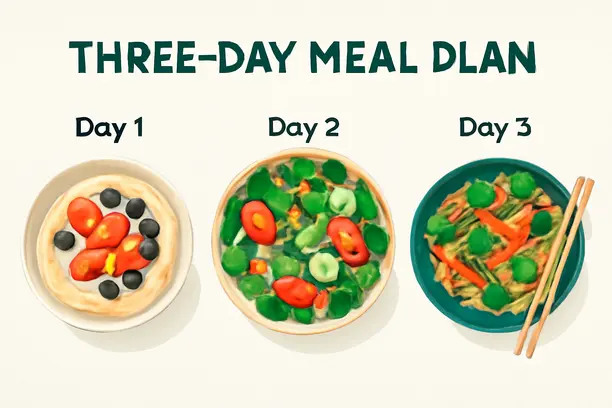
Three-Day Meal Plan Overview
- Day 1: Oats with raisins and apple for breakfast; lentil-vegetable soup with a whole grain roll for lunch; grilled salmon with broccoli and brown rice for dinner.
- Day 2: Scrambled eggs with spinach and mushrooms; chickpea salad with tomatoes and cucumber; veggie stir-fry with tofu and quinoa.
- Day 3: Chia pudding with orange and walnuts; whole wheat wrap with hummus, greens, and red pepper; lentil curry with mixed vegetables and farro.
Each day is designed to provide adequate fiber (≥25g) and protein (≥60g) while keeping calories near 1,600. To promote weight loss, lean proteins and reduced grain portions can be emphasized.
For maintenance, adding yogurt, nuts, or extra whole grains helps keep energy up throughout your day.
For longer or culturally specific plans, there are resources such as a 7-day vegetarian Indian meal plan or a Mediterranean sample menu that offer structure and delicious ideas.
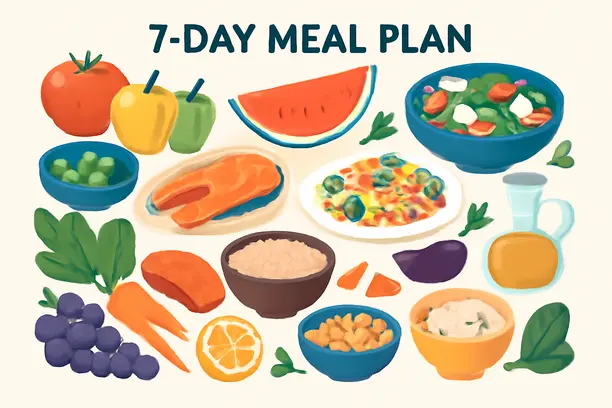
Seven-Day Mediterranean-Inspired Plan (Daily Averages)
- Fruits and vegetables: 4 to 5 cups (450–550g), including apples, oranges, berries, tomatoes, leafy greens, and squash rotated throughout the week.
- Protein: 60–85g daily from beans, yogurt, poultry, fish, tofu, or tempeh
- Whole grains: 3 to 5 servings, such as oats, brown rice, or whole grain bread
- Healthy fats: 2 to 3 tbsp olive oil plus a handful of nuts or seeds
- Total calories: Around 1,500 to 1,700 kcal, supporting moderate weight loss or maintenance for many adults
Vegan options can replace fish with beans or tempeh. Grain variations like bulgur or whole wheat pasta can add fiber and taste diversity.
Meals can be flavored with herbs, garlic, and lemon to keep sodium low yet palatable.
Feeling overwhelmed by planning and shopping? The 30-Day Mediterranean Diet Challenge gives you pre-built meal plans, shopping lists, and bonus guides—making it easy to stay on track, even on busy days.
Vegetarian and vegan eaters can easily swap in lentils, beans, and tofu to maintain protein and fiber intake. Plant-forward recipes simplify meeting daily vegetable targets, as explored further in our plant-based recipe guide.
These plans emphasize flexibility, using fresh, frozen, or canned produce to fit budget, taste, and nutrition preferences without stress Source: EatRight.
Safety, contraindications, and who should modify or avoid produce-heavy plans
Risks and medical conditions requiring caution
Most people benefit from eating more fruits and vegetables, but some health conditions call for extra care.
If you have diabetes, it’s wise to monitor fruit portions to keep blood sugar steady. Those