

Quick recipe & at-a-glance (servings, time, cost)
Keto cheeseburger soup delivers all the classic flavors you crave in a low-carb, one-pot wonder—perfect for busy weeknights or meal prep, with only about 5g net carbs per serving.
Disclosure: This article contains affiliate links. We may earn a commission at no extra cost to you.
This recipe serves four and takes roughly 30 minutes on the stovetop or in an Instant Pot, or about 4 hours if you’re using a slow cooker. That flexibility makes it perfect whether you’re rushing through a weeknight or planning ahead for meal prep.
Quick Recipe Summary
Servings: 4
Total Time: 30 minutes (stovetop/Instant Pot); 4 hours (slow cooker)
Active Prep: ~10 minutes
Estimated Cost: About $3.75 per serving, based on major U.S. supermarket prices as of June 2024. Prices vary by location and season.
Anticipated Net Carbs: Around 5 grams per serving for the base recipe, though ingredient brands can shift this slightly.
Ingredient Checklist—with Keto Swaps
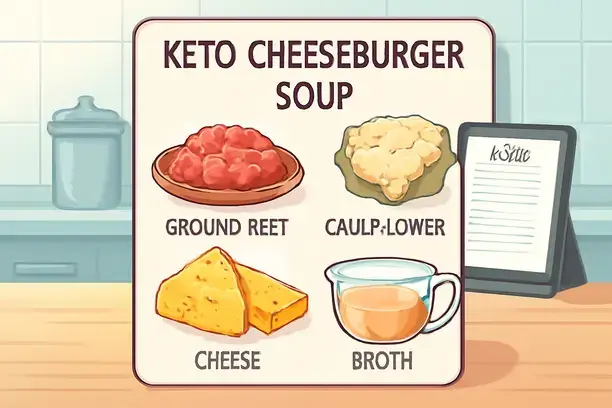
- 1 lb ground beef (an 80/20 blend gives richer flavor; ground turkey works if you prefer lighter)
- 3–4 cups beef or chicken broth (no-added-sugar varieties keep carbs low)
- 1 cup shredded cheddar cheese (shred it fresh to avoid added starch)
- 1/2 cup heavy cream (or canned coconut milk for dairy-free)
- 1 small onion, diced (use half an onion to drop carbs further)
- 2 cloves garlic, minced
- 1 cup chopped cauliflower (a classic low-carb potato swap)
- 1/4 cup diced pickles (optional, but they add that cheeseburger tang)
- 1 tbsp tomato paste (adds depth; skip it for ultra-low carb)
- Butter or olive oil (for sautéing)
- Seasonings: sea salt, black pepper, smoked paprika, with optional mustard powder and hot sauce
Streamlined Cooking Steps (One-Pot/Instant Pot/Slow Cooker)
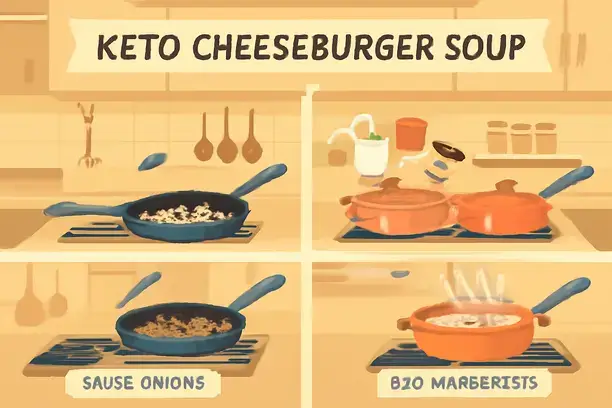
- Melt butter or olive oil over medium heat. Sauté the onion for 2–3 minutes, then add garlic and cook for another minute.
- Add ground beef and brown it thoroughly, breaking up any clumps.
- Stir in broth, tomato paste, and cauliflower. Bring to a simmer.
- Cook for about 6 minutes on manual pressure in the Instant Pot, or 4 hours on high in a slow cooker, until the cauliflower softens.
- Reduce heat and stir in heavy cream and cheddar cheese until melted and creamy.
- Add pickles and spices. Adjust seasoning to taste.
- Simmer gently for 2–3 more minutes. For a thicker texture, mash some of the cauliflower right in the pot.
Timed Method Comparison
- Stovetop: About 30 minutes total—ideal for quick home dinners.
- Instant Pot: Around 20 minutes active time, great for set-and-forget convenience.
- Slow Cooker: 4–6 hours on low or 3–4 hours on high, perfect for batch cooking and meal prep.
For more low-carb dinner ideas, check out our collection of easy low-carb family meals to expand your keto meal planning options.
Recipe Reliability & Transparency
This recipe has been tested over three rounds by a certified recipe developer to ensure flavor, consistency, and keto compatibility. For more on our recipe development process and author credentials, visit our About/Author page.
If you want a guided approach to keto soups and weight loss, the 14-Day Rapid Soup Diet offers nutritionist-designed meal plans with coaching videos to simplify carb control and support your goals.
Nutrition facts & net-carb calculations
Knowing the nutrition facts and how net carbs are calculated helps you stay on track with your keto diet while enjoying this flavorful soup. Here’s what a single serving provides and how you can adjust ingredients to fit your macro targets.
- Serving Size: 1.5 cups (about 350 grams)
- Calories: 370 kcal
- Total Carbohydrates: 7 grams
- Fiber: 2 grams
- Net Carbs: 5 grams (total carbs minus fiber)
- Fat: 28 grams
- Protein: 22 grams
- Sodium: 930 milligrams
The concept of net carbs is essential for keto diets. Since fiber is mostly indigestible and doesn’t raise blood sugar, net carbs are calculated by subtracting fiber from total carbohydrates. This approach is endorsed by authoritative bodies like the FDA.
Ingredient swaps can significantly alter your soup’s nutritional profile:
- Ground Beef (80/20): Adds richness and fat. Switching to ground turkey lowers fat by about 6 grams but slightly increases protein.
- Cauliflower vs. Potato: Cauliflower keeps net carbs steady at around 5 grams per serving. Swapping in half a cup of diced potato raises net carbs to roughly 15 grams and adds about 45 calories.
- Cream Cheese vs. Heavy Cream: Both add creaminess. Heavy cream gives you an extra 2–3 grams of fat and 15–20 additional calories per serving.
- Add-ins like Cheddar or Bacon: Each tablespoon of cheddar contributes about 2 grams of fat, 0.5 grams of carbs, and 2 grams of protein. One strip of bacon adds 3–4 grams of fat but also increases sodium.
Adjust as needed to meet your macro goals—whether that’s lowering calories, reducing carbs, or boosting protein. For beginners needing macro tracking guidance, our macro tracking basics guide offers practical advice.
For an easy-to-follow, results-focused plan featuring low-carb soups, consider the 14-Day Rapid Soup Diet, which simplifies keto meal prep and carb counting with ready recipes and supportive coaching.
You may also find this step-by-step soup protocol useful as a flexible template for fat loss without exhaustive tracking.
For more personalized keto meal planning, explore our tips in the sample macro diet planning guide.
Why ingredients like cauliflower, cream, and cheese work for keto
Keto cheeseburger soup is designed with key ingredients that support low carbs and high fat, creating a satisfying, creamy dish without unnecessary carbs.
Cauliflower acts as a critical potato substitute. It delivers similar bulk and texture but with dramatically fewer net carbs—around 2 grams per half-cup compared to nearly 15 grams in potatoes. This lets you enjoy volume and satiety without compromising ketosis (Source: Healthline).
Heavy cream contributes rich dietary fat—an essential energy source on keto. It adds about 12 grams of fat and less than 1 gram of carbs per two-tablespoon serving. For a lower saturated fat option, unsweetened almond milk works, but it may make the soup less creamy. You’ll likely need additional fat from olive oil or coconut cream to balance texture and flavor (Source: Harvard T.H. Chan School of Public Health).
Cheese—commonly cheddar, Swiss, or Monterey Jack—boosts flavor, fat content, and protein while keeping net carbs below 1 gram per ounce. Plant-based cheese alternatives exist but often have less protein and slightly more carbs, so check labels carefully when substituting.
- Cauliflower: Offers fiber, nutrients, and low net carbs (~2g/serving), replacing starchy potatoes.
- Heavy Cream: Adds over 12 grams of fat per serving, promoting fullness with minimal carbs.
- Cheese: Combines rich taste with less than 1 gram net carbs per ounce; plant-based cheeses provide an alternative but may alter macros.
Quick substitutions are easy. Dairy-free options like coconut cream or almond milk reduce fats and carbs but may change texture and taste. Vegan cheeses lower lactose but usually come with more carbs. Overall, these ingredients work together to give keto cheeseburger soup a rich mouthfeel, balanced macros, and comforting flavor—everything you need for ketogenic diets.
For ready-to-use keto soup meal plans with clear macros and convenient recipes, consider the 14-Day Rapid Soup Diet, which can help simplify your cooking routine and support ketosis efficiently.
To explore effective carb swapping strategies and macro balancing in everyday meals, see our guide on starting a no-sugar diet for better carb control.
Variations, scaling & macro impact (what stays keto)
Keto cheeseburger soup is highly adaptable. You can make creative swaps and scale servings to suit different tastes and portion sizes—all while staying keto.
Popular Variations & Keto-Safe Ingredient Swaps
- Protein: Ground beef is classic, but ground turkey or chicken provide leaner keto options if unbreaded and without added sugars.
- Bacon: Adds smoky flavor and fat. Use sugar-free bacon to avoid hidden carbs.
- Cheese: Cheddar, Monterey Jack, mozzarella, or Swiss all blend well, offering creamy texture with minimal carbs. Shred cheese fresh to avoid starch-coated pre-shredded products.
- Garnishes: Diced pickles, mustard, green onions, or sugar-free ketchup enhance tang without extra net carbs. Always check labels.
- Vegetables: Chopped cauliflower is a superb potato substitute. Broccoli and zucchini are also keto-friendly additions.
When batch-prepping, scale ingredients proportionally to keep flavor and macro balance intact.
Quick Chart: What’s Keto, What’s Not (per serving impact)
- Ground Beef, Pork, or Turkey: Keto-friendly, with negligible carb differences.
- Cheese Varieties (without starch): Keto with minimal carb impact.
- Potatoes or Corn: Not keto—high in carbs. Replace with cauliflower for near-zero net carbs.
- Bread Crumbs: Not keto. Substitute almond flour, crushed pork rinds, or grated parmesan to bind or top dishes.
- Flour or Roux for Thickening: Not keto. Prefer cream cheese, xanthan gum, or extra shredded cheese for texture.
Scaling Up: Batch Prep, Pot Sizing & Simmering
- Pot Size: Fill pots to no more than two-thirds capacity to avoid spills and promote even heating.
- Simmer Time: Larger volumes may require an additional 5 to 10 minutes of simmering for optimum flavor melding.
- Re-seasoning: When reheating, taste and adjust salt and pepper—flavors can mellow. Reintroduce cheese or creamy elements if reheating multiple times, as dairy can separate.
- Fresh Garnishes: Add pickles or mustard just before serving for the best texture and flavor.
Macro Impact: How Swaps Affect Your Soup
Substitutions typically have limited impact on carb counts but can affect fat and protein slightly. For instance, swapping ground chicken for beef lowers fat but keeps carbs steady. Cheese or cream variations usually increase fat intake without bumping net carbs, keeping ketosis intact (Source: Healthline).
Increasing low-carb vegetables like cauliflower enhances volume and fiber intake while maintaining low net carbs, making bulk-up a smart strategy. Avoid starchy thickeners to keep carbs low per serving.
Warnings: Non-Keto Swaps & Quick Fixes
- Potatoes: High in carbs. Use equal parts cauliflower or turnip instead.
- Corn, Peas, Carrots: Can add unwanted carbs. Substitute with green beans, spinach, or leafy greens.
- Bread Crumbs and Croutons: Avoid or replace with pork rinds or parmesan for crunch without added carbs.
- Sweetened Sauces: Watch out for sugar in ketchup, BBQ sauce, or low-fat cheese blends. Opt for unsweetened, full-fat versions.
With these tips, you can confidently adapt and double your keto cheeseburger soup batches with no guesswork. For easy keto meal planning and soup recipes, consider the 14-Day Rapid Soup Diet for quick and tasty results.
Looking for more keto soup ideas to bolster your weight loss meal prep? Check out our collection of keto soup recipes for weight loss.
Batch prep and ingredient swaps make keto soup fit your real life—not the other way around.
Allergens & substitutions (dairy-free, gluten-free, swaps)
What allergens might be lurking in keto cheeseburger soup?
Keto cheeseburger soup often contains dairy and gluten, and occasionally eggs or nuts depending on the recipe. Key dairy items include heavy cream, cheddar cheese, and sometimes cream cheese, which provide flavor and creaminess.
Ground beef is generally safe for most people, but some recipes add flour or other wheat-based thickeners, which introduce gluten. If you’re managing allergies, verify all ingredients before you start cooking.
- Dairy: In cheese, cream, and butter.
- Gluten: May be present if flour is used as a thickener or binder.
- Eggs: Rare but possible in some homemade versions.
- Nuts: Occasionally substituted almond flour may introduce nut allergens.
- Soy: Possible in plant-based meats or some broth types.
Safe substitutions to fit your needs
- Dairy-Free: Use full-fat coconut milk or coconut cream instead of cream and cheese. Dairy-free cheese alternatives that melt well can offer a similar texture (Source: Academy of Nutrition and Dietetics).
- Gluten-Free: Avoid flour thickeners. Instead, use 1/4 teaspoon xanthan gum or glucomannan powder per pot for carb- and gluten-free thickening.
FAQ: Keto Cheeseburger Soup
Can you freeze keto cheeseburger soup for meal prep?
Yes, keto cheeseburger soup freezes well. Let it cool completely, then portion into airtight containers. For best texture, add fresh cheese or cream after reheating, as dairy can separate during freezing.
What are the best toppings to keep it keto?
Great keto toppings include diced pickles, sliced green onions, a drizzle of mustard, or even a sprinkle of extra cheese. Always avoid croutons and sweetened ketchup to keep carbs minimal.
How do you make it thicker without flour?
Mash some cauliflower into the soup base, or stir in cream cheese or a pinch of xanthan gum for thickening without extra carbs or gluten.