
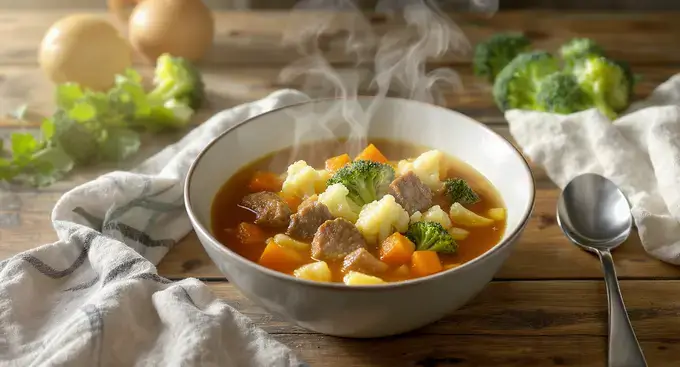
How to Calculate Net Carbs for Keto Soups
Keto vegetable beef soup requires careful attention to net carbs right from the start—it’s the foundation for making a true keto-friendly meal. The formula is straightforward: Net Carbs = Total Carbohydrates – Dietary Fiber. Because fiber passes through your digestive system without raising blood sugar, you subtract it from the total, leaving only the carbs that matter for ketosis.

Apply this to every vegetable going into your soup. One cup of raw cauliflower, for instance, has about 5 grams of total carbs and 2 grams of fiber—that’s 3 grams of net carbs. For the most reliable numbers, cross-reference ingredients using the USDA FoodData Central database rather than guessing.
Practical Application with Common Soup Veggies
Here’s how net carbs break down for typical ingredients in a keto vegetable beef soup:
- Cauliflower: ~5g total carbs, ~2g fiber = ~3g net carbs
- Broccoli: ~7g total carbs, ~2.6g fiber = ~4.4g net carbs
- Spinach: ~3.6g total carbs, ~2.2g fiber = ~1.4g net carbs
- Zucchini: ~3.1g total carbs, ~1g fiber = ~2.1g net carbs
- Green Bell Pepper: ~4.6g total carbs, ~1.7g fiber = ~2.9g net carbs
Cooking can shift water content slightly, but it doesn’t change the net carb calculation. That said, always read labels on packaged broths—some contain added sugars that raise total carbs without adding any fiber.
Determining Accurate Serving Sizes
Consistent tracking starts with consistent measuring. Weigh your raw vegetables before they go into the pot. If you’re cooking a large batch, calculate total net carbs for the entire recipe, then divide by the number of servings you’ll get out of it.
Measuring cups are convenient, but they’re less precise than a kitchen scale—the same cup can hold very different amounts depending on how loosely or tightly you pack it. For staying reliably within keto limits, a scale is your best tool. This level of accuracy is what ensures your keto vegetable beef soup genuinely supports your goals. For more help structuring low-carb meals, check out our guide to easy low carb weeknight dinners.
Is vegetable beef soup keto?
Yes—with the right approach. A traditional vegetable beef soup can absolutely be made keto-friendly by focusing on quality beef as your protein and loading the pot with low-carb, high-fiber vegetables like cauliflower, broccoli, and spinach. Calculate the net carbs per serving against your daily allowance and you’ll know exactly where it fits.
Essential Food Safety for Keto Beef Soup
Good food safety practices are what make a well-crafted keto vegetable beef soup a meal you can feel confident serving. Start with temperature. For ground beef, the USDA recommends cooking to an internal temperature of 160°F (71°C) to eliminate harmful bacteria. Source: USDA Food Safety Always use a food thermometer—color alone is not a reliable indicator of doneness.
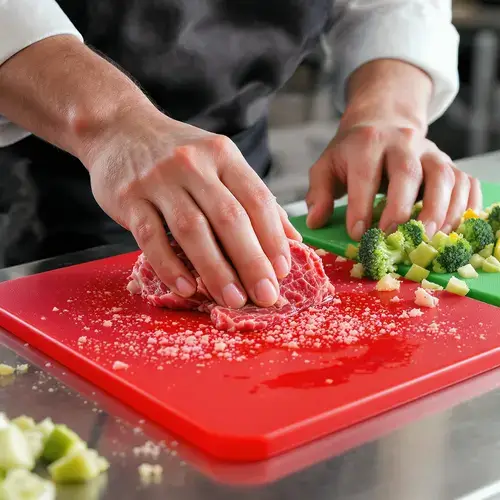
Cross-contamination is another area worth taking seriously. Use separate cutting boards and utensils for raw beef and your vegetables. A smart habit: prep your vegetables first, then handle the raw meat, washing all surfaces and your hands thoroughly with soap in between. Source: UK Food Standards Agency
Once the soup is cooked, how you cool and store it matters just as much. Bacteria multiply rapidly in the temperature danger zone—between 40°F and 140°F (4°C–60°C). To cool your keto beef soup safely, divide it into shallow containers no deeper than 2 inches and get it into the refrigerator within two hours of cooking. Source: ThermoWorks Food Safety
Label your containers with the date and plan to finish leftovers within 3–4 days. When reheating, bring the soup to a rolling boil—at least 165°F (74°C)—before serving. These habits are simple, but they make a real difference in keeping your soup both nutritious and safe.
What Makes a Soup Truly Keto-Friendly
A soup earns the “keto” label when it genuinely aligns with the diet’s core macronutrient principles: high fat, moderate protein, and very low carbohydrates—all working together to support ketosis.
Every ingredient in a keto vegetable beef soup should reinforce those ratios. Beef delivers essential amino acids and fits comfortably within a moderate protein target, while a rich bone broth base adds both fat and depth of flavor.
Vegetable selection is where many recipes go sideways. Leafy greens, cruciferous vegetables like broccoli and cauliflower, and other non-starchy options are your best choices—they bring fiber and nutrients without spiking blood sugar. Starchy vegetables like potatoes, corn, and carrots, on the other hand, can blow through your daily carb limit in a single serving.
A few other common ingredients are worth watching. Grains (pasta, rice, barley), legumes (beans, lentils), and root vegetables can quietly derail ketosis. Even sweet potatoes—often considered “healthy”—carry too many net carbs for a keto context. For thickening, skip the flour and cornstarch; xanthan gum or pureed cauliflower are far better options.
If you’re new to tracking this level of detail, our guide on how to track macros accurately is a useful starting point. And for practical meal planning beyond soup, easy low-carb weeknight dinners offers a variety of ideas worth bookmarking.
A truly keto soup isn’t just low in carbs—it’s deliberately built to support a specific metabolic outcome. That distinction, small as it sounds, is what separates a well-formulated recipe from one that just looks the part.
What is the most keto-friendly soup?
Soups built on a bone broth or stock base, with high-fat proteins like beef or chicken and low-net-carb vegetables like spinach, kale, and cauliflower, consistently top the list. Cream-based options—a keto cheeseburger soup or a broccoli cheddar made without flour—are also excellent choices, as long as no starchy thickeners sneak in.
How many carbs are in homemade vegetable beef soup?
It depends almost entirely on what you put in it. A keto version made with low-carb vegetables and no starchy thickeners can be quite low in net carbs per serving. The only reliable way to know is to calculate it yourself using the formula (Total Carbs – Fiber) for your specific recipe and ingredients.
Building Credibility with Clear Claims and Expertise
When writing about keto vegetable beef soup and the diet it supports, precision matters. Nutritional ketosis is a metabolic state where the body shifts to burning fat for fuel, producing ketones as an energy source when carbohydrate intake drops low enough. Source: Cleveland Clinic This is a distinct and very different condition from diabetic ketoacidosis, which is a dangerous medical emergency.
Any health claims you make should stay grounded in evidence. Research suggests that ketogenic diets may support weight management and improve certain metabolic markers for some people. Source: NCBI Bookshelf But saying a single bowl of soup “burns fat” would overstate what the science actual shows. A more honest framing: this soup is designed to fit within a low-carbohydrate, high-fat dietary pattern that some studies associate with specific metabolic benefits.
Demonstrating Author Expertise
Credibility also comes from transparency about who’s behind the advice. Whether that means formal nutrition education, keto coaching certifications, or years of hands-on recipe development, readers deserve to understand the basis of the guidance they’re following. Being upfront about your background—including its limits—builds more trust than vague authority claims.
Essential Disclaimers
Any content that involves meaningful dietary change needs a clear disclaimer. The ketogenic diet isn’t appropriate for everyone—it may not be suitable for people with certain medical conditions, those who are pregnant or breastfeeding, or individuals on specific medications. A responsible disclaimer makes it explicit that the content is for educational purposes only, not medical advice, and strongly encourages readers to consult a doctor or registered dietitian before making significant changes to how they eat. Source: Ketogenic.com
For practical support building a keto meal plan, our guide on how to follow a keto diet for weight loss is a solid next step. Earning your readers’ trust means citing reliable sources, being clear about what you know, and being equally clear about what falls outside your expertise.
Is vegetable soup good for a keto diet?
It can be—but the standard version usually isn’t. Most traditional vegetable soups include potatoes, carrots, corn, or beans, none of which are keto-friendly. A soup specifically designed for keto, using only low-net-carb vegetables like leafy greens, broccoli, and cauliflower, is a different story—it can be a genuinely nutritious and satisfying part of a ketogenic diet.