
Evidence for common ingredients and claims
Lean weight loss supplements are popular, but only a handful of ingredients have real science to support them. If you’ve ever wondered which “lean weight loss” supplements actually work and which are just marketing, you’re in the right place.
Disclosure: This article contains affiliate links. We may earn a commission at no extra cost to you.
Lean weight loss supplements often promise the world, but not all ingredients live up to the hype. Real evidence comes from human trials that test specific doses, show meaningful results, and disclose exactly what’s inside. Let’s break down the science behind the most common ingredients.
Key Ingredients: Evidence, Dosing, and Transparency
- Green Tea Extract (Catechins & Caffeine)
- Randomized trials show modest fat loss—typically 1–3 kg over 12 weeks—especially when paired with healthier eating habits.
- Effective doses range from 300 to 800 mg catechins per day, combined with moderate caffeine.
- Many supplements claim to be “clinically dosed” but fall short of these amounts. Always check the label.
- Source: NCBI
- Garcinia Cambogia (HCA)
- Studies show inconsistent results—often less than 1 kg difference compared to placebo after 8–12 weeks.
- Tested doses typically range from 1000 to 2800 mg HCA daily, taken before meals.
- Quality and dosage vary wildly across products, often missing the mark set by research.
- NIH Dietary Supplements for Weight Loss
- Glucomannan (Konjac Root Fiber)
- Backed by several controlled trials showing modest weight loss of 1–2 kg over 8–16 weeks.
- Effective doses hover around 3 grams per day, split into three doses before meals.
- Some supplements hit this target; others don’t. Look for clear labeling.
- Mayo Clinic Glucomannan Review
- Caffeine & Bitter Orange (Synephrine)
- May boost calorie burning by 3–11% short-term, though higher doses are usually required.
- Typical effective doses include 200–400 mg caffeine combined with 20–50 mg synephrine.
- Synephrine carries cardiovascular risks. Some countries restrict its use, so be cautious with stimulant blends that lack transparent labeling.
- NIH Facts: Weight Loss Supplements
Regulatory Safety Alerts
Weight loss supplements have been flagged by agencies like the FDA for containing hidden pharmaceuticals or unsafe stimulant levels. Check official updates regularly to steer clear of tainted or risky products.
FDA weight loss safety updates provide current warnings and recall information.
Marketing Claims versus Research Reality
- Verify whether “clinically dosed” ingredients actually match the amounts used in successful trials—for example, 500–800 mg catechins daily for green tea extract. Many products fall short.
- “Clinically tested” may refer to isolated ingredients studied in specific contexts, not the finished product itself—or at doses you can’t sustain long-term.
- Look for references to human trials with dose-matching and independent verification, not just animal or lab studies.
Limitations and Ingredient Synergy
Most lean weight loss supplements rely on low-dose or low-evidence components, so don’t expect dramatic results. Sustainable fat loss depends far more on consistent dietary habits than on isolated supplements.
Combining supplements with a well-structured eating plan—one that balances macros and calories—can improve outcomes. But remember: no pill replaces the fundamentals.
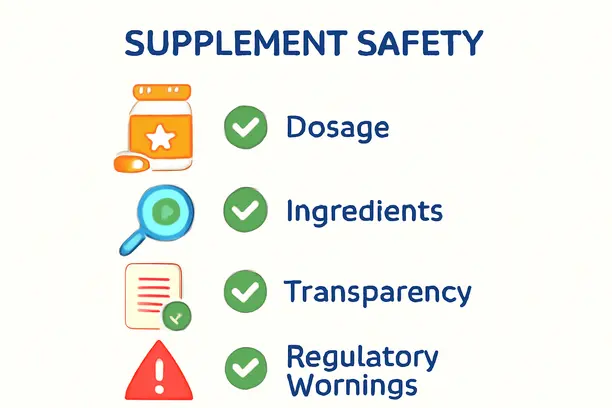
Supplement Transparency Checklist
- Are all active ingredients and their dosages clearly listed on the label?
- Do clinical claims cite randomized human trials using the same doses?
- Has the product undergone independent testing for contaminants or undisclosed drugs?
- Are there any regulatory warnings or safety flags?
For practical nutrition strategies that integrate evidence and transparency, see our guide on healthy and balanced diet plans for weight loss.
For those seeking a straightforward, supplement-free approach, consider the 14-Day Rapid Soup Diet, a whole-food meal plan designed for busy adults looking for simple, effective weight management without reliance on stimulants or unclear ingredients.
Safety, side effects, and who should avoid supplements
Lean weight loss supplements can seem like a shortcut, but not everyone responds the same way—and some ingredients carry real risks. Understanding potential side effects and knowing who should steer clear can help you make safer choices.
- Caffeine: Often used to boost metabolism and energy. Common side effects include jitteriness, increased heart rate, anxiety, insomnia, and digestive upset. Serious reactions are rare at recommended intakes but rise with excessive consumption or when stacking multiple stimulants.
- Green Tea Extract (EGCG): Generally well-tolerated, but high doses may cause headaches, nausea, or dizziness. Rare cases of liver injury have been linked to concentrated extracts.
- Bitter Orange (Synephrine): Has stimulant effects that can raise blood pressure and heart rate, potentially triggering chest pain or arrhythmias—especially risky for those with cardiovascular issues or when combined with other stimulants. Source: NIH
- Garcinia Cambogia: May cause digestive upset, headaches, or dizziness. Its long-term safety remains unclear.
- Conjugated Linoleic Acid (CLA): Possible side effects include stomach discomfort and, with extended use, increased liver fat or insulin resistance in some cases.
- Glucomannan and Fibers: Typically cause mild bloating or gas if not introduced gradually or when insufficient fluids are consumed. Source: NCCIH
If you’re considering alternative approaches like the 14-Day Rapid Soup Diet, you’ll likely experience fewer side effects since it emphasizes whole foods and moderate fiber increases. That said, some people may still notice digestive changes or water retention. The diet provides structured, low-risk fat loss support 14-Day Rapid Soup Diet plan.
Who Should Avoid Weight Loss Supplements?
- Pregnant or breastfeeding individuals: Safety of most supplements is untested, with some posing risks to fetal or infant development.
- Those with heart disease or hypertension: Stimulants like caffeine and synephrine may worsen blood pressure and arrhythmia risk.
- People with diabetes: Certain ingredients may interfere with blood sugar control or medication efficacy.
- Individuals with a history of eating disorders: Appetite suppressants or severe calorie restriction may worsen unhealthy patterns.
- Those on SSRIs, blood thinners, or MAOIs: Supplements like green tea extract can interact adversely with medications such as warfarin; stimulants may conflict with antidepressants. Source: FDA
Safety Checklist for Using Supplements
- Consult your healthcare provider before starting new supplements, especially if you have health conditions or take prescription drugs.
- Start with the lowest recommended dose, increasing only if no adverse reactions occur after several days.
- Introduce one supplement at a time to identify potential side effects accurately.
- Avoid combining multiple stimulants or unproven proprietary blends with undisclosed ingredients.
- Watch for warning signs such as rapid pulse, chest pain, high anxiety, dark urine, or jaundice. Stop use immediately and seek medical care if these appear.
Monitoring and Knowing When to Stop
Keep a daily symptom and supplement log noting energy, mood, digestion, heart rate, and sleep. If moderate side effects occur—like persistent headaches, GI discomfort, or anxiety—pause use for 2–3 days, then restart at a lower dose or switch products.
Discontinue immediately and seek emergency care for severe symptoms like chest pain, fainting, severe breathlessness, or jaundice.
Using a cautious, science-informed approach reduces risks. Combining supplement use with dietary and lifestyle changes—like those in the 14-Day Rapid Soup Diet—offers safer, sustainable results.
If you’re uncertain about a supplement’s suitability, consult evidence-based internal resources on maintaining a calorie deficit here or explore options like berberine for weight management here.
If you want a low-risk, no-supplement option that fits busy days, the Rapid Soup Detox system gives you a done-for-you meal plan with no stimulants or complicated prep.
Exercise guidance to preserve lean mass during weight loss
Maintaining muscle mass during weight loss is crucial, and resistance training is the cornerstone. When you’re in a calorie deficit, your body can break down muscle for fuel—but lifting weights signals it to preserve lean tissue while burning fat instead.
Research shows that without resistance exercise, up to 20–30% of lost weight may be muscle, which slows metabolism and hampers long-term success Source: NCBI.
Fortunately, moderate resistance training 2–4 times per week targeting major muscle groups—legs, back, chest, shoulders, arms—helps protect muscle effectively. Aim for 2–4 sets of 6–12 repetitions per exercise, a range that’s optimal for retention and strength Source: American College of Sports Medicine.
Weekly Training Structuring Options
- Full-body workouts twice or thrice weekly are ideal for beginners or tight schedules. Exercises like squats, push-ups, rows, and presses cover multiple muscles efficiently.
- Upper/lower body splits four days a week divide training for better recovery—for example, Mon/Thu upper body, Tue/Fri lower body.
- Push/pull/legs split suits those training 3+ days per week, allowing focused work on muscle groups with flexibility. You’ll find practical routines in our push-pull workout guide.
Regardless of format, target each muscle group twice weekly and apply progressive overload—gradually increasing weight, reps, or sets—to avoid plateaus and sustain muscle growth.
Protein intake complements resistance work. Aim for 1.6–2.2 grams per kilogram of body weight daily to limit muscle loss during calorie deficits. Explore tailored meal plans supporting this in our weight loss diet plans with gym routines.
While some muscle loss is inevitable with fat loss, the right combination of training and nutrition usually limits it to under 10–15% of total weight lost Source: NCBI.
For a simpler approach that complements resistance training—or offers alternatives for lower-intensity fat loss—consider the soup-based 14-Day Rapid Soup Diet, designed for adults seeking practical, tasty meals that support fat loss without heavy gym time.
Combining resistance workouts with thoughtful nutrition is essential for preserving muscle and achieving sustainable changes in strength and body composition. The Rapid Soup Detox plan may serve as a complementary tool in your regimen.
Practical meal plans, macros, and sample days
Personalizing your macronutrient intake is key to sustainable lean weight loss. Protein plays the biggest role in preserving muscle during dieting—most adults benefit from 1.6–2.2 grams of protein per kilogram of body weight per day, especially those over 40 or with high training volumes Source: Journal of the International Society of Sports Nutrition.
You’ll adjust carbohydrates and fats around this protein target according to your activity level.
Macro Guidelines by Activity Level
- Sedentary: 1.6 g protein/kg; balance calories with non-starchy vegetables, moderate healthy fats, and low-to-moderate carbohydrates.
- Moderately active: 1.8–2 g protein/kg; emphasize carbohydrates around training sessions and maintain moderate fats.
- Highly active: 2–2.2 g protein/kg; increase carbohydrates for energy, lower fats moderately to accommodate calorie needs.
Calorie targets start by estimating maintenance—for example, weight in kg × 22–24 for men, 20–22 for women—and subtracting 300–500 kcal to achieve a safe deficit. Protein stays high, fats rarely drop below 0.8 g/kg, and remaining calories fill with carbohydrates.
Sample Meal Plans
- Sedentary Day
- Breakfast: Greek yogurt with berries and chia seeds.
- Lunch: Grilled chicken salad with mixed greens and olive oil vinaigrette.
- Snack: Carrot sticks with hummus.
- Dinner: Baked white fish, steamed broccoli, and quinoa.
- Moderately Active Day
- Breakfast: Scrambled eggs with spinach and feta; whole grain toast.
- Lunch: Turkey and vegetable stir-fry over brown rice.
- Snack: Protein shake and apple.
- Dinner: Shrimp tacos with cabbage slaw and avocado.
- Highly Active Day
- Breakfast: Oatmeal with milk, banana, and whey protein.
- Lunch: Chicken breast, roasted sweet potatoes, green beans.
- Snack: Low-fat cottage cheese with pineapple and mixed nuts.
- Dinner: Lentil and vegetable soup, grilled salmon, brown rice.
FAQ: Lean Weight Loss Essentials
How quickly can I expect to see results with lean weight loss methods?
Most people see noticeable changes in body composition in 2–4 weeks with a consistent regimen of calorie control, higher protein, and resistance training. Sustainable fat loss is typically 0.5–1 kg (1–2 lbs) per week, with smaller, steady changes being healthier and longer-lasting.
Can I achieve lean weight loss without supplements?
Yes. The foundation for lean weight loss is a modest calorie deficit, high protein intake, and regular exercise, especially resistance training. Supplements are optional and provide only marginal benefits compared to a solid food and training plan.
What’s the best way to stay motivated for continued fat loss?
Setting realistic, short-term goals and monitoring progress through body measurements or strength gains can keep you motivated. Social support, varying workouts, and enjoying your meals also help maintain enthusiasm. For more tips, see our article on getting motivated for the gym.