

What is Sprint Interval Training (SIT)? Clear definition and scope
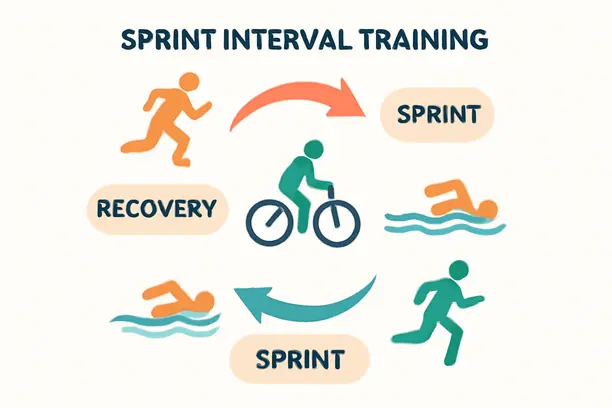
Sit training, or Sprint Interval Training (SIT), is a high-intensity exercise method built around very short bursts of near-maximal effort—typically 30 seconds or less—followed by extended periods of low-intensity recovery. You can do it running, cycling, rowing, or swimming. The defining feature? You’re going all-out during those work phases.
SIT sessions alternate between these intense sprint intervals and recovery periods, commonly using work-to-rest ratios anywhere from 1:3 to 1:6. So a 20-second sprint might be followed by one to two minutes of easy movement or complete rest. Those recovery intervals aren’t filler—they’re crucial for safety and for helping you maintain maximum effort during each sprint round Source: National Institutes of Health.
Unlike traditional high-intensity interval training (HIIT), which often involves longer work intervals at a slightly lower intensity, SIT focuses on fewer, shorter, and more intense sprints. This often results in efficient conditioning completed in less total workout time.
SIT is generally suitable for healthy adults who exercise regularly and don’t have recent cardiac events or significant mobility issues. If you’re new to vigorous exercise or have medical concerns, it’s smart to consult a healthcare professional and review safety guidelines before attempting SIT Source: American College of Sports Medicine.
For those starting new exercise routines, practical guidance is available on quick and easy exercise introductions.
How SIT works: mechanisms, timelines and evidence clarity
Sprint Interval Training triggers adaptations by aggressively challenging your body with brief, maximal effort bursts followed by recovery. Physiologically, it rapidly stimulates mitochondrial growth, increases oxidative enzyme activity, and enhances anaerobic power. These changes often translate into performance improvements within two to six weeks, particularly in untrained individuals.
Studies show that enzyme markers like citrate synthase and indicators of mitochondrial biogenesis increase significantly after just a few SIT sessions in sedentary adults. That’s the efficiency of this training method for beginners laid bare Source: Journal of Applied Physiology.
Adaptation rates vary by individual. Novices often see sharp gains in aerobic capacity and metabolic health, while trained athletes experience more subtle improvements, usually requiring more personalized SIT protocols and longer training blocks for measurable progress.
Training modality also influences adaptations. For instance, running-based SIT promotes improvements in movement economy and muscle recruitment that differ from cycling-based SIT Source: ACSM.
Key findings from recent research include:
- Untrained adults (cycling SIT): Typically gain VO2max, mitochondrial function, and enzyme activity after three to six sessions within two weeks. Protocols often involve four to six all-out 30-second sprints with four-minute recovery periods.
- Trained athletes: Improvements occur mainly in anaerobic power and high-speed endurance, needing tailored program design and longer durations.
- Modality differences: Running and cycling both enhance aerobic and anaerobic fitness, but running-based SIT may transfer better to other weight-bearing sports.
Consistently, SIT improves VO2max, time-trial performance, and oxidative enzyme levels. Most evidence shows significant benefits for recreational exercisers within less than a month, though elite athletes require more specific testing and prolonged training to confirm gains Source: British Journal of Sports Medicine.
For those interested in complementary short-duration workouts, see efficient exercise routines that pair well with SIT.
Safety, screening and population-specific guidance
Before starting SIT, complete a pre-exercise screening to identify potential risks. If you’ve had a recent heart attack, unstable angina, uncontrolled hypertension, or severe lung disease, you’ll need medical clearance before attempting SIT. Chronic cardiovascular or metabolic conditions and high-risk symptoms also warrant clinical evaluation and supervision Source: CDC Physical Activity Readiness Checklist.
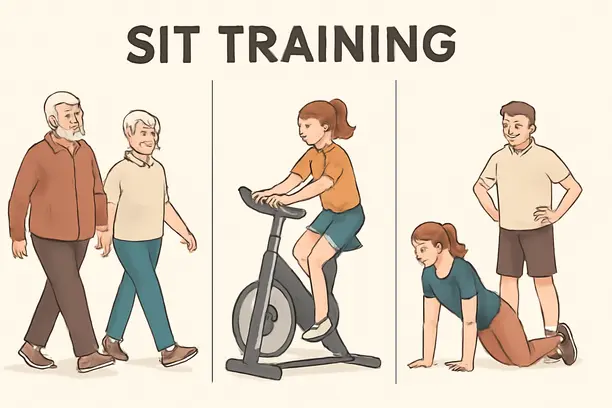
If you’re cleared, begin with submaximal intervals—shorter, less intense efforts with generous rest periods. Gradual progressions are vital. Don’t proceed to all-out sprints until you’re symptom-free after multiple sessions. Stop training and consult a medical professional if you experience dizziness, chest pain, or unusual breathlessness.
- Beginners or deconditioned individuals: Start with 10-second intervals at roughly 70% effort, with 60 to 90 seconds rest. Brisk walking intervals may serve as a safer introductory option.
- Older adults (especially women 40+): Emphasize longer warm-ups and moderate intensities such as incline walking or gentle cycling. Pay attention to joint health and routine medical check-ups, especially over age 50 or with cardiovascular risk factors Source: British Heart Foundation.
- Adolescents: Healthy teens may tolerate SIT sessions of 10 to 15 seconds maximal effort, but supervision and focus on proper technique are essential to reduce injury risk. Avoid SIT in those under medical evaluation for heart or respiratory conditions Source: NPR.
- Individuals with chronic conditions: Consult healthcare providers before attempting SIT. Safer alternatives include low-impact interval walking, chair-based exercises, or aquatic sprints, especially for those with mobility or balance concerns.
Low-impact substitutes such as gentle interval workouts and chair-based programs for seniors or limited mobility preserve benefits while reducing joint stress.
Regularly reassess readiness and adapt plans in response to health changes. A progressive, individualized approach under medical guidance ensures safe inclusion of Sprint Interval Training for all populations.
Programming and measurement: intensity, recovery and modality adjustments
Measuring intensity in SIT extends beyond simple heart rate or duration tracking. Since sprints are maximal efforts, perceived exertion scales emphasizing “maximum effort” provide more reliable guidance. Fatigue indicators—like a 10 to 15 percent decline in sprint speed—signal when to stop a set, rather than relying solely on heart rate, which can lag during brief bouts.
SIT programming varies with experience. Beginners often start with one weekly session, like four 20-second all-out sprints with two to four minutes full rest. Intermediate and advanced athletes may progress to two weekly sessions, performing six to eight 30-second sprints.
Incorporating periodic “de-load” weeks every four to six weeks helps prevent overtraining and injury Source: Journal of Applied Physiology. Monitoring mental and physical fatigue is essential. If recovery is impaired, reduce sprint volume or session frequency until recuperation improves.
Modality-specific considerations include:
- Running: Use flat, consistent surfaces with supportive footwear. Avoid sudden directional changes. Hill sprints reduce joint impact but increase calf strain. Ensure a safe, obstacle-free environment.
- Cycling: Employ moderate-to-high gears with cadence between 90 and 110 rpm during sprints. Adequate warm-up protects knees and hips.
- Rowing: Emphasize powerful leg drive with stroke rates of 36 to 42 strokes per minute. Maintain proper form to minimize back strain.
For individuals with orthopedic concerns, older adults, or those recovering from injury, reduce work interval length, choose lower-impact modalities (cycling, rowing), and extend recovery periods to maintain intensity safely.
What is an example of sit training?
A typical SIT example includes four to six all-out sprints of 20 to 30 seconds each, interspersed with two to four minutes of low-intensity recovery. You can do this on a bike, treadmill, or with bodyweight exercises depending on your preference and training goals.
How is SIT different from HIIT?
SIT involves shorter, maximal-effort sprints with longer recovery periods, focusing on utmost intensity in brief bursts. HIIT workouts usually have longer work intervals at submaximal efforts and relatively shorter rest, emphasizing sustained high intensity rather than absolute all-out sprints.
Sample SIT protocols: 7-minute workouts, weekly microcycles, and sport-specific plans
Bodyweight SIT in Seven Minutes
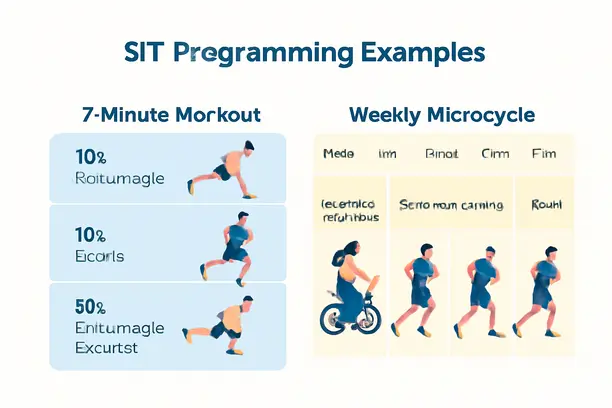
If you’re pressed for time, a seven-minute bodyweight SIT session offers a potent metabolic stimulus. After a short warm-up, alternate 20 seconds of all-out movements—squat jumps, burpees, or high knees—with one minute of walking or rest. Repeat this cycle six times for a total duration around seven minutes. Performing two weekly sessions at this volume helps maintain fitness during busy schedules.
Classic Cycling (or Cardio) SIT Protocol
This widely studied SIT format involves six sets of 20-second maximal sprints on a stationary bike, spin bike, or treadmill, followed by two to four minutes of slow pedaling or walking to recover fully. While cycling-focused, it adapts well for running, swimming, or rowing.
One to two weekly sessions yield significant aerobic and anaerobic improvements, including increased VO2max and speed Source: National Institutes of Health.
Repeat-Sprint SIT for Team Sports
For athletes in sports like soccer, basketball, or hockey, repeat-sprint protocols simulate game demands. Try eight to ten sprints lasting seven to ten seconds, each separated by up to 60 seconds of light jogging or rest. Conduct these sessions once or twice weekly during the season to maintain speed and repeat-sprint ability, matching the stop-start nature of these sports British Journal of Sports Medicine.
Weekly Microcycle Templates
- In-Season Maintenance: One SIT session midweek, with lower-intensity skill work and recovery on other days. Allow at least 48 hours before competition to avoid fatigue.
- Off-Season Progression: Two SIT workouts per week (e.g., Monday and Thursday), interspersed with easy aerobic or skill-focused sessions. Include at least one full rest day weekly.
Spacing SIT sessions by at least 48 hours supports optimal adaptation and recovery.
Pickleball SIT Mini-Plan
Pickleball players can customize SIT by performing six to eight all-out sprints lasting eight to 15 seconds, with 60 to 90 seconds of walking rest. The sprint duration and movement should reflect common rally lengths and court positioning to enhance transfer.
Incorporate this protocol once weekly on practice or cross-training days. Track progress via fatigue time, recovery heart rate, or improvements in rally endurance for meaningful on-court performance gains.
To maintain motivation for routines like these, consult our tips on how to get more motivated for the gym.
What is the 7 minute SIT workout?
The 7-minute SIT workout involves six cycles of 20 seconds of all-out bodyweight exercises—like burpees or squat jumps—followed by one minute of walking or rest. This short but intense format is designed for efficient fitness gains when time is limited.
Does the SIT 7 minute workout really work?
Yes, research supports that even brief SIT sessions like the 7-minute protocol can improve aerobic and anaerobic fitness markers for many individuals, especially beginners or those pressed for time. Consistency and maximal effort during sprints are key to obtaining benefits.
Sources
- British Journal of Sports Medicine – Sprint Interval Training and Endurance Adaptations
- British Journal of Sports Medicine – Repeat Sprint Training for Team Sports
- American College of Sports Medicine – Sprint Interval Training
- British Heart Foundation – Safe Exercise for Older Adults
- Centers for Disease Control and Prevention – Physical Activity Readiness Checklist
- ACSM – Adaptation to Sprint Interval Training
- Journal of Applied Physiology – Sprint Interval Training Programming
- Journal of Applied Physiology – Early Mitochondrial Adaptations to SIT
- National Institutes of Health – Cycling SIT Protocols
- National Institutes of Health – Importance of Recovery in SIT
- NPR – Adolescent Responses to SIT