
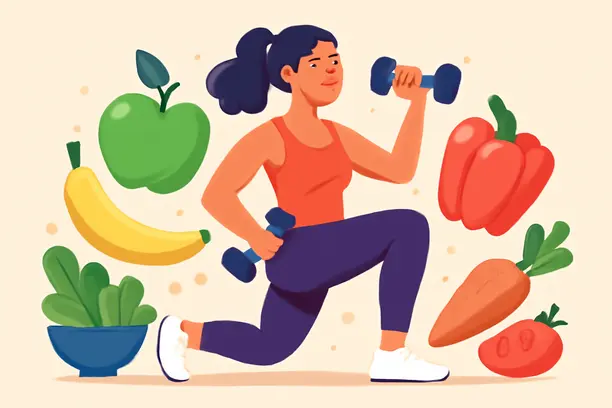
How fat loss differs from weight loss: science and measurement
Workout and diet plan women need to focus on fat loss rather than just weight loss, because true progress is about reducing body fat—not just watching the scale fluctuate. Successfully targeting fat loss means better energy, lasting results, and visible changes in how you look and feel.
Disclosure: This article contains affiliate links. We may earn a commission at no extra cost to you.
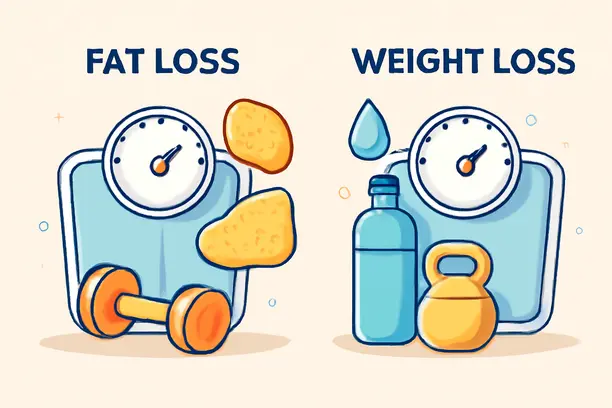
Fat loss and weight loss might sound like the same thing, but they’re actually pretty different. Weight loss means your total body weight goes down—and that could be from losing fat, muscle, water, or even bone density.
Fat loss, on the other hand, zeroes in on reducing body fat stores. That’s the change you’ll feel in your energy levels, see in the mirror, and appreciate in how your clothes fit.
The engine behind weight loss is energy balance—the gap between calories you eat and calories you burn. But where that weight comes from? That depends on how you eat, how you train, and how well you sleep and manage stress.
Dietary protein, resistance training, hormones, sleep quality, and even daily stress all shape whether you’re losing fat, muscle, or just water.
Early on, you might see the scale drop fast. That’s exciting, but it’s usually water and glycogen—not fat. Cut carbs, and your body flushes out stored glycogen along with the water it holds. The number drops quickly, but it’s temporary.
- Water and Glycogen Loss: Quick weight swings after changing your diet are normal. They’re not fat loss—they’re your body adjusting to new fuel sources.
- Muscle Gain or Loss: Lift weights regularly, and you’ll hold onto (or even build) muscle. Since muscle is denser than fat, the scale might not budge much—but your body composition improves dramatically.
- Actual Fat Loss: Real fat loss is slow and steady. It takes weeks or months, and progress isn’t always linear. Some weeks you’ll lose, some weeks you’ll maintain, and that’s completely normal.
If you’re a woman, hormonal cycles and water retention can make the scale swing wildly from week to week. Relying on the scale alone? That’s a recipe for frustration.
Instead, combine methods. Track your waist measurement, notice how your jeans fit, and take monthly progress photos. Together, these give you a much clearer picture of what’s actually happening.
When it comes to measuring body composition, you’ve got options—each with strengths and trade-offs:
- DEXA scans: The gold standard. They map out fat, muscle, and bone with roughly 2% error. The downside? They’re expensive and not practical for weekly check-ins.
- Skinfold calipers: Cheap and repeatable if you (or your trainer) use them the same way every time. Expect 3–5% error depending on who’s pinching.
- Bioelectrical Impedance Analysis (BIA): Common in bathroom scales. Accuracy varies wildly based on hydration, time of day, and device quality. Higher-end models backed by research can be surprisingly accurate.
- Waist circumference: Dead simple and directly tied to abdominal fat. Just remember there’s about a ±1–2 cm margin of error depending on how tightly you pull the tape.
- Progress photos and strength benchmarks: Visual proof and performance gains often reveal changes the scale won’t show. Can you do more push-ups? Lift heavier? That’s progress.
No single metric tells the whole story. Use a few at once, and you’ll get a more honest view of what’s working.
Sustainable fat loss isn’t a sprint—it’s a marathon. You’ll need patience, especially when the scale stalls or even climbs for a week or two.
One more thing: spot reduction is a myth. You can’t target fat loss in specific areas by doing endless crunches or tricep dips.
Fat cells release stored energy systemically in response to an overall calorie deficit—not because you worked that specific muscle. Genetics determine where you lose fat first and where it hangs on longest.
The solution? Combine smart nutrition with full-body resistance training and regular cardio. Fat loss happens across your whole body, and eventually, it’ll come off the stubborn spots too.
Spot exercises strengthen muscles, but they don’t burn the fat sitting on top of them. Think of it this way: you can’t out-crunch a bad diet, and you can’t crunch away belly fat faster than your genetics allow.
For best results, track at least two types of measurements—like weight and waist circumference. Add monthly progress photos and note your strength improvements in the gym.
Learning to read these signals helps you avoid frustration and keeps you moving toward sustainable, evidence-based fat loss.
Jumpstart your results with this expert-approved women’s fitness plan
Programming & progression: safe progress, deloads and injury prevention
If you’ve ever wondered how to keep making progress without risking burnout or injury, you’re in the right place. Smart programming is your secret weapon for steady results.
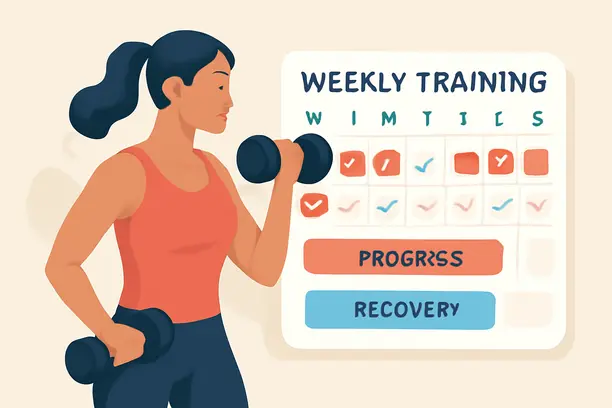
Safe, effective progress doesn’t happen by accident. It requires structured programming, gradual increases, and real attention to recovery.
Women following a workout and diet plan benefit most when progression is thoughtful—pushing hard enough to improve, but not so hard that you break down or burn out.
Here’s a straightforward 4-week progression template to guide your training:
- Week 1: Start with manageable weights or bodyweight movements. Master your form. Aim for 2–3 sets of 8–12 reps per exercise.
- Weeks 2–3: Progress by either increasing weight moderately (2–5% for upper body, 5–10% for lower body) or adding an extra set—not both at once. If you hit the top of your rep range with solid form, bump up the load next session.
- Week 4: Time for a deload. Cut your weight by 10–20%, or drop your sets in half. This lets your body recover and adapt, which actually prevents injury and keeps you moving forward long-term.
The “two for two” rule is handy: if you knock out two extra reps beyond your target for two sessions in a row, it’s safe to increase the difficulty next time.
Knowing when to deload is just as important as knowing when to push. Watch for these signs:
- Persistent soreness that doesn’t fade
- Lifts that stall or regress
- Poor sleep, loss of motivation, or mood swings
- Elevated resting heart rate or nagging joint pain
These are your body’s way of asking for a lighter week.
How fat loss differs from weight loss: science and measurement
Workout and diet plan women need to focus on fat loss rather than just weight loss, because true progress is about reducing body fat—not just watching the scale fluctuate. Successfully targeting fat loss means better energy, lasting results, and visible changes in how you look and feel.
Disclosure: This article contains affiliate links. We may earn a commission at no extra cost to you.
Fat loss and weight loss might sound like the same thing, but they’re actually pretty different. Weight loss means your total body weight goes down—and that could be from losing fat, muscle, water, or even bone density.
Fat loss, on the other hand, zeroes in on reducing body fat stores. That’s the change you’ll feel in your energy levels, see in the mirror, and appreciate in how your clothes fit.
The engine behind weight loss is energy balance—the gap between calories you eat and calories you burn. But where that weight comes from? That depends on how you eat, how you train, and how well you sleep and manage stress.
Dietary protein, resistance training, hormones, sleep quality, and even daily stress all shape whether you’re losing fat, muscle, or just water.
Early on, you might see the scale drop fast. That’s exciting, but it’s usually water and glycogen—not fat. Cut carbs, and your body flushes out stored glycogen along with the water it holds. The number drops quickly, but it’s temporary.
- Water and Glycogen Loss: Quick weight swings after changing your diet are normal. They’re not fat loss—they’re your body adjusting to new fuel sources.
- Muscle Gain or Loss: Lift weights regularly, and you’ll hold onto (or even build) muscle. Since muscle is denser than fat, the scale might not budge much—but your body composition improves dramatically.
- Actual Fat Loss: Real fat loss is slow and steady. It takes weeks or months, and progress isn’t always linear. Some weeks you’ll lose, some weeks you’ll maintain, and that’s completely normal.
If you’re a woman, hormonal cycles and water retention can make the scale swing wildly from week to week. Relying on the scale alone? That’s a recipe for frustration.
Instead, combine methods. Track your waist measurement, notice how your jeans fit, and take monthly progress photos. Together, these give you a much clearer picture of what’s actually happening.
When it comes to measuring body composition, you’ve got options—each with strengths and trade-offs:
- DEXA scans: The gold standard. They map out fat, muscle, and bone with roughly 2% error. The downside? They’re expensive and not practical for weekly check-ins.
- Skinfold calipers: Cheap and repeatable if you (or your trainer) use them the same way every time. Expect 3–5% error depending on who’s pinching.
- Bioelectrical Impedance Analysis (BIA): Common in bathroom scales. Accuracy varies wildly based on hydration, time of day, and device quality. Higher-end models backed by research can be surprisingly accurate.
- Waist circumference: Dead simple and directly tied to abdominal fat. Just remember there’s about a ±1–2 cm margin of error depending on how tightly you pull the tape.
- Progress photos and strength benchmarks: Visual proof and performance gains often reveal changes the scale won’t show. Can you do more push-ups? Lift heavier? That’s progress.
No single metric tells the whole story. Use a few at once, and you’ll get a more honest view of what’s working.
Sustainable fat loss isn’t a sprint—it’s a marathon. You’ll need patience, especially when the scale stalls or even climbs for a week or two.
One more thing: spot reduction is a myth. You can’t target fat loss in specific areas by doing endless crunches or tricep dips.
Fat cells release stored energy systemically in response to an overall calorie deficit—not because you worked that specific muscle. Genetics determine where you lose fat first and where it hangs on longest.
The solution? Combine smart nutrition with full-body resistance training and regular cardio. Fat loss happens across your whole body, and eventually, it’ll come off the stubborn spots too.
Spot exercises strengthen muscles, but they don’t burn the fat sitting on top of them. Think of it this way: you can’t out-crunch a bad diet, and you can’t crunch away belly fat faster than your genetics allow.
For best results, track at least two types of measurements—like weight and waist circumference. Add monthly progress photos and note your strength improvements in the gym.
Learning to read these signals helps you avoid frustration and keeps you moving toward sustainable, evidence-based fat loss.
Jumpstart your results with this expert-approved women’s fitness plan
Programming & progression: safe progress, deloads and injury prevention
If you’ve ever wondered how to keep making progress without risking burnout or injury, you’re in the right place. Smart programming is your secret weapon for steady results.
Safe, effective progress doesn’t happen by accident. It requires structured programming, gradual increases, and real attention to recovery.
Women following a workout and diet plan benefit most when progression is thoughtful—pushing hard enough to improve, but not so hard that you break down or burn out.
Here’s a straightforward 4-week progression template to guide your training:
- Week 1: Start with manageable weights or bodyweight movements. Master your form. Aim for 2–3 sets of 8–12 reps per exercise.
- Weeks 2–3: Progress by either increasing weight moderately (2–5% for upper body, 5–10% for lower body) or adding an extra set—not both at once. If you hit the top of your rep range with solid form, bump up the load next session.
- Week 4: Time for a deload. Cut your weight by 10–20%, or drop your sets in half. This lets your body recover and adapt, which actually prevents injury and keeps you moving forward long-term.
The “two for two” rule is handy: if you knock out two extra reps beyond your target for two sessions in a row, it’s safe to increase the difficulty next time.
Knowing when to deload is just as important as knowing when to push. Watch for these signs:
- Persistent soreness that doesn’t fade
- Lifts that stall or regress
- Poor sleep, loss of motivation, or mood swings
- Elevated resting heart rate or nagging joint pain
These are your body’s way of asking for a lighter week.
Rows benefit from focusing on scapular control—pull your shoulder blades together as you row. Move smoothly, and use resistance bands or lighter weights if you’re still learning the pattern.
Always prioritize a neutral spine, controlled motion, and breathing through the movement. Never hold your breath.
If your form starts to break down, regress to an easier variation. There’s no shame in that—you’re still building strength the right way.
Stay consistent and listen to your body. The best results come from balancing smart training intensity with proactive recovery and steady progression.
See results faster with a proven progressive program for women
Check This