
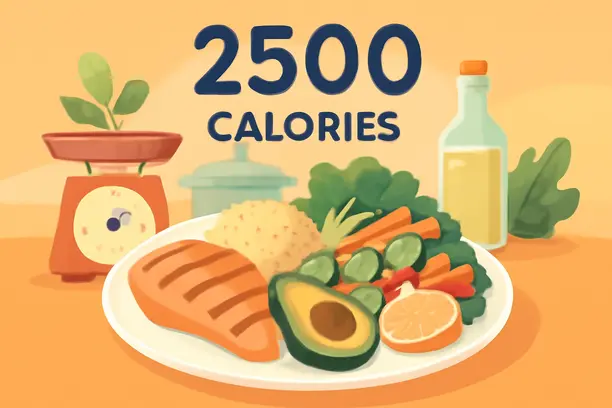
Standardized macronutrient framework for 2,500 kcal
2500 calorie meal plan design starts with knowing your macros in grams—not just percentages. Protein and carbs each deliver 4 calories per gram, while fat packs 9 calories per gram. Here’s the quick math to convert percentages into real numbers:
- Protein grams = (Desired % × 2500) ÷ 4 × 0.01
- Carb grams = (Desired % × 2500) ÷ 4 × 0.01
- Fat grams = (Desired % × 2500) ÷ 9 × 0.01
Below are three common macro splits, each with precise gram targets for 2,500 calories, matched to different goals:
- Balanced Maintenance (30% Protein, 40% Carbs, 30% Fat):
Protein: 188g | Carbs: 250g | Fat: 83g.
Perfect if you’re maintaining weight, prioritizing steady energy, and keeping things simple. - Performance (25% Protein, 55% Carbs, 20% Fat):
Protein: 156g | Carbs: 344g | Fat: 56g.
Designed for athletes or active folks who need extra fuel and fast recovery. - Fat Loss (35% Protein, 30% Carbs, 35% Fat):
Protein: 219g | Carbs: 188g | Fat: 97g.
Higher protein keeps you full longer and helps preserve muscle while you’re in a calorie deficit.
Pick the split that fits your lifestyle and how your body responds. Consistency matters more than hitting every gram perfectly every single day.
For hands-on advice, check out our guides on customizing macros for weight loss and how to divide macros into meals. Official energy and nutrient recommendations can be found at the USDA Dietary Reference Intakes.
Tiered protein targets (sedentary → hypertrophy) and math
How Much Protein Do You Really Need? Tiered Targets by Goal
Protein needs aren’t one-size-fits-all—they shift depending on how active you are and what you’re working toward. Here’s a simple breakdown based on your body weight in kilograms:
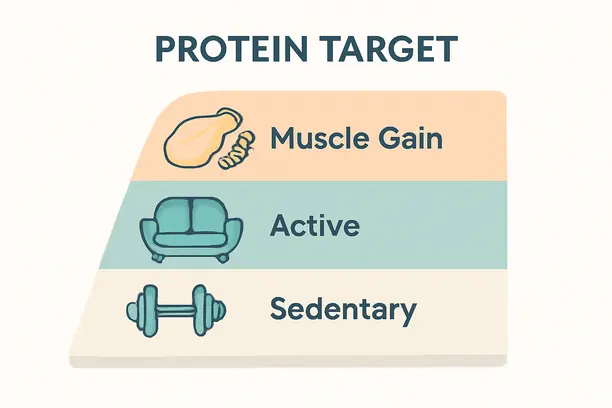
- General health (sedentary/non-athlete): 0.8g per kg (about 0.36g per lb) daily.
- Active, health-focused: 1.2–1.6g/kg (0.54–0.73g/lb) keeps you going without pushing for muscle growth.
- Muscle gain/hypertrophy: 1.6–2.2g/kg (0.73–1g/lb) maximizes muscle protein synthesis and recovery from resistance training.
Let’s say you weigh 70 kg (154 lb). Depending on your goal, you’d aim for:
- 56g protein/day for basic health
- 84–112g for an active lifestyle
- 112–154g for muscle building
If you’re heavier or lighter, just multiply your weight by the number that fits your goal. A 90 kg (198 lb) lifter chasing hypertrophy? You’d target roughly 144–198g daily.
Most 2,500 calorie meal plans deliver 100–160g protein per day—solid for moderate activity and the lower end of muscle-building needs. Want to bump up protein without adding calories? Swap in lean proteins like chicken, fish, Greek yogurt, or tofu to replace some carbs or fats. Our healthy meal tips offer practical swap ideas.
Spreading protein evenly across meals optimizes muscle synthesis and keeps hunger in check. Research suggests aiming for 25–40g protein per meal over 3–5 meals daily Source: NCBI.
So if your daily target is 130g, roughly 33g per meal does the trick.
To adjust protein without changing total calories, replace starches or fatty items with lean protein, or add a small serving of protein powder. Need less protein? Dial back portions a bit and balance your plate with vegetables or whole grains. More on this in our macro meal planning guide.
Calculate and adjust calories: BMR → TDEE → weekly plan
To make a 2,500 calorie meal plan work for you, start by estimating your Basal Metabolic Rate (BMR)—the calories your body burns just to keep the lights on. The Mifflin-St Jeor equation is a solid choice:
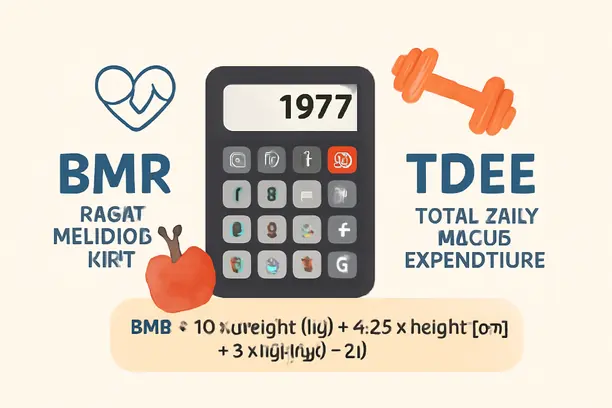
- Men: BMR = 10 × weight (kg) + 6.25 × height (cm) − 5 × age (years) + 5
- Women: BMR = 10 × weight (kg) + 6.25 × height (cm) − 5 × age (years) − 161
Next, adjust BMR using your activity level multiplier:
- Sedentary (little or no exercise): 1.2
- Lightly active (light exercise 1–3 days/week): 1.375
- Moderately active (moderate exercise 3–5 days/week): 1.55
- Very active (hard exercise 6–7 days/week): 1.725–1.9
Multiply your BMR by the activity factor, and you’ve got your Total Daily Energy Expenditure (TDEE)—the calories you burn in a day.
Set your daily calorie target based on your goal:
- Maintain weight: Eat at your TDEE.
- Fat loss: Subtract 300–500 calories for a safe deficit.
- Muscle gain: Add 200–300 calories to support growth.
Here’s a quick example: A 35-year-old man weighing 75 kg and 175 cm tall with moderate activity would calculate:
- BMR = 10 × 75 + 6.25 × 175 − 5 × 35 + 5 = 750 + 1094 − 175 + 5 = 1,674 kcal
- TDEE = 1,674 × 1.55 ≈ 2,594 kcal/day
His maintenance calories hover around 2,600. Adjust from there based on whether he wants to lose, gain, or maintain.
Track progress by weighing yourself weekly, noting energy levels, strength changes, and body measurements. If results stall after 2–4 weeks, adjust calories by 100–200 per day. Avoid drastic drops—they can mess with your metabolism and muscle retention. Patience and consistency win the game Source: CDC.
Common pitfalls? Overestimating activity levels, forgetting to track snacks and drinks, or making rushed calorie changes.
For guidance on how long to stay in a deficit and smart calorie adjustments, see our articles on calorie deficit timing and real weight loss results here.
Complete 5-meal sample days with portions, macros, and prep notes
Three Complete Days of a 2500 Calorie Meal Plan
Here are three full days with five balanced meals each, hitting roughly 2,500 calories per day. The macro split averages 30% protein, 40% carbs, and 30% fat—solid for satiety, muscle maintenance, and steady energy Source: Harvard T.H. Chan School of Public Health.
Day 1
- Breakfast: 3 boiled eggs, 2 slices whole grain toast, 1 tbsp butter, 1 apple.
375 kcal | 23g protein | 34g carbs | 16g fat. - Snack 1: Greek yogurt (200g), 2 tbsp granola, 1/2 cup berries.
260 kcal | 17g protein | 32g carbs | 6g fat. - Lunch: Grilled chicken breast (150g), brown rice (1 cup), steamed broccoli (1 cup), olive oil (1 tbsp).
505 kcal | 39g protein | 53g carbs | 15g fat. - Snack 2: Hummus (1/3 cup) with carrot and cucumber sticks (200g total).
230 kcal | 8g protein | 25g carbs | 12g fat. - Dinner: Stir-fried beef strips (120g) with mixed veggies (1.5 cups), udon noodles (1 cup), teriyaki sauce (1 tbsp).
600 kcal | 38g protein | 75g carbs | 15g fat.
Prep tip: Grill extra chicken and chop veggies ahead of time for quick lunches and dinners. Pack snacks in grab-and-go containers.
Day 2
- Breakfast: Overnight oats (1 cup rolled oats, 1 cup skim milk, 1 banana, 1 tbsp chia seeds).
450 kcal | 16g protein | 73g carbs | 10g fat. - Snack 1: Protein bar (~200 kcal, 15g protein, 20g carbs, 6g fat).
- Lunch: Tuna salad (100g canned tuna, 2 cups mixed greens, cherry tomatoes, 2 tbsp vinaigrette, 1 whole wheat pita).
420 kcal | 28g protein | 38g carbs | 16g fat. - Snack 2: 2 rice cakes with 2 tbsp peanut butter.
240 kcal | 8g protein | 28g carbs | 10g fat. - Dinner: Baked salmon (130g) with roasted potatoes (180g), asparagus (1 cup), 1 tsp olive oil.
580 kcal | 35g protein | 46g carbs | 24g fat.
Prep tip: Make oats in batches and chop veggies in advance. Roast potatoes and asparagus ahead to save time on busy nights.
Day 3
- Breakfast: 2 scrambled eggs with spinach, 1 medium avocado, 2 corn tortillas.
370 kcal | 15g protein | 29g carbs | 20g fat. - Snack 1: Cottage cheese (1 cup) with pineapple (1/2 cup).
220 kcal | 24g protein | 20g carbs | 4g fat. - Lunch: Turkey wrap (90g turkey breast, whole wheat wrap, lettuce, tomato, 1 tbsp light mayo), apple.
420 kcal | 28g protein | 52g carbs | 11g fat. - Snack 2: Trail mix (1/4 cup mixed nuts, 2 tbsp raisins).
200 kcal | 7g protein | 19g carbs | 12g fat. - Dinner: Pasta (80g dry) with marinara, lean ground beef (80g), arugula salad, 1 tbsp parmesan.
590 kcal | 36g protein | 60g carbs | 20g fat.
Prep tip: Boil pasta and batch-cook ground beef in advance. Portion out trail mix and snacks for the entire week.
Quick-Reference Shopping List
- Chicken, beef, turkey breast, salmon, tuna
- Eggs, Greek yogurt, cottage cheese, cheese
- Whole grain bread, brown rice, oats, whole wheat wraps, pita, udon noodles, pasta, rice cakes
- Mixed greens, spinach, broccoli, cucumbers, carrots, asparagus, tomatoes, potatoes, arugula
- Apples, bananas, berries, pineapple, avocado
- Hummus, peanut butter, nuts, raisins, granola, olive oil, chia seeds, vinaigrette, teriyaki, marinara, light mayo
Vegetarian, Budget, and Speed-Prep Swaps
- Vegetarian: Swap meat and fish for tofu, beans, or lentils—try baked tofu in stir-fries or chickpeas in wraps.
- Budget: Use dried beans, canned tuna, seasonal produce, and swap nuts for seeds to cut costs.
- Speed-prep: Grab pre-cut vegetables, microwaveable grain packs, or ready-cooked proteins. Batch-prepare wraps and salads at the start of the week Source: British Dietetic Association.
This flexible three-day template helps you build your own macro meal plans and offers ideas for more healthy homemade meals.
Safety, evidence, tone, and references (who wrote this?)
This 2,500 calorie meal plan was designed by a registered dietitian specializing in clinical nutrition and sports performance, last updated June 2024. The guidance draws on established standards from the U.S. Department of Agriculture, the American Heart Association, and the Academy of Nutrition and Dietetics.
All health claims and nutrient recommendations rest on reputable sources—protein intake guidelines and calorie needs reference peer-reviewed studies and official dietary frameworks Source: Academy of Nutrition and Dietetics, Source: U.S. Dietary Guidelines.
Safety comes first. You should consult a healthcare provider before starting this plan if you have:
- Chronic conditions like kidney, liver, or heart disease
- Recent major surgery, eating disorders, or uncontrolled diabetes
- Pregnancy, breastfeeding, or are under 18 years old
- Prescription medications affecting blood pressure, clotting, or glucose control—diet changes can alter medication needs Source: American Heart Association
Protein intake may need adjustment if kidney or liver health is compromised. Sodium stays under 2300 mg daily, consistent with FDA guidelines.
If you need a lower sodium plan, check out these low-sodium meal ideas.
This plan is general guidance for healthy adults—not personalized medical advice. Always check with your doctor or a registered dietitian before making significant dietary changes, especially if you have underlying health concerns or take medications that might interact with nutrition.
For help picking a diet that fits your life, visit our guide on finding a diet that works.
Micronutrients, fiber, hydration and how the plan meets them
Beyond protein, carbs, and fats, a 2,500 calorie meal plan needs to cover fiber, micronutrients, and hydration for optimal health. Adults generally need 28–38 grams of dietary fiber daily—easily hit by including plenty of vegetables, fruits, whole grains, and legumes throughout meals and snacks.
Key micronutrient goals include:
- Iron: 8 mg daily for adult men, 18 mg for premenopausal women; found in lean meats, legumes, spinach, and fortified cereals.
- Calcium: 1000–1300 mg, sourced via dairy, fortified plant milks, or leafy greens.
- Potassium: About 4700 mg daily, supplied by potatoes, bananas, beans, and yogurt.
Variety at each meal helps cover most vitamins and minerals. Keep an eye on vitamin D levels if you’re in a low-sunlight region, and B12 if you’re following a plant-based diet.
Our essential vegetable recipes offer plant-focused nutrient options.
Hydration needs vary widely. Most moderately active adults need 2–3 liters of water per day, but if you sweat heavily or exercise intensely, you’ll need more fluid along with electrolytes like sodium, potassium, and magnesium. Signs you’re properly hydrated? Pale yellow urine and good energy levels.
For targeted nutrient density and hydration meals, explore nutrient-dense foods for weight loss.
Simple ingredient swaps boost nutrition even further—swap white rice for quinoa to add fiber and magnesium; choose canned salmon for calcium and vitamin D; add beans for iron and potassium. These small tweaks fill gaps and support overall health.
For a thorough look at balanced macronutrient eating, check out this guide.
Following these guidelines within a 2,500 calorie framework means you’re not just meeting calorie needs—you’re nourishing your body for long-term wellness and performance.
What can I eat for 2500 calories a day?
A 2,500 calorie daily intake can include a variety of whole foods—lean proteins like chicken, fish, and eggs; complex carbs like whole grains, fruits, and vegetables; and healthy fats like olive oil, nuts, and avocado. You’ll typically divide meals into 3 main meals and 2 snacks to meet your macro and micronutrient goals comfortably.
Is 2500 calories a day healthy?
Yes, 2,500 calories can be healthy for many moderately active adults who need maintenance or muscle gain calories. Whether it’s right for you depends on your age, gender, activity level, and goals. Calculating your personal needs using BMR and activity factors is essential to see if 2500 calories matches your daily energy expenditure.
Is a 2500 calorie diet good for bulking?
A 2,500 calorie diet can support muscle gain (bulking) if it exceeds your maintenance calories with enough protein and nutrient balance. Adjust calories and macros based on your progress and training intensity to maximize lean mass growth without packing on excess fat.
Sources
- CDC – Losing Weight: Finding a Healthy Weight
- CDC Nutrition Recommendations – Know Your Limit for Added Sugars
- Academy of Nutrition and Dietetics – The Best Protein Sources
- American Heart Association – Sodium and Your Health
- Harvard T.H. Chan – Healthy Eating Plate
- USDA Dietary Reference Intakes Calculator
- USDA Dietary Reference Intakes Tables
- NCBI – Protein Distribution and Muscle Synthesis
- U.S. Dietary Guidelines 2020–2025
- British Dietetic Association – Meal Prep and Batch Cooking