

Diet safety, contraindications, and when to seek medical advice
Diet plan safety is essential for real results—without risking your health or energy in the process. If you’ve ever wondered whether “quick fix” diets are truly safe, you’re not alone. The right plan is one you can follow safely, with proven benefits for your unique circumstances.
Disclosure: This article contains affiliate links. We may earn a commission at no extra cost to you.
Before jumping into any diet, consider not only what the plan promises but whether it’s right for you personally. Approaches that dramatically cut calories, eliminate entire food groups, or trigger rapid weight loss can be unsafe—even dangerous—for certain people.
Some groups should avoid most restrictive diets altogether. If you’re pregnant or breastfeeding, cutting calories or skipping key nutrients may harm both you and your baby. People managing insulin-dependent diabetes risk unstable blood sugar or medication issues when they drastically change their eating habits without medical oversight. Anyone with a personal or family history of eating disorders—or those currently struggling with disordered eating—face special vulnerability. Strict rules or deprivation diets can trigger relapses Source: National Eating Disorders Association.
Kidney disease brings its own risks. High-protein, low-carb, or detox diets can overload impaired kidneys. Similarly, if you have significant gastrointestinal conditions—like Crohn’s, ulcerative colitis, or recent GI surgery—seek guidance before changing fiber, fluid, or macronutrient intake. Those taking prescription medications (especially for blood pressure, thyroid, or blood sugar) may need urgent dose adjustments when dramatic weight loss or dietary shifts occur.
Professional input isn’t just for people with visible illness. If you experience persistent digestive symptoms (pain, bloating, diarrhea, or constipation), unexplained fatigue, or mental fogginess after starting a new plan, check with your primary care provider or a registered dietitian. Rapid or unintentional weight loss can signal a serious underlying health issue, making it essential to involve a healthcare professional Source: Academy of Nutrition and Dietetics.
- Pregnant or nursing? Only follow diet plans approved by your OB provider.
- Chronic illness, recent surgery, or organ disease? Get your provider’s sign-off—no exceptions.
- History of eating disorders? Avoid restrictive plans and consult a specialist for tailored advice.
- Taking medications for blood sugar, pressure, or heart conditions? Discuss any planned diet with your doctor.
Even popular plans—Mediterranean, plant-based, low-carb—may not fit your needs if you have unique health risks. Always factor in your age, lifestyle, and physical activity level. If you’re considering a specialty program like a long-term diet plan for weight loss or need a rapid-results plan, review the safety, duration, and suitability with a professional first.
If you prefer a structured approach promising fast results but want flexibility and simplicity, the 14-Day Rapid Soup Diet offers an easy-to-follow plan designed for busy adults and those over 50—but it’s still best started under medical advice, especially if you have any health conditions or take regular medications.
If you have doubts about a diet plan, or experience unexpected symptoms (dizziness, heart palpitations, mood changes), make an appointment with your healthcare team. Early conversation lets you tailor nutrition, avoid complications, and get help sustaining safe, meaningful results. For additional structure, consider consulting a registered dietitian before and during your journey. Ready to try a gentle reset with clear recipes? See if the simple, no-fuss soup-based 14-day approach aligns with your medical needs and daily routine.
Evidence strength and a simple checklist for evaluating nutrition claims
How strong is the science behind diet plan claims?
Nutrition headlines and viral posts often tout dramatic results from a new diet, but the substance behind those claims varies widely. While some health benefits—like weight loss from calorie reduction—have support from randomized controlled trials, most “life-changing” long-term outcomes of trending diets rely mainly on observational studies or anecdotal stories. That means the evidence is suggestive, but not strong enough to guarantee the same result for everyone.

When you see a promise like “lose 14 lbs in 14 days” or “no more cravings,” pause and consider the type of research behind it. Highly restrictive or rapid weight loss programs might show short-term results in select, motivated groups, but evidence of lasting benefit and safety over months or years is typically much weaker—if it exists at all. Official guidelines, such as those from the U.S. National Institutes of Health or major medical associations, rarely endorse extreme claims unless robust, multi-year RCTs back them up. Most don’t.
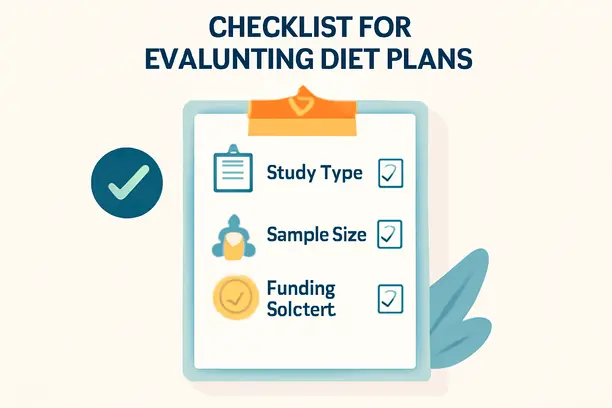
Checklist: How to assess a nutrition claim or diet plan
- Study type: Is the claim from an observational study, a randomized controlled trial, or just before-and-after anecdotes? RCTs provide the strongest evidence, while testimonials or case reports are the weakest.
- Sample size & duration: How many people participated, and for how long? A trial with dozens of participants over a few weeks is less convincing than a study tracking hundreds for years.
- Funding source: Was the research sponsored by a brand that benefits from positive findings? Industry-funded studies may be at higher risk for bias, so take extra caution.
- Consistency with guidelines: Does the finding align with established dietary guidelines (such as those from the World Health Organization or a national health agency)? Outliers should be treated skeptically unless replicated independently.
Always ask these questions before making significant lifestyle changes based on a bold headline. Safety, long-term sustainability, and consensus among reputable experts matter more than any single sensational story.
For a transparent, step-by-step approach that emphasizes real foods and practical recipes, you may want to explore a focused program like the 14-Day Rapid Soup Diet system, which includes digital meal guides and recipes designed for sustainable results. Just remember to read all disclaimers and evaluate whether this—or any—program fits your needs, especially if you have health concerns.
Curious about what a structured, evidence-considered diet plan for weight loss can look like? That guide compares traditional staples with contemporary approaches and references established health principles.
Before you commit, always read the program fine print. Even if you’re considering a ready-made digital plan that promises quick fat loss, like the Rapid Soup Detox 14-day protocol—complete with meal-by-meal video walkthroughs, run it through the scientific checklist above and, when in doubt, talk to a qualified healthcare professional.
If you’re interested in more balanced, sustainable strategies beyond short-term results, see our resource on how to stick to a diet and workout plan over the long term. Remember—solid science, not just hype, should drive any truly healthy transformation.
For in-depth guidance on evaluating nutrition research claims, visit resources like the National Center for Complementary and Integrative Health and the American Heart Association’s guide to evaluating nutrition science.
Personalization: connecting calorie calculations to sample meal plans and case examples
Why one-size-fits-all diet plans fall short
Sample meal plans—like a 1,500 kcal or 1,800 kcal day—offer a starting point, but real success comes when you personalize that blueprint. Two people with the same calorie target may need different foods, nutrients, or schedules based on their metabolism, age, activity, or health focus. Calorie formulas (such as the Mifflin-St Jeor or Harris-Benedict equations) estimate energy needs by factoring in weight, height, age, gender, and activity. Yet these are just estimates. Real-life needs can shift by several hundred calories above or below, especially with changes in muscle mass, hormones, or daily step count Source: Academy of Nutrition and Dietetics.
Personalized case scenarios: How calories and choices change
Sedentary weight-loss client: Sandra, 38, works a desk job and wants to lose 20 pounds. Her basal metabolic rate (BMR) is about 1,400 kcal. With minimal physical activity, her daily calorie needs are roughly 1,700 kcal—but to lose weight safely (about 1 pound/week), she aims for a 1,200–1,500 kcal diet.
Her sample plan might be heavy on non-starchy veggies, lean protein, and a few healthy fats for satiety. Sandra’s lunch: a veggie soup with chicken breast and olive oil toast. For her, swapping cakes for fruit and brothy meals aligns her intake to her goal while keeping hunger in check. For more on crafting a weight-loss-focused meal plan, see this complete 20 kg weight loss diet plan guide.
Older adult focused on bone health: James, 67, isn’t very active but needs more calcium and vitamin D. He uses a 1,500 kcal/day plan but requires dairy or fortified alternatives, plus a bit more protein to support muscles and bones.
James swaps a carb-heavy breakfast for Greek yogurt with berries, and adds sardines or tofu at lunch to boost both protein and minerals. If his appetite dips, small, nutrient-dense meals spaced throughout the day ensure he still meets his needs Source: National Institute on Aging.
High-mileage athlete: Lisa, 26, runs 40 miles a week. Although her basic plan starts at 1,800 kcal, she may actually need 2,200–2,500 kcal or more. A lower-calorie plan would leave her constantly hungry and slow recovery.
She ups her carb intake (oats, rice, potatoes) and chooses larger portions post-run. Lisa also rotates in higher-protein snacks and electrolyte-rich foods to match her training. Her meal swaps include whole grain pasta, fruit smoothies with whey, and extra nuts post-workout.
Adapting a diet plan: Smart customization tips
- Assess activity: The more you move, the higher your energy and carb needs. If your exercise routine increases, add a snack like Greek yogurt or oatmeal—don’t just eat more of everything.
- Adjust for age: Older adults often need fewer calories but more protein, calcium, and vitamin D. Prioritize lean proteins, dairy or fortified milk, and plenty of produce.
- Swap foods, not just calories: If satiety is a struggle, choose broth-based soups, fibrous vegetables, or eggs. For a high-energy phase, add healthy fats (nut butter, avocado) or starchy carbs.
- Tweak protein and carb balance: Weight loss often gets an extra boost from higher-protein meals, while endurance athletes thrive on more carbohydrates. Sample plans in this exercise-linked diet plan guide break down sample macros for different needs.
When adapting your sample menu, make one change at a time—a new snack, a swap in protein, or shifting your carb type—and observe how you feel and perform. If a plan feels too rigid or leaves you unsatisfied, revisit your calorie calculations or nutrient targets rather than simply cutting back more Source: Harvard T.H. Chan School of Public Health.
If you prefer a done-for-you structure that’s easy to adjust for your own calorie needs, discover the 14-Day Rapid Soup Diet for fast, practical meal plans and recipes. This plan is digital, so you can quickly swap ingredients or portion sizes while keeping results on track.
For those seeking specific, step-by-step diet plans tailored to unique situations, the Rapid Soup Detox system provides customizable guides and follow-along videos—making personalization simple even for busy or low-activity lifestyles.
Ever noticed how a single tweak—like adding a snack or swapping a carb—can suddenly make a diet plan feel doable? Sometimes, the smallest change makes the biggest difference.
Authorship, review, and source attribution (EEAT transparency)
Clear authorship and credentials for diet plan content
Every reputable diet plan article should transparently list the actual author’s name and their relevant credentials. Ideally, if the content is developed or checked by a specialist—such as a registered dietitian or nutritionist—their designation appears right alongside their name. For example, “Reviewed by [Name], RD, last medically reviewed on [Month, Year].” This level of transparency not only builds trust but helps readers assess whether the advice fits their personal needs or medical context.
When an update or new review occurs, the most recent date should be clearly stated. That way, you know whether a guide reflects the latest research or dietary guidelines. Outdated or anonymous advice, especially around something as impactful as a diet plan, can undermine both safety and efficacy. Always look for evidence of up-to-date authorship and expert vetting before following any dietary advice.
Editorial independence and disclosures
Editorial independence matters most when you’re making health decisions. Credible articles include a brief statement that editorial content is free of commercial or sponsor influence, even if affiliate links or product recommendations appear on the page. In parallel, any financial relationship—such as payments, product partnerships, or commercial ties relevant to a diet plan—must be clearly declared. Full disclosure isn’t just best practice; it’s a core standard for ethical health communication Source: British Nutrition Foundation.
If you see affiliate suggestions such as the 14-Day Rapid Soup Diet digital program, there should always be a nearby disclosure that any purchase supports the site—never hidden in the fine print. This empowers you to decide with full context.
Attribution of dietary guidelines and sources
The best diet plan recommendations cite the official guidance that shapes their strategy. For instance, references might include the Dietary Guidelines for Americans 2020–2025 when discussing calorie targets, macronutrient balance, or healthy food groups. When you read, “According to the American Heart Association, adults should…” or “The World Health Organization recommends…”, you know the advice isn’t just someone’s opinion—it traces back to authoritative, research-based standards.
On Fitsero, this approach is reflected in articles like how to craft a healthy, balanced diet plan and step-by-step guidance for weight loss meal planning, which both cite globally recognized dietary organizations to help readers evaluate each recommendation’s foundation.
Confidence through traceable, evidence-based advice
For maximum credibility, every diet plan article should allow readers to easily identify who wrote it, who reviewed it, and which authoritative sources underpin the recommendations. This transparency supports informed decision-making and protects your health.