

What is Lazy Keto? Definitions and Carb Targets
Lazy keto meals make low-carb eating effortless by focusing only on keeping your carb intake low, skipping the need to track every macro. This simple approach helps you enjoy keto benefits—like fat loss and steady energy—without the food math or endless meal prep.

Disclosure: This article contains affiliate links. We may earn a commission at no extra cost to you.
Lazy keto simplifies low-carb eating by zeroing in on one thing: keeping your carb intake low. You won’t stress over calories or protein grams. This approach works for people who crave flexibility while chasing fat loss or better metabolic health.
Traditional keto often demands tracking all your macros and staying under 20 grams of net carbs daily. Lazy keto typically aims for 20 to 50 grams of net carbs per day. That’s a practical sweet spot: 20 grams aligns with classic keto standards, while 50 grams gives you breathing room for hectic schedules or social meals.
Some experts talk about getting 10% of daily calories from net carbs, but most people find a simple gram target easier to follow. By the way, “net carbs” means total carbs minus fiber and sugar alcohols—the parts that don’t spike your blood sugar or drain your energy Source: Cleveland Clinic.
Understanding the difference between net and total carbs makes meal planning much smoother. Take broccoli: a cup has about 6 grams total carbs but only 2 grams net. An avocado? Around 12 grams total, but with 10 grams of fiber, you’re left with just 2 grams net. That makes avocados a lazy keto superstar.
- Egg-and-spinach omelet (with cheese): Around 3g net carbs
- Chicken salad with olive oil: Around 4g net carbs
- Bunless burger with salad greens: Around 6g net carbs
- Salmon with roasted asparagus: Around 5g net carbs
- Creamy zucchini soup: About 7g net carbs per serving
Here’s how to pick your personal carb target:
- If fat loss is your main goal: Stay closer to 20–30 grams of net carbs daily.
- If you take medications or have diabetes: Talk to your doctor first—ketosis and carb shifts can affect insulin and other meds.
- If you’re active or exercise regularly: You might handle 40–50 grams, especially if you time them around workouts.
- If your life includes frequent social events: You can push up to 50 grams, but keep most days lower-carb.
Lazy keto appeals to folks who prefer a looser meal structure and recipes that don’t demand hours in the kitchen. For more inspiration, check out our low-carb dinner ideas for families and simple low-carb lunches for busy days.
If you’d rather skip the guesswork altogether, the 14-Day Rapid Soup Diet delivers ready-made lazy keto-friendly meals built for fat loss—no detailed tracking required.
Can You Reach Ketosis on Lazy Keto? Expectations & Testing
Yes, you can reach ketosis on lazy keto—but your results will vary depending on how tightly you stick to your carb limit and your unique metabolism.
Getting into nutritional ketosis with lazy keto is absolutely possible, just not guaranteed. Since lazy keto focuses mainly on carbs and often ignores protein and calories, outcomes differ widely from person to person.
Classic keto usually keeps net carbs under 20 grams daily with moderate protein, which triggers ketosis more reliably. But if your protein creeps too high or hidden carbs sneak in, your body might keep making glucose through gluconeogenesis—stalling ketone production.
Physical activity helps drive you toward ketosis by depleting stored muscle glycogen and ramping up fat metabolism afterward. Still, factors like age, muscle mass, stress levels, and insulin sensitivity all influence how easily you slip into ketosis on lazy keto. Some people naturally hit mild ketosis with more flexible intake; others need stricter limits.
You’ve got three main ways to test for ketosis:
- Urine ketone strips: Cheap and simple, but less accurate after the first few weeks as your body stops excreting as many ketones in urine.
- Breath ketone meters: Non-invasive gadgets that measure acetone in your breath. Reusable, but hydration and exercise can skew readings.
- Blood ketone meters: The gold standard. They measure beta-hydroxybutyrate in your blood. Requires finger pricks and ongoing test strips.
Most people who keep their carbs low on lazy keto enter at least mild nutritional ketosis—blood BHB levels between 0.5 and 1 mmol/L—within 3 to 7 days. Deeper or sustained ketosis typically demands tighter control over protein and other macros.
Early on, you might notice “keto flu” symptoms: headache, fatigue, muscle cramps. True ketosis often kicks in once these fade, bringing improved energy and sharper mental clarity.
Testing is helpful if you want precise feedback or you’re troubleshooting stalls, but daily checks aren’t necessary for most. Instead, watch for subjective signs like reduced appetite or steady energy. For meal planning with varying carb levels, see our guide on easy low-carb weeknight dinners.
The 14-Day Rapid Soup Diet offers a practical keto-friendly meal plan if you’d rather not worry about macros and prefer structured guidance.
Ketosis is personal and adaptation takes time. Track your symptoms and test if you’re curious, but don’t let differences in how your body responds discourage you. Patience and consistency are what matter most Source: Harvard Health.
Safety, Who Should Be Cautious, and Monitoring
Who Should Use Extra Caution With Lazy Keto Meals
Lazy keto isn’t a fit for everyone. If you have certain health conditions or take specific medications, check with your doctor before starting.
- Kidney or liver conditions: High fat and protein can strain these organs, especially with chronic kidney disease, fatty liver, or cirrhosis. Careful monitoring is essential.
- History of eating disorders: Any restrictive eating pattern—even a relaxed one like lazy keto—can trigger relapse or unhealthy behaviors. Professional supervision is recommended.
- Pregnant or breastfeeding women: Your body needs balanced macros and plenty of energy for fetal and infant growth. Most experts advise against keto during these periods without medical oversight Source: National Kidney Foundation.
- People on certain medications: Meds for diabetes, blood pressure, or mental health may interact with rapid weight or electrolyte changes. Adjustments may be needed under supervision.
Other groups that need caution include those with type 1 diabetes, gallbladder removal, pancreatitis, or severe GI disorders—fat digestion or safety may be compromised.
Managing Side Effects: Tips for Common Keto Challenges
- Keto flu: Fatigue, brain fog, and muscle aches in the first week can ease with hydration and adequate sodium, potassium, and magnesium.
- Bowel irregularities: Less fiber can cause constipation. Add low-carb, high-fiber foods like leafy greens, avocado, chia seeds, and flaxseed—plus plenty of water.
- Dehydration: Cutting carbs flushes out water and electrolytes. Boost your fluid intake and sip broth or mineral water to keep sodium and potassium balanced.
Tweaking meals to include more fiber-rich veggies and watching for headaches or cramps can make the transition smoother. For recipe ideas that simplify prep and support gut health, explore these simple low-carb dinner recipes.
Easy Monitoring Checklist for At-Home Safety
Pay attention to your body, especially when you’re new to lazy keto:
- Weigh yourself weekly, not daily—your weight naturally fluctuates.
- Monitor energy and mood: Extreme tiredness, irritability, or dizziness are red flags.
- Digestive health: Notice changes in bowel movements that might signal you need more fiber, fluids, or electrolytes.
- Hydration status: Dry mouth, dark urine, or muscle cramps need prompt attention.
Keeping a simple journal of meals and symptoms helps you spot patterns and makes conversations with healthcare pros more productive.
When to Get Labs or Call Your Doctor
- Sudden weakness, confusion, or chest pain.
- Persistent nausea, vomiting, or stomach discomfort.
- Swelling in your legs or feet, or big changes in urination.
- If you have diabetes, any unexplained highs or lows in blood sugar.
- For those with chronic conditions, baseline and follow-up labs—electrolytes, liver/kidney function, lipids—are wise Source: Mayo Clinic.
For a safe and accessible start, browse our healthy meals to make at home and consider the 14-Day Rapid Soup Diet as an easy intro to balanced, low-carb eating.
For simplicity and results without strict calorie counting, the accompanying Rapid Soup Detox program offers a stress-free plan for busy individuals.
Nutritional Quality: Micronutrients, Fiber, and Fat Choices
Building Balanced Lazy Keto Meals for Maximum Nutrition
Lazy keto shouldn’t mean compromising on nutrition. To keep your energy up and your health strong, meals need more than just fats and proteins.
Start by covering at least half your plate with non-starchy, low-carb vegetables: spinach, kale, broccoli, zucchini, cauliflower, peppers. These bring fiber, vitamins, minerals, and bulk—filling you up without piling on net carbs. Stock frozen greens and cauliflower rice for quick meal add-ins.
Fiber often falls short on keto, so deliberately work in sources like ground flaxseed or chia seeds to support digestion and stable blood sugar. They store well and need zero prep. Look for recipes rich in nuts, seeds, avocados, and non-starchy veggies to maintain quality nutrition.
Step-by-Step Tips to Upgrade Your Lazy Keto Plate
- Start with vegetables: Half your plate should be low-carb veggies like roasted broccoli, sautéed spinach, or fresh salads.
- Add protein: Choose lean or fatty sources—grilled chicken, eggs, canned sardines (loaded with omega-3s and vitamin D), tofu, or fatty fish.
- Choose fats wisely: Go for unsaturated fats like extra-virgin olive oil, avocado slices, or nuts over processed saturated fats.
- Make smart swaps: Trade processed cheese for full-fat feta or mozzarella. Snack on nuts instead of pork rinds.
Pantry staples with serious nutritional punch include canned oily fish like sardines, olives, nut butters (no added sugar or hydrogenated fats), seeds, and a variety of frozen vegetables. These ingredients let you whip up nutrient-dense meals even on your busiest days.
For more on maximizing fiber while keeping carbs low, see our guide on nutrient-dense foods within low-carb diets. Cooking at home with whole foods not only supports your well-being—it helps you sustain lazy keto over the long haul.
The 14-Day Rapid Soup Diet specializes in “solid-in-liquid” soups that boost satiety and deliver balanced micronutrients and fiber without excess carbs.
Every lazy keto meal is a chance to truly nourish your body—not just hit macronutrient targets. Find daily inspiration in our picks for healthy meals you can make at home.
If you want convenient nutrition with minimal prep, the comprehensive Rapid Soup Detox plan offers a complete system designed for low-carb lifestyles.
Consistently prioritize quality fats, fiber-rich plants, and whole protein sources. Even quick snacks like sunflower seeds or sardine salad beat processed cheese slices hands-down for nutrient density.
For detailed advice on balanced meal planning within your macros, visit our macro eating guide.
Practical Plans: Easy Meals, Budgeting, and Long‑Term Maintenance
7-Day Lazy Keto Starter Plan: Simple Meals & Budget Tips
Jumpstarting lazy keto doesn’t require fancy meal plans or pricey ingredients. You’ll do best focusing on a handful of repeatable recipes—quick, lower-carb, and satisfying.
Think scrambled eggs with spinach, bunless burgers, chicken stir-fries with frozen veggies, salads topped with cheese and seeds. These keep carbs low while slashing your time in the kitchen. Make double portions at dinner and you’ve got lunch covered—less waste, less work.
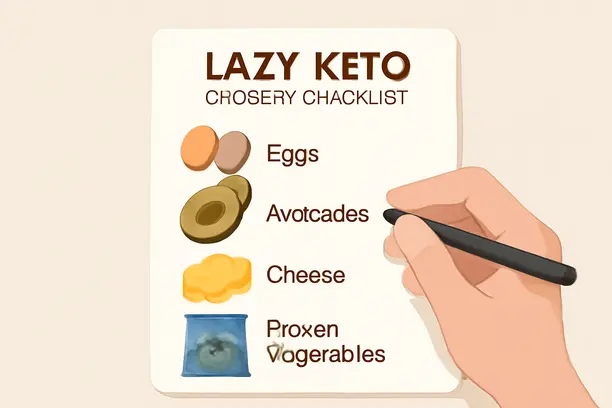
When grocery shopping, stick to core affordable basics: eggs, frozen mixed vegetables, chicken thighs, ground beef, cheddar, cream cheese, avocados, and leafy greens. Store brands and frozen options keep nutrition high and costs down. A typical 3-day shopping list might include a dozen eggs, bags of frozen veggies, packs of chicken and beef, a block of cheese, and salad greens—enough for multiple meals throughout the week.
For more structure, the 14-Day Rapid Soup Diet provides done-for-you plans with prep videos and straightforward soup recipes that simplify lazy keto for busy lives.
FAQs on Lazy Keto Meals
How do lazy keto meals differ from strict keto meals?
Lazy keto meals only require you to track your net carb intake, while strict keto asks you to monitor protein, fat, and calories as well. This makes lazy keto much simpler—perfect for those who dislike detailed food logging—while still supporting fat loss and other benefits.
Can you eat out while following lazy keto?
Yes! At restaurants, choose protein-centric dishes, skip bread and fries, and order extra veggies or salads. Most places let you sub out high-carb sides for something keto-friendly, making lazy keto more sustainable even when dining out.
What are common mistakes to avoid with lazy keto?
The most common pitfalls are eating too many hidden carbs (like sauces or processed snacks), forgetting about fiber, and relying on processed fats. Focus on whole foods, regularly check nutrition labels, and make non-starchy veggies a staple at every meal.