

Mediterranean vs. a typical American breakfast — a quick comparison
Healthy Mediterranean breakfast options offer steady energy and real satisfaction from the start of your day—making them a better choice if you’re tired of sugar crashes and mid-morning hunger. The Mediterranean approach transforms your morning routine with delicious, nutrient-packed choices that actually keep you full.

Disclosure: This article contains affiliate links. We may earn a commission at no extra cost to you.
A healthy Mediterranean breakfast differs substantially from a typical American morning meal in its nutrient composition and how it supports your energy throughout the day.
Whereas American breakfasts often rely on white bread, sugary cereals, pancakes with syrup, and processed meats like bacon or sausage, these foods tend to spike blood sugar and provide only short bursts of energy. This frequently results in hunger pangs and energy crashes by mid-morning.
In contrast, a Mediterranean breakfast centers on whole grains such as hearty oats or rye bread, fiber-rich fruits and vegetables, protein-dense dairy like Greek yogurt, and healthy fats from nuts and olive oil.
For example, instead of plain white toast, a Mediterranean approach might feature whole-grain bread topped with chopped tomatoes, a drizzle of extra-virgin olive oil, and feta cheese.
Where the typical American breakfast often includes sugary pastries, the Mediterranean style favors fresh fruit—naturally sweet and packed with antioxidants. Eggs are commonly cooked with vegetables like spinach and tomatoes in olive oil, boosting fiber and phytonutrients.
These ingredient choices matter significantly for satiety and stable energy levels.
Mediterranean breakfasts emphasize slow-digesting carbohydrates, fiber, and healthy fats, which research shows help people feel fuller longer and maintain balanced blood sugar throughout the morning Source: Harvard T.H. Chan School of Public Health.
This pattern, common in Mediterranean cultures, reflects a mindful, nourishing start to the day—often shared socially and enjoyed without rush.
Swapping processed meats for plant-based proteins like hummus or nuts, and refined grains for wholesome whole grains, Mediterranean breakfasts also lower the risk of chronic diseases linked to diet, such as type 2 diabetes and heart disease Source: American Heart Association.
For practical ideas, consider starting your day with Greek yogurt mixed with berries and walnuts or skillet eggs cooked with vegetables and olive oil—delicious options that provide steady energy without the crash.
How Mediterranean-style breakfasts support health: satiety, blood sugar, and heart health
Mediterranean breakfasts promote health through a thoughtful combination of fiber, protein, and unsaturated fats—each playing a key role in sustaining satiety, managing blood sugar, and supporting cardiovascular function.
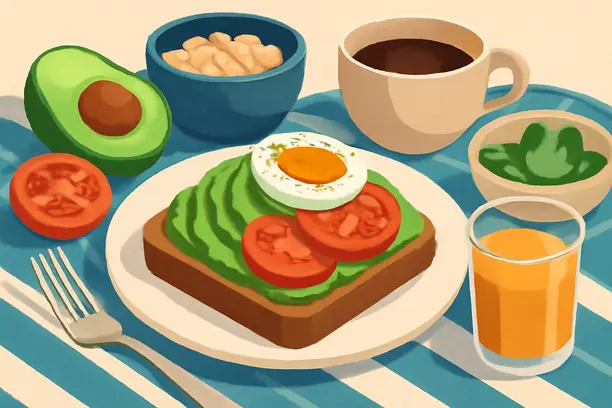
Picture a bowl of nutty oats topped with Greek yogurt and fresh berries, or whole-grain bread layered with avocado and a soft-boiled egg. These are examples of nutrient-rich meals designed to meet your body’s needs.
Fiber from oats, fruits, and vegetables slows digestion, keeping you feeling full for longer and reducing the urge to snack in mid-morning. Because fiber slows sugar absorption, it also helps maintain stable blood glucose levels—unlike high-sugar cereals or pastries.
This gradual sugar release benefits heart and metabolic health, with prominent health authorities emphasizing these effects Source: Harvard School of Public Health.
Protein, sourced from Greek yogurt, cheese, eggs, or nut butters, triggers satiety hormones and keeps appetite in check for hours.
Studies indicate that Mediterranean-style breakfasts high in protein can support weight management by reducing overall calorie intake Source: NIH.
Healthy fats, such as those in olive oil, nuts, and seeds, are not only flavorful but also slow glucose absorption, promoting cardiovascular health.
Unsaturated fats typical of Mediterranean breakfasts have been linked to lower heart disease risk factors in large cohort studies and dietary guidelines Source: American Heart Association.
While these benefits are well-documented—especially in Mediterranean populations—the principles of fiber, protein, and healthy fats are beneficial across diverse groups. Individual responses vary based on genetics, lifestyle, and health status.
No single breakfast is a cure-all, but making nutrient-dense choices regularly helps build a foundation for long-term cardiometabolic health.
If you want a step-by-step plan to make these healthy habits automatic, there’s a simple way to get started—no guesswork or restrictive rules required.
Portion guidance and simple rules for weight management
How to Build a Balanced Mediterranean Breakfast for Weight Management
Starting your day with the right portion balance can enhance satiety and energy without making weight management stressful. Nutrition experts suggest aiming for:
- Protein: 15–30 grams, equivalent to one cup of Greek yogurt or two eggs
- Whole grains: ½ to 1 cup cooked oats, barley, or farro
- Healthy fats: About 1 tablespoon of extra-virgin olive oil or ¼ avocado
- Vegetables and fruits: Freely add non-starchy options like tomatoes, spinach, cucumbers, berries, or citrus for color and crunch
This combination supports fullness for hours and steadies blood sugar by slowing digestion—proteins and fats slow gastric emptying, while fiber enhances sustained satiety.
Adjust portions to your goals. For weight loss, consider reducing grains slightly and increasing vegetables rather than cutting protein or fats, which can lead to hunger later Source: Harvard T.H. Chan School of Public Health.
To fine-tune portion sizes, use this simple two-step hunger and fullness check:
- After breakfast, ask yourself if you’re physically hungry or just eating out of habit.
- Halfway to lunch, assess if you truly need a snack or if your breakfast is keeping you satisfied.
Small daily tweaks—like swapping half your grains for extra vegetables or moderating portion sizes—often yield better results than drastic cuts or food bans.
This approach aligns with Mediterranean eating and encourages sustainable satisfaction Source: Healthline.
Sample Week: Mediterranean Breakfasts for Weight Management
- Monday: Greek yogurt with berries and walnuts (5 min, RPE 1—easy)
- Tuesday: Scrambled eggs with spinach and tomatoes, whole-grain toast (10 min)
- Wednesday: Overnight oats with chia seeds, almond milk, and sliced apple (prep ahead)
- Thursday: Cottage cheese with sliced peaches and pistachios
- Friday: Skillet eggs with tomatoes, peppers, and olive oil (shakshuka style)
- Saturday: Avocado toast with radishes and pumpkin seeds on rye bread
- Sunday: Small veggie omelet with a side of orange segments and olives
Portion control remains flexible—listen to your body’s cues and adjust as needed based on activity level and fullness. Consistency over time brings the best metabolic results.
Mediterranean breakfast ideas and recipes for women over 40
Women over 40 may experience shifting metabolism and changing nutrient needs, making intentional breakfast choices even more valuable.
Focus on high-quality protein, slow carbs, and antioxidants to optimize health, muscle maintenance, and energy.
- Greek yogurt parfait: Layer plain Greek yogurt with fresh berries, walnuts, and a drizzle of honey. Top with a sprinkle of chia or flaxseed for extra omega-3s.
- Mediterranean egg scramble: Sauté spinach, tomatoes, and onions in olive oil. Add eggs, feta, and fresh herbs. Serve with rye toast.
- Oat bowl: Cook steel-cut oats with unsweetened almond milk, top with diced pears, cinnamon, and chopped pistachios.
- Tomato-olive toast: Whole-grain toast topped with chopped tomatoes, kalamata olives, and a touch of olive oil—add sliced boiled egg for extra staying power.
- Cottage cheese breakfast bowl: Cottage cheese with sliced peaches, pumpkin seeds, and a pinch of cinnamon.
Aim for color, texture, and variety to avoid breakfast boredom and get a broader range of micronutrients.
For mornings that call for speed, prep fruit and seed mix-ins, or keep cooked eggs and washed greens ready to grab. Batch-cooking steel-cut oats or hard-boiled eggs can help you keep up the habit.
More inspiration for plant-powered, Mediterranean-style meals is available in our guides: favorite healthy meals to make at home and essential healthy recipes with vegetables.
Troubleshooting common barriers: time, cravings, breakfast boredom
Even the best intentions can run into common obstacles. Here’s how to keep your healthy Mediterranean breakfast routine on track:
- No time in the morning? Prep overnight oats or Greek yogurt bowls in advance. Keep pre-washed veggies, boiled eggs, and fruit handy for quick assembly.
- Craving sugar or pastries? Satisfy sweet cravings with natural fruit, a fistful of nuts, or a spoonful of nut butter. Cinnamon or a swirl of honey in your oatmeal can also curb urges, while still keeping added sugar in check.
- Getting bored? Mix up your base (swap oats for whole-grain toast or a veggie omelet). Add flavor with fresh herbs, different nuts, or a drizzle of extra-virgin olive oil. Try rotating new fruits and seeds weekly for variety.
If sticking with your new breakfast feels tough after week one, try setting a gentle reminder or teaming up with a friend for accountability. Sometimes, a small nudge can keep you moving past the initial adjustment.
And remember, there’s no need for perfection—consistency with mostly Mediterranean-style breakfasts is more important than all-or-nothing thinking. Gradual adjustments build long-lasting, healthy routines.
Explore more on overcoming motivation hurdles at how to get more motivated for the gym and step-by-step: get motivated to workout again.
Mini-FAQ: Healthy Mediterranean Breakfast Questions
What should I avoid in a Mediterranean breakfast to stay healthy?
Avoid processed meats (like bacon or sausage), refined white breads, highly sweetened cereals, and pastries. Focus instead on whole grains, fresh fruits, vegetables, nuts, seeds, and healthy fats like olive oil for sustained energy.
How can I make my Mediterranean breakfast more filling?
Include a balance of protein (such as Greek yogurt, eggs, or cottage cheese) and healthy fats (like nuts, seeds, or avocado). Fiber from vegetables, fruits, and whole grains also helps increase satiety, making you feel fuller for longer.
Is a Mediterranean breakfast suitable for weight loss after 40?
Yes, a Mediterranean breakfast is excellent for weight management, especially after 40. Its focus on slow-digesting carbs, healthy fats, and protein helps control hunger, supports metabolism, and provides key nutrients for healthy aging.