
What this 30-day plan is for (goals, calorie level, who it’s for)
Meal plan for one month is the ultimate way to simplify your life by cutting out daily dinner stress and building sustainable healthy eating habits. This flexible 30-day plan is designed especially for busy individuals and small households who want homemade meals without constant planning or marathon grocery trips.
Disclosure: This article contains affiliate links. We may earn a commission at no extra cost to you.
It’s designed for busy people and smaller households who want to enjoy home-cooked meals without juggling endless grocery lists or spending their weekends chopping vegetables. The real goal here? Helping you cut back on takeout, eat more balanced meals, and—most importantly—build habits that actually stick after the 30 days are up.
This plan targets around 1,500 to 1,800 calories per day, which works well for most adults who are maintaining their weight or aiming for a modest, steady drop—especially if you’re keeping up with light to moderate activity. Of course, everyone’s needs are different. If you’re more active, you can bump up portions or toss in extra snacks like Greek yogurt or a handful of almonds. On the flip side, if you’re smaller or want to lose a bit more aggressively, just dial back the portions or swap in lighter options.
Here’s how to tweak things on the fly:
- To increase calories: add snacks like Greek yogurt or nuts, or enlarge meal servings.
- To decrease calories: emphasize non-starchy vegetables, reduce added fats, or shrink grain and protein portions.
- To boost protein: focus on eggs, lean meats, tofu, or cottage cheese.
- To add carbohydrates: incorporate extra beans, whole grains, or fruit.
Think of this as a flexible template, not a rigid prescription. If you’ve got specific health concerns or dietary restrictions, it’s always smart to check in with a healthcare professional before making big changes Source: British Nutrition Foundation. But for most healthy adults without clinical issues, this plan is a solid starting point.
The plan draws inspiration from the Mediterranean Diet—a time-tested approach that’s all about heart-healthy fats, colorful produce, and satisfying flavors. You’ll learn to listen to your hunger cues, stay hydrated, and swap or repeat meals however you like.
Want something even more structured? The 30-Day Mediterranean Diet Challenge offers a fully mapped-out month of meals, recipes, and bonus support to keep you on track.
A quick note on who created this: I’m a certified nutrition coach (Precision Nutrition–PN2) with years of experience building practical, evidence-based programs for real people with real lives. Everything here aligns with the latest dietary guidelines Source: Dietary Guidelines for Americans, 2020-2025, but it’s designed to work in the real world—not just on paper.
If weight loss is your main focus, you might also want to check out our guide on effective monthly calorie deficit planning for more targeted strategies.
Recipes and navigation: full recipes, links, and reproducible notes
Themed Weekly Meal Plans for a Month
Planning meals for a whole month might sound overwhelming at first. But when you break it down week by week—and choose recipes that are quick, tasty, and actually enjoyable—it becomes way more manageable.
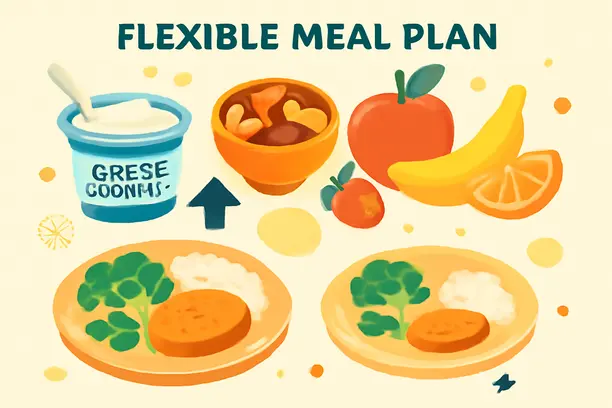
Here’s your roadmap for four weeks of simple, delicious eating:
- Week 1 (Mediterranean Focus)
- Breakfast: Greek yogurt parfait with berries, honey, and granola—ready in 5 minutes; protein-packed and lasts well through the week.
- Lunch: Mediterranean Chickpea Bowls serve 4 and take 30 minutes; make extra for quick leftovers.
- Dinner: Sheet-pan lemon chicken with potatoes and green beans—roast bone-in chicken thighs tossed with lemon, potatoes, green beans, and olive oil at 400°F for 40 minutes; ideal for batch cooking.
- Week 2 (Vegetarian/Plant-Based)
- Breakfast: Overnight oats combining oats, chia seeds, plant milk, and fruit; customizable and ready to grab in the morning.
- Lunch: Stuffed Sweet Potatoes topped with black beans, salsa, and avocado; perfect for meal prepping and freezing.
- Dinner: Vegetable stir-fry with bell peppers, broccoli, carrots sautéed in olive oil; add tofu or tempeh for protein in a quick 30-minute meal.
- Week 3 (Budget & Batch Cooking)
- Breakfast: Egg muffins with spinach and tomato baked for 20 minutes; freezes well and serves several mornings.
- Lunch: Bean chili simmered with tomatoes and corn for 40 minutes; yields six servings, great for freezing.
- Dinner: Baked pasta layered with sauce, veggies, and cheese; reheats well for leftovers.
- Week 4 (Quick, No-Fuss Favorites)
- Breakfast: Smoothie packs blending banana, spinach, nut butter, and milk; freeze in bags for fast morning smoothies.
- Lunch: Low-carb lettuce wraps filled with chicken or tuna salad; portable and satisfying.
- Dinner: 20-minute shrimp and spinach sauté cooked with garlic and lemon; served with brown rice or quinoa, naturally gluten-free.
Navigation Tips: How to Use These Recipes & Links
Every recipe here was chosen because it’s easy, flavorful, or makes your life simpler. Look for labels like “30-minute meal” or “freezer-friendly” to quickly find what fits your schedule.
Need more inspiration? Browse our curated collection of healthy meals to make at home this month for even more step-by-step recipes.
For a full day-by-day breakdown—complete with portions, nutrition notes, and ready