
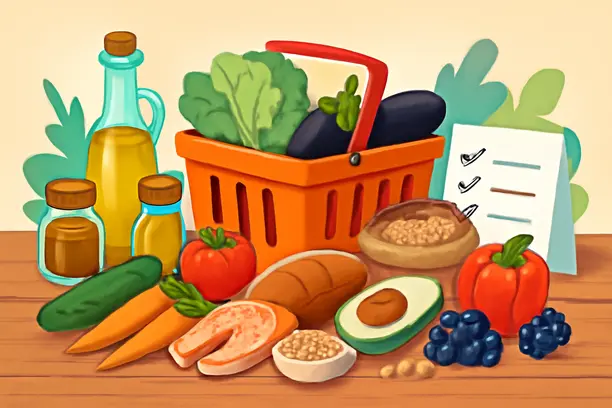
Mediterranean grocery checklist with portions & frequency
Mediterranean diet shopping list essentials mean you get delicious health benefits and vibrant flavors—without stressful shopping or wasted food. This approach keeps your meals balanced, fresh, and surprisingly budget-friendly.

Disclosure: This article contains affiliate links. We may earn a commission at no extra cost to you.
Fruits & Vegetables
- Leafy greens (spinach, arugula): 10–14 cups (140–200g weekly). Plan for at least one large salad plus a few servings as side dishes.
- Tomatoes (fresh or canned): 4–6 medium (600–900g) or 2 cans weekly. Use them in salads, sauces, or cooked meals.
- Cruciferous vegetables (broccoli, cauliflower): 500g–1kg. Roast or steam them for 2–3 meals per week.
- Colorful vegetables (peppers, eggplant, zucchini): 700g–1kg of 2–3 types to diversify stir-fries or sheet pan recipes.
- Fruits (citrus, berries, apples): At least 7–10 pieces or 4–6 cups of berries weekly—enjoy daily with breakfast, snacks, or dessert.
Buy only what you’ll use within 7 days for best freshness.
Leafy greens and berries perish fastest—store them in your refrigerator and use them early in the week.
Whole Grains
- Oats, quinoa, barley, or brown rice: 400–500g (uncooked) weekly, aiming for about 1/2 to 1 cup cooked grains daily.
- Whole grain breads or pita: 1–2 loaves or 8–12 wraps per week; freeze extras to prevent spoilage.
Rotate your grains to keep meals interesting.
Store grains in airtight containers. Freeze bread if you won’t eat it within 3 days.
Healthy Proteins
- Fish (salmon, sardines, white fish): 500–700g weekly. Aim for 2–3 meals featuring fish as a primary protein (EatRight.org).
- Poultry (chicken, turkey): 400–500g for 1–2 main meals weekly.
- Eggs: 1 dozen (12 eggs) for various meals like breakfast or salads.
- Beans & lentils: 400g dried or 3–4 cans used 2–3 times weekly in soups, stews, or salads.
Eat seafood earlier in the week—fresh fish lasts just 1–2 days refrigerated.
Pantry items like canned fish and beans last months, so keep them as reliable backups.
Essential Pantry Staples
- Olive oil (extra virgin): 250–500ml for dressings and cooking.
- Nuts & seeds (almonds, walnuts, sunflower): 200–250g total; enjoy 4–6 handfuls per week as snacks or salad toppings.
- Spices & dried herbs (oregano, garlic, cumin): Buy small jars or refill pouches as needed; these keep for months.
- Yogurt or cheese (feta, parmesan): About 500g for snacks, toppings, or side dishes 2–3 times per week.
Always keep essentials like olive oil, spices, and canned tomatoes stocked.
They’ll help you create diverse and authentic Mediterranean meals on the fly.
Sample 1-Week Mediterranean Diet Grocery List
- Produce: 2 bags mixed greens, 6 tomatoes, 2 cucumbers, 1 eggplant, 1 bag carrots, 3 apples, 2 oranges, 1 box berries
- Grains: 1 loaf whole wheat bread, 1 pack pita, 250g quinoa, 250g oats
- Protein: 2 salmon fillets, 1 chicken breast, 1 can chickpeas, 1 can white beans, 12 eggs
- Dairy: 500g plain Greek yogurt, 1 block feta
- Pantry: Olive oil, jar olives, walnuts, sunflower seeds, dried oregano, cumin, garlic powder
This list covers meals like salads, roasted vegetables, fish dinners, chicken tray bakes, and bean-based stews.
Planning ahead minimizes mid-week grocery trips and reduces spoilage of perishables.
For more detailed food ideas and portion guidelines, see our comprehensive Mediterranean diet essential ingredients guide.
For meal inspirations, check the sample Mediterranean diet menu.
If you want a done-for-you plan with printable grocery lists and daily meal ideas, the 30-Day Mediterranean Diet Challenge gives you structure and confidence from week one.
7-day sample meal plan with daily nutrient totals
Day 1: Fresh Start
Breakfast: Greek yogurt with honey, walnuts, and fresh berries.
Lunch: Chickpea and tomato salad with olive oil and feta.
Snack: Sliced cucumber and a small handful of almonds.
Dinner: Grilled salmon with roasted vegetables and quinoa.
Daily swaps: Use tofu instead of salmon for a plant-based protein alternative.
- Calories: ~1,500 / ~2,000
- Protein: 80g / 110g
- Carbohydrates: 160g / 215g
- Fiber: 28g / 35g
- Fat: 55g / 70g
- Sodium: 1,400mg / 1,800mg
Day 2: Lean & Green
Breakfast: Steel-cut oats with sliced apple and cinnamon.
Lunch: Farro salad with cherry tomatoes, olives, and cucumber.
Snack: Greek yogurt with berries.
Dinner: Lemon-herb chicken breast with roasted sweet potatoes and steamed broccoli.
Daily swaps: Substitute chicken with roasted chickpeas for vegetarian.
- Calories: ~1,450 / ~1,950
- Protein: 75g / 102g
- Carbohydrates: 150g / 200g
- Fiber: 26g / 34g
- Fat: 52g / 65g
- Sodium: 1,360mg / 1,700mg
Day 3: Plant-Focused
Breakfast: Overnight oats with raisins and nuts.
Lunch: Lentil soup with carrots, celery, and spinach.
Snack: Sliced orange and a few walnuts.
Dinner: Whole wheat pasta with tomato sauce, eggplant, and a sprinkle of parmesan cheese.
Daily swaps: Use gluten-free pasta if needed.
- Calories: ~1,480 / ~1,980
- Protein: 68g / 98g
- Carbohydrates: 155g / 205g
- Fiber: 29g / 36g
- Fat: 54g / 68g
- Sodium: 1,420mg / 1,790mg
Day 4: Savory & Satisfying
Breakfast: Two eggs scrambled with spinach and tomato.
Lunch: Grilled vegetable and hummus wrap.
Snack: Apple slices with almond butter.
Dinner: Baked white fish with wild rice and a side of greens.
Daily swaps: Quinoa can replace rice as desired.
- Calories: ~1,490 / ~1,990
- Protein: 85g / 110g
- Carbohydrates: 148g / 198g
- Fiber: 27g / 34g
- Fat: 56g / 69g
- Sodium: 1,390mg / 1,780mg
Day 5: Classic Mediterranean
Breakfast: Plain yogurt with honey, chopped walnuts, and berries.
Lunch: Greek salad with feta, chickpeas, and olives.
Snack: Hummus with carrot sticks.
Dinner: Chicken tray bake with peppers, zucchini, and potatoes.
Daily swaps: Tofu and extra veggies in place of chicken for a vegetarian meal.
- Calories: ~1,500 / ~2,020
- Protein: 78g / 105g
- Carbohydrates: 162g / 212g
- Fiber: 28g / 35g
- Fat: 53g / 70g
- Sodium: 1,400mg / 1,850mg
Day 6: Simple Goodness
Breakfast: Avocado toast on whole wheat bread.
Lunch: Lentil and spinach stew.
Snack: Mixed nuts.
Dinner: Roasted turkey breast with bulgur and green beans.
Daily swaps: Use a white bean stew instead of turkey for a vegetarian option.
- Calories: ~1,470 / ~1,970
- Protein: 74g / 100g
- Carbohydrates: 151g / 201g
- Fiber: 29g / 36g
- Fat: 52g / 67g
- Sodium: 1,380mg / 1,790mg
Day 7: Family Favorites
Breakfast: Oatmeal with diced pears and cinnamon.
Lunch: Quinoa salad with black beans, cherry tomatoes, and a lemon-olive oil dressing.
Snack: Cucumber slices with tzatziki.
Dinner: Baked salmon with Mediterranean roasted veggies.
Daily swaps: Swap salmon for baked falafel if plant-based.
- Calories: ~1,510 / ~2,010
- Protein: 80g / 112g
- Carbohydrates: 160g / 209g
- Fiber: 30g / 37g
- Fat: 54g / 70g
- Sodium: 1,450mg / 1,850mg
Portion sizes above suit most women over 40 seeking health, energy, and gentle weight loss support, but you can easily adjust for your needs. For even more meal inspiration, check our Mediterranean diet recipes collection and easy sample menu ideas.
If you want more structure including ready-to-use meal plans, recipe packs, and organized shopping lists by meal type, the 30-Day Mediterranean Diet Challenge brings clarity and motivation—plus saves you hours each week.
Mediterranean shopping list tips for busy women over 40
Keeping your Mediterranean diet shopping list practical can simplify your week and help avoid food waste. Here are a few time-saving tips:
- Shop seasonally and locally—produce will be fresher and usually more affordable.
- Use a running grocery list app or planner so you’re never caught off guard on busy days.
- Batch-cook grains and proteins early in the week for easy dinners and lunch salads.
- Prep chopped veggies as soon as you unpack groceries, storing them in see-through containers.
- Freeze extra bread, berries, and fish portions to avoid spoilage—label and date everything!
If you often feel unmotivated to plan meals or exercise, check out our resources on finding fitness motivation and staying consistent with workouts—they pair perfectly with healthy eating goals.
While the Mediterranean diet is flexible, sticking to your shopping list and prepping ahead removes mental stress. That means you always have something delicious and healthy to fall back on—even on your busiest days.
If you want to make Mediterranean eating automatic, consider the 30-Day Mediterranean Diet Challenge for printable meal plans and daily grocery checklists—so you can spend less time planning and more time living.
Mini-FAQ: Smart choices for your Mediterranean diet shopping
What should you avoid buying for a Mediterranean diet?
Avoid heavily processed foods like sugary snacks, refined white breads, processed meats, and bottled dressings high in additives. Focus instead on whole grains, fresh fruits and vegetables, lean proteins, and healthy fats.
Can you meal prep and still eat Mediterranean?
Absolutely! Batch-cook whole grains, beans, and proteins at the start of your week. Store cut veggies for salads in clear containers and freeze extra cooked fish or breads for quick, healthy meals anytime.
How do you adapt a Mediterranean diet on a budget?
Buy in-season produce, use canned beans and tomatoes, and choose whole grains in bulk. Eggs and legumes make affordable protein options—ditch expensive specialty items to keep things low-cost but nutrient-rich.