Health claims & evidence-backed nutrition
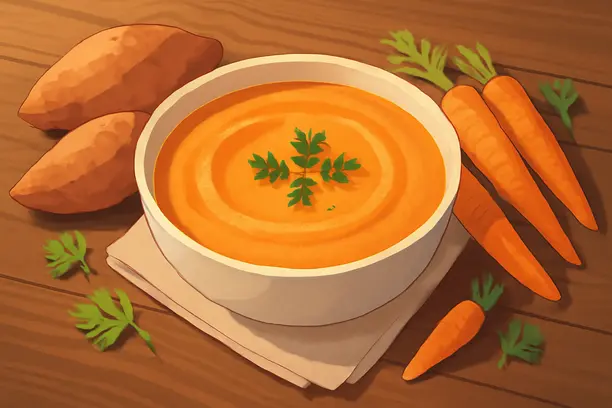
Sweet potato and carrot soup is the ultimate comfort food, blending warmth and nutrition in every spoonful. This satisfying soup offers a creamy texture while delivering real health benefits, making it a smart choice for any meal.
Disclosure: This article contains affiliate links. We may earn a commission at no extra cost to you.
Sweet potato and carrot soup is more than a warming meal—it’s packed with nutrients that support your health in tangible ways. Both ingredients are naturally loaded with beta-carotene, the pigment your body converts into vitamin A. This vitamin is crucial for clear vision (especially at night), a resilient immune system, and healthy skin. According to the National Institutes of Health, vitamin A also plays a role in reproductive health Source: NIH.
Beyond beta-carotene, you’re getting dietary fiber that aids digestion, keeps you feeling satisfied longer, and helps steady your blood sugar after meals. That’s especially helpful if you’re managing your weight or watching your calorie intake. These veggies also bring potassium to the table, which supports healthy blood pressure and keeps your muscles and nerves functioning properly Source: USDA.
Evidence-based benefits—and realistic expectations
Research consistently links diets rich in beta-carotene with lower risks of certain chronic diseases. People who eat more fruits and vegetables like sweet potatoes and carrots often enjoy better eye health and stronger immune defenses.
That said, these are population-level trends, not guarantees for any one person. How well your body absorbs and converts beta-carotene depends on your genetics, the fat in your diet, and your overall health. While this soup helps you meet daily vitamin A needs, think of it as part of a balanced diet—not a magic bullet or a substitute for medical advice Source: Harvard T.H. Chan School of Public Health.
Beyond “superfood” status: Practical nutrition for real life
Adding sweet potato and carrot soup to your meals boosts your fiber intake, helps keep you hydrated (thanks to its high water content), and makes eating more plants simple and delicious.
For more veggie-focused ideas, check out our curated collection of essential healthy vegetable recipes.
If you’re looking for structured meal plans built around nourishing soups—perfect for weight loss, appetite control, and steady energy—consider the 14-Day Rapid Soup Diet. It features nutrient-dense recipes designed for practical wellness.
Ultimately, a diverse and balanced diet—including soups like this one—is your best strategy for long-term health. For more simple, nourishing home-cooked meal inspiration, see our guide to favorite healthy meals to make at home. To dive deeper into rapid results with soup, explore the Rapid Soup Detox guide for a science-backed approach.
Nutrition facts panel and portion guidance
For anyone tracking calories or nutrients, sweet potato and carrot soup makes it easy to stay on course without sacrificing flavor. You’ll get hearty satisfaction from a bowl—none of the heaviness of cream-based options.
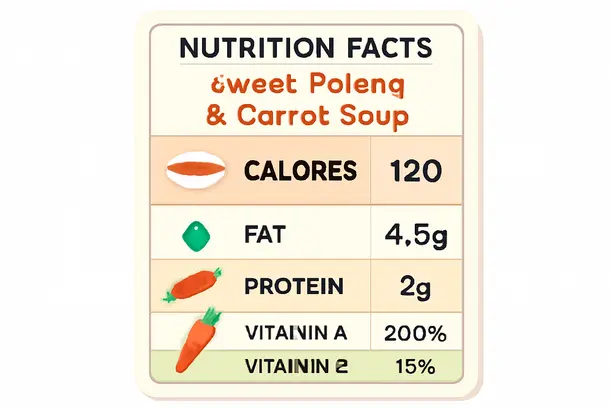
A typical serving of sweet potato and carrot soup (about 1 cup or 250g) delivers roughly 144–219 calories. That serving usually contains around 2g fat, 4g protein, and 47g carbohydrates, including 8g fiber and 15g natural sugars. Sodium content is moderate at approximately 340mg per cup, making it a heart-conscious choice when you’re watching salt intake.
The vitamin content really stands out. Thanks to the combined beta-carotene from carrots and sweet potatoes, you’re getting over 300% of the daily recommended vitamin A. The soup also supplies about 35% of vitamin C requirements and 750mg of potassium, which supports healthy blood pressure and hydration Source: USDA FoodData Central.
A standard serving can count as approximately 3 of the 5 recommended daily portions of fruits and vegetables according to many nutrition guidelines.
Portion guidance for different diets
Adjusting serving sizes affects calorie and nutrient intake. Here’s how to portion it for your needs:
- Light serving (¾ cup; ~190g): Around 110–150 calories, perfect for a snack or appetizer.
- Standard serving (1 cup; ~250g): 144–219 calories, balanced for a main or side dish.
- Hearty serving (1½ cups; ~375g): Up to 300 calories, ideal for larger meals or more active individuals.
Thanks to the fiber (8g per standard serving) and complex carbs, this soup keeps you satisfied without packing on excess calories. It’s a smart choice for weight loss, meal prepping, or general healthy eating Source: NHS.
Portion control is fundamental for maintaining a calorie deficit. To help you feel full while cutting calories, check our guide on staying full on a diet.
Tailoring ingredients and tracking macros
Recipe variations can shift nutrition: adding cream, oils, or toppings will increase fat and calorie counts. Homemade versions let you control sodium levels or boost fiber with additions like lentils.
For effective meal tracking, use a food scale and nutrition app to monitor the exact content of your servings. This practice is especially helpful when following structured dietary goals or macro counting Source: FDA.
If you want meal plans focused on soups with guided support, the 14-Day Rapid Soup Diet provides fully prepared recipe guides and daily plans.
To lose a jean size or accelerate weight loss without complex prep, consider the Rapid Soup Detox—easy-to-follow meals with a money-back guarantee. For more inspiration on plant-based soups that align with wellness goals, browse our collection of essential healthy vegetable recipes.
Looking for a shortcut to healthy, filling meals that don’t leave you hungry? The right soup plan can keep you on track even when life gets busy. Try a done-for-you soup meal plan
Food safety, storage & allergen notes
Making a big batch of soup is only half the story—keeping it fresh and safe means you’ll have healthy meals ready all week. Here’s how to get it right every time.
Ensuring your sweet potato and carrot soup stays safe and appetizing starts with proper cooling. After cooking, cool the soup to room temperature within two hours to minimize bacteria growth in the “danger zone” between 40°F and 140°F.
To speed this process, divide the soup into small, shallow containers and avoid stacking them while warm.
Store the soup in airtight containers in the refrigerator, where it’ll safely keep for 3 to 4 days. For longer preservation, freeze it in freezer-safe containers with about one inch of headspace to allow for expansion. After thawing, soups may separate slightly—simply stir or gently reblend to restore smoothness.
Always reheat leftovers thoroughly, reaching an internal temperature of at least 165°F to reduce food safety risks Source: USDA.
Be mindful of potential allergens in ingredients or toppings like dairy, coconut, nuts, or sesame seeds. Inform guests about substitutions, especially when serving groups with allergy concerns. Dairy-free alternatives such as oat milk can replace coconut milk, and plain yogurt can stand in for crème fraîche.
These choices make the soup suitable for a wider range of dietary preferences and needs.
For plant-based or allergen-friendly recipe ideas, consult our guide to quick and nutritious healthy dishes focused on whole foods. If you prefer simplifying meal planning and weight management with satisfying soups, the 14-Day Rapid Soup Diet offers structured digital plans and additional cookbooks for easy preparation.
By following recommended handling, storage, and allergen guidelines, you can confidently enjoy your sweet potato and carrot soup as a nutritious meal throughout your week. For further details on food safety, see resources at Foodsafety.gov.
How this soup fits calorie-controlled diets (e.g., 5:2)
If you’re following a calorie-controlled plan like 5:2, finding meals that fill you up without blowing your allowance can feel like a puzzle. Sweet potato and carrot soup makes it simple—and tasty.
This soup is an excellent option for calorie-controlled eating patterns, such as the intermittent fasting 5:2 diet. On fasting days, women typically target 500 calories, men 600. A bowl of this soup (144 to 219 calories depending on the portion) accounts for a large chunk of that allowance while leaving space for low-calorie fruits or vegetables.
Rather than weighing ingredients, using a standard measuring cup for portion control can simplify adherence. Homemade versions generally range from 100 to 150 calories per cup, but always verify based on your recipe’s nutrition.
Soups are well suited to such plans because they’re easy to make in batches and portion ahead, reducing midweek planning stress.
What does a fasting day look like?
A sample fasting day might involve fruit and tea for breakfast, a filling bowl of sweet potato and carrot soup at lunch, and a light snack of raw vegetables later. The soup’s high water and fiber content supports fullness, as shown in studies on the satiety of “solid-in-liquid” meals Source: NIH.
Including some protein at dinner or yogurt with fruit can balance macronutrients if desired.
These restricted-calorie protocols aren’t suitable for everyone. Pregnant individuals, those with diabetes, or anyone with health conditions should consult a healthcare professional before starting. Nutritional needs vary widely based on individual factors such as age and activity level Source: NHS.
Programs like the 14-Day Rapid Soup Diet provide rotating recipes and structured meal guidance to ease compliance. To learn how to manage hunger on low-calorie days, see our tips for feeling full while in a calorie deficit.
Soups are naturally rich in fiber, vitamins, and minerals if you use a variety of vegetables. Sweet potato and carrot together supply complex carbs, antioxidants, and potassium, making them satisfying and nutrient-dense despite calorie restraints.
For additional ideas, explore our roundup of healthy vegetable-based soup recipes. To simplify low-calorie meal days, consider the Rapid Soup Detox system, which offers ready-made fasting meal plans, recipes, and digital guides designed for busy lifestyles.
Variations & serving ideas (vegan, slow-cooker, toppings)
Let’s keep this doable: sweet potato and carrot soup is a true blank canvas. Whether you’re vegan, dairy-free, or just love to experiment, you can easily tweak it to fit your mood or pantry.
This recipe is highly adaptable, suitable for a wide range of dietary preferences and flavor profiles. To make a vegan or dairy-free version, substitute cream or milk with oat or almond milk, and omit yogurt or sour cream toppings. The soup maintains a silky texture and rich taste without any dairy.
For additional flavor complexity, try incorporating one of these before blending:
- Thai red curry paste for gentle heat and an Asian flair
- Smoked paprika to add warmth and depth
- Freshly grated ginger to brighten the taste with a peppery zing
Herbs and spices like cumin, turmeric, or ground coriander also complement this soup well, creating new and exciting variations for plant-based cooking (ample inspiration here).
Slow cooker & Instant Pot instructions
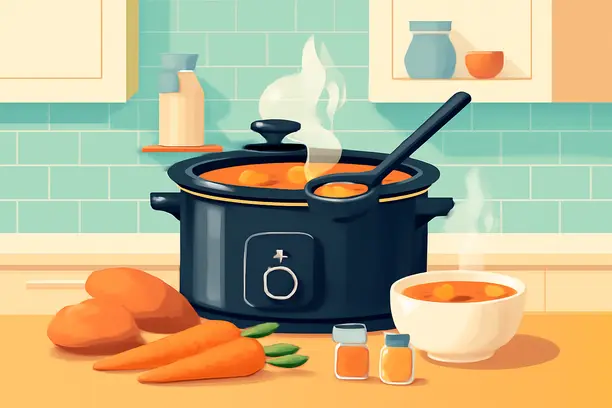
If you prefer minimal hands-on time, use a slow cooker by adding all ingredients and cooking on LOW for 6–7 hours. For an Instant Pot, use PRESSURE mode and cook for about 10 minutes, then blend until smooth—ideal for busy evenings or batch cooking (Source: BBC Good Food).
Creative toppings for added texture & flavor
Enhance your soup with these toppings:
- Toasted pumpkin or sunflower seeds for crunch
- Fresh chopped cilantro or parsley for herbal freshness
- Chili flakes or a spoonful of harissa to add spice
- A dollop of coconut yogurt or dairy-free sour cream for creaminess
For more nutritious meal ideas supporting your healthy habits, explore our favorite healthy meals.
Leftovers: Beyond the soup bowl
Don’t let leftover soup go to waste—it’s a versatile base for other meals. Use it as a sauce over whole grains or pasta, stir it into grain or vegetable bowls, or transform it into a hearty stew the next day.
When reheating, warm gently and stir well to maintain the soup’s smooth texture (Source: The Kitchn).
To consistently enjoy soup-based meals with minimal planning, consider the structured 14-Day Rapid Soup Diet, which includes clear meal roadmaps and tasty, easy recipes. If you’re aiming to slim down while savoring comforting soups, check out the Rapid Soup Detox System for quick, convenient fat-loss meals.