
Essential Safety and Gear for Your First Swim
A beginner swim workout is your gateway to a safe, effective, and sustainable fitness journey — one that blends essential safety habits with the right gear to build real confidence from day one. Good preparation means you can focus on technique and endurance without unnecessary worry. By respecting pool rules, tuning into your body, and choosing equipment thoughtfully, you turn that first plunge into something genuinely rewarding.
Before you get in the water, take a few minutes to learn the facility’s specific rules. These typically cover showering beforehand, lane etiquette, and which equipment is allowed. Most pools require swimming with a buddy or under the watch of a certified lifeguard. Know how to signal for help — usually a raised arm and a clear call — and scan the area for exits, depth markers, and the nearest lifeguard station before you push off the wall.
Even a strong start can unravel quickly if you ignore early warning signs. Watch for muscle cramps, sudden shivering, or unexpected fatigue. If any of these hit, stay calm, signal for help if you need it, and make your way to the wall or a shallow area without rushing. Practicing a relaxed floating position gives you a moment to recover and wait for assistance if needed. Knowing when to stop — rather than pushing through — is one of the most underrated skills a new swimmer can develop.
For extra support staying consistent with your movement goals outside the pool, it’s worth checking out tips on maintaining workout motivation during fatigue.
How should a beginner start swimming?
Start by getting comfortable in the water, learning basic breathing techniques, and practicing floating. Keep your early sessions short and focused on drills rather than grinding out full laps — a kickboard is a great tool for building confidence without overwhelm. A few lessons or sessions with a more experienced swimmer can also fast-track your progress in a safe, low-pressure way.
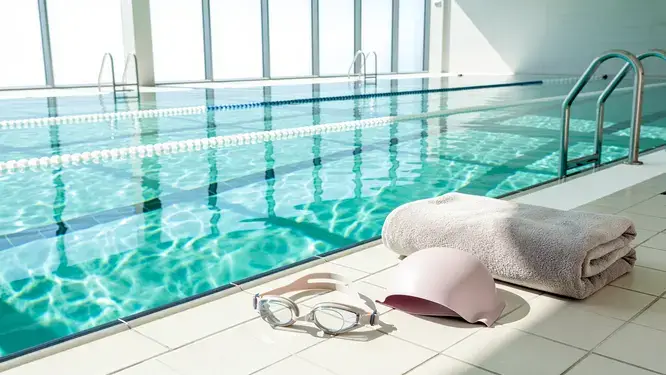
Gear matters more than most beginners expect. Choose goggles that seal well without digging into your eye sockets, and adjust the straps until they feel snug but comfortable. Your swimsuit should allow full, free movement through your shoulders and hips — anything too tight will restrict your range and drain your energy faster than the workout itself. Accessories like swim caps, earplugs, or fins can be helpful, but only add them if they solve a specific problem. Don’t let unfamiliar equipment distract you from the basics.
Safety also means knowing your limits. Rest at the wall when you feel winded, and don’t hesitate to exit if something feels off — overexertion is a surprisingly common cause of water-related incidents, even among healthy adults. Building that self-awareness is just as valuable as perfecting your freestyle. For further guidance, the American Red Cross water safety essentials is a solid resource to bookmark.
How to Structure and Progress Your Swim Workouts
A well-structured beginner swim workout is the foundation for real, measurable progress. Many new swimmers simply jump in and swim laps until they’re tired — and while that’s not without value, a plan that evolves over four weeks turns scattered effort into genuine gains in endurance, technique, and confidence. Think of the next month as a series of weekly building blocks, each one setting you up for the next with the right mix of skill work and gentle physical challenge. Here’s how to put it together.
- Weeks 1–2: Master the Basics and Build Routine
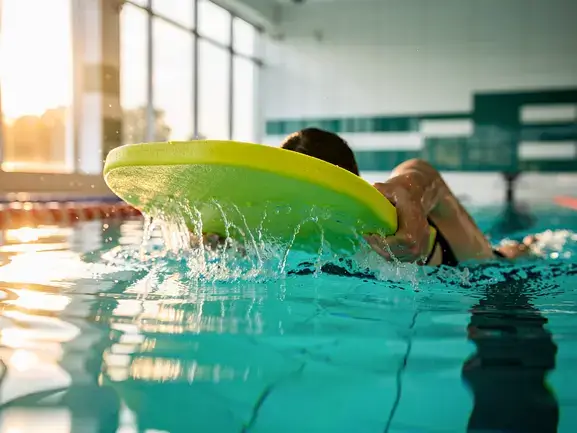
- Session 1 (Kickboard focus): Use a kickboard to isolate lower-body propulsion and build ankle flexibility. Keep sets short — a few easy laps with rest as needed — and focus on consistency over distance.
- Session 2 (Breathing & Drills): Dedicate this session to breathing drills like the 3-3-3 pattern or side glide, and add fins if your pool allows. The goal is rhythm and comfort, not speed.
- Session 3 (Full-Stroke Integration): Swim several lengths of full-stroke freestyle, resting generously between each. Finish every lap feeling in control — not gasping — and prioritize form above all else.
- Weeks 3–4: Layer in Endurance and Reduce Rest
- Add one length (25m) to each set per session. As things start to feel more manageable, trim your rest by a small amount between reps. This incremental approach applies progressive overload safely, giving your muscles and cardiovascular system time to adapt USA Swimming – Beginner Tips.
- If you’re swimming four days a week, use the fourth session as a “technique review” or easy recovery swim — it reinforces efficient movement and helps prevent fatigue-driven bad habits.
How long should a beginner swim workout be?
For beginners, shorter sessions focused on quality beat longer ones every time. Practicing drills, working on breathing mechanics, and building a consistent routine matter far more than logging distance. As your endurance grows, you can gradually extend your time in the water.
Is 30 minutes of swimming a day enough?
Absolutely. For most beginners, 30 minutes of daily swimming is an excellent workout. It delivers full-body conditioning, improves cardiovascular health, and builds muscular endurance at a pace your body can handle. Showing up consistently will always outperform the occasional long session.
When tracking progress, look beyond session count. Notice how many laps you can swim without stopping, how your rest intervals shrink, or how your breathing steadies during longer efforts. By the end of four weeks, most beginners feel noticeably stronger in the water — and more importantly, they’ve built a routine worth sticking with Swim England – Learn to Swim.
Once you’ve completed this four-week template, you’ll have a personal blueprint you can adapt — extending distance, introducing new strokes, or shifting focus toward open water or speed work. And if motivation dips along the way, the strategies covered in our guide on getting more motivated for the gym apply just as well to pool training.
Building Trust with Evidence-Based Swimming Benefits
When it comes to the health claims surrounding swimming, it pays to separate fact from hype — especially if you’re building your first beginner swim workout around them. The good news is that swimming’s reputation as a low-impact, joint-friendly exercise is well-earned and firmly backed by research. Because water supports your body weight, swimming places far less stress on the hips, knees, and ankles than most land-based activities. That makes it genuinely accessible for people with joint discomfort, limited mobility, or those simply easing back into fitness after a long break CDC – Health Benefits of Water Exercise.
The benefits extend beyond the physical. Studies have linked regular aquatic exercise to improved mood, reduced anxiety, and better sleep quality. Swimming won’t replace professional mental health care, and responses vary from person to person — but the rhythmic movement and calming sensory environment of water do appear to support emotional balance and stress management for many people PMC – Swimming and Mental Health. Just be cautious of sweeping claims that swimming “cures” anxiety or depression — the evidence points to meaningful improvement for some, not a medical fix.
For a science-grounded start, organizations like the American College of Sports Medicine (ACSM), the Centers for Disease Control and Prevention (CDC), and national swimming governing bodies regularly publish consensus statements and practical guides. These resources help cut through wishful marketing by clearly distinguishing what’s well-established from what’s still emerging or simply anecdotal. If you want to build healthy habits alongside your training, our broader guidance on healthy lifestyle guidelines provides useful context.
Ultimately, the real value of a beginner swim workout comes from approaching it honestly. Trustworthy sources don’t promise quick fixes — they emphasize that swimming is a safe, enjoyable way to increase physical activity, build cardiovascular fitness, and support emotional well-being where appropriate. For more on gentle exercise options that complement swimming, explore our guide to low-impact exercise alternatives.