
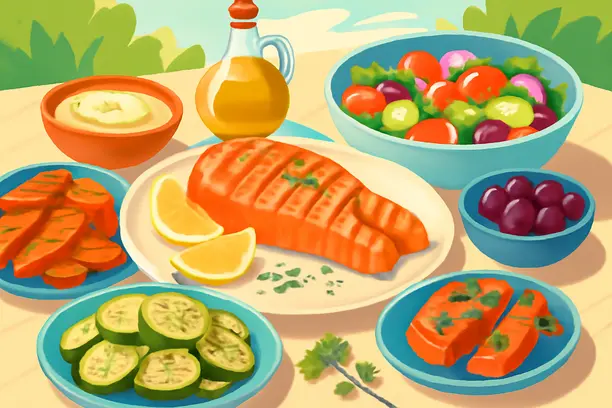
7‑Day Mediterranean meal plan for weight loss (with portions)
Healthy Mediterranean diet recipes make it easy to lose weight and eat well, without giving up the foods you love or counting every calorie. The Mediterranean diet brings vibrant flavors, filling meals, and proven health benefits to your plate.

Disclosure: This article contains affiliate links. We may earn a commission at no extra cost to you.
Here’s the good news: healthy Mediterranean meals can fit into your busy life and actually keep you satisfied. No deprivation required.
A successful Mediterranean weight loss plan starts with simple, vegetable-forward meals and smart portioning. Think of it as the plate method: aim for half your plate to be non-starchy vegetables, a quarter lean protein—grilled fish, chicken, or lentils—and a quarter whole grains like farro, brown rice, or starchy vegetables such as sweet potato or chickpeas.
Healthy fats like extra virgin olive oil add flavor and help you feel full. Just keep your drizzle measured—about one tablespoon per main meal—so you manage calories without losing any of the enjoyment.
Sample 7-Day Mediterranean Dinner Menu (typical serving size: one medium plate)
- Monday: Grilled salmon, roasted sweet potatoes, and sautéed zucchini with a squeeze of lemon.
- Tuesday: Chicken souvlaki skewers, herbed brown rice, Greek village salad.
- Wednesday: Lentil and vegetable stew loaded with greens, served with whole-grain pita.
- Thursday: Baked eggplant with tomato, crumbled feta, and white beans.
- Friday: Shrimp and spinach stir-fry with garlic over quinoa.
- Saturday: Turkey meatballs in tomato sauce, steamed broccoli, a small portion of whole-wheat spaghetti.
- Sunday: Grilled chicken breast, roasted peppers and carrots, barley salad with parsley.
For breakfast and lunch, you’ll want to combine fiber, protein, and healthy fats. That trio keeps you energized and satisfied throughout the day.
Here are two sample days to get you started:
- Day 1
- Breakfast: Plain Greek yogurt (3/4 cup) topped with mixed berries (1/2 cup) and a tablespoon of chopped walnuts.
- Lunch: Quinoa salad (1 cup cooked) tossed with cucumber, cherry tomatoes, chickpeas, diced red onion, olive oil (limit to 1 tsp), and lemon; side of fresh spinach.
- Day 2
- Breakfast: Overnight oats made with rolled oats (1/3 cup dry), chia seeds (1 tbsp), almond milk, chopped apple, and cinnamon.
- Lunch: Hummus and roasted vegetable wrap with whole grain tortilla, 2 tbsp hummus, grilled zucchini, bell peppers, eggplant, and a side of arugula salad with lemon.
Snacking smart means choosing nutrient-dense options that won’t derail your progress. Try a handful of almonds (12–15 nuts), carrot sticks with 2 tablespoons of tzatziki, or a small piece of fruit paired with protein like cottage cheese.
Plain Greek yogurt with berries works well too—it curbs sugar cravings while keeping you satisfied. Daily sources of fiber from beans, lentils, and whole grains help you feel fuller longer and support healthy, sustainable weight loss.
Personalization is key to sticking with any eating plan. Vegetarians can swap meats for extra legumes or grilled tofu. Want a lighter approach? Trade starchy sides for leafy greens or cut your olive oil by half while boosting flavor with herbs and citrus.
Focus on variety: enjoy seasonal vegetables, rotate your protein sources, and experiment with different whole grains. That way, you’ll never get bored, and you’ll boost your nutrient diversity at the same time.
If meal planning feels overwhelming, there’s an easier way. The Mediterranean Diet 30-Day Challenge digital program gives you meal plans, shopping lists, and daily encouragement—so you don’t have to figure it out alone.
Small changes add up quickly. Replace white rice with fiber-rich farro, or pile hearty greens beneath your protein for extra volume without packing in extra calories.
Listening to your hunger cues—eating slowly, pausing between bites—supports natural calorie control. You won’t need to track every gram when you tune in to what your body’s telling you.
Consistency matters more than perfection. Research shows the Mediterranean way of eating leads to better long-term adherence and more sustainable fat loss compared to rigid, restrictive diets.
For more recipes and ideas, check out curated resources like Mediterranean recipes for weight loss for ongoing inspiration and guidance.
Structured plans like the Mediterranean Diet 30-Day Challenge provide detailed menus, substitutions, and flexible recipes so you can enjoy every step of your health journey. Source: Harvard T.H. Chan School of Public Health
If you’re new to the Mediterranean approach, you might wonder what pantry staples to keep on hand or how to batch-cook recipes for the week. Stocking up on canned beans, lentils, brown rice, spices like oregano and cumin, extra-virgin olive oil, and a rainbow of fresh produce makes meal prep simple and affordable.
To boost your results, stay active most days of the week. Even brisk walks or low-impact strength training enhance the benefits of a healthy Mediterranean diet and support long-term weight loss for women over 40.
Evidence, safety & author credentials
Credentials: Registered Dietitian Nutritionist (RDN); Master’s in Nutrition Sciences (MS)
Experience: Over 12 years in clinical and culinary nutrition, specializing in Mediterranean dietary counseling for heart health, diabetes prevention, and sustainable weight management. Has led cooking workshops and contributed to Mediterranean nutrition guidelines.
Evidence Review: Content reviewed for accuracy and up-to-date scientific evidence as of March 2024.
Medical Disclaimer: This information is for educational purposes only and does not replace personalized medical advice, diagnosis, or treatment. Consult your healthcare provider before making major dietary changes, especially if you have chronic conditions or are on prescription medications. Individual responses may vary.

The Mediterranean diet’s health benefits are backed by strong clinical evidence. The PREDIMED trial—one of the largest randomized controlled studies—followed over 7,000 adults at elevated cardiovascular risk.
Participants who stuck to a Mediterranean eating pattern rich in olive oil, nuts, fruits, vegetables, and fish experienced significant reductions in major cardiovascular events, including heart attacks and strokes, compared to those on a low-fat diet after about five years. Source: New England Journal of Medicine
Beyond heart health, systematic reviews link the Mediterranean diet with improved blood sugar regulation and reduced incidence of type 2 diabetes. Its emphasis on whole grains, legumes, extra-virgin olive oil, and minimal processed foods aligns with long-term nutrition recommendations from major health organizations.