
Which diets work best for men over 50 — clear pros, cons, and who should try them
Diet for men over 50 calls for a unique approach—focusing on heart health, muscle preservation, and energy—so you stay strong, sharp, and active as you age. The right diet fits your lifestyle and health goals without causing unnecessary stress.
Disclosure: This article contains affiliate links. We may earn a commission at no extra cost to you.
Men over 50 benefit most from diets that promote heart health, cognitive function, muscle preservation, and metabolic balance. Choosing the right eating pattern depends on your personal health goals and any medical conditions you’re managing.
Mediterranean Diet
The Mediterranean diet consistently ranks as one of the most heart-healthy and sustainable eating patterns for men over 50. It focuses on whole plant foods, moderate fish and poultry, healthy fats—especially olive oil—and limited processed foods.
Studies link this diet to lower cardiovascular and metabolic disease risk, as well as longevity benefits Source: Harvard Health.
- Pros: Supports heart and brain health; flexible and enjoyable; rich in fiber; evidence-based for chronic disease prevention.
- Cons: Requires consistent home cooking; benefits decrease if key ingredients like quality olive oil or seafood are omitted.
- Best for: Men with high blood pressure, cholesterol, or diabetes risk, or anyone wanting a sustainable and flavorful plan.
- Avoid if: You need strict portion control for weight loss; moderate intake of wine and bread is advisable.
For practical meal ideas, check out our Mediterranean diet daily menu sample.
DASH Diet
The DASH (Dietary Approaches to Stop Hypertension) diet is designed primarily to support heart and blood pressure health. It emphasizes fruits, vegetables, low-fat dairy, lean proteins, and reduced sodium.
Multiple trials confirm its effectiveness in lowering blood pressure, especially in aging adults Source: National Heart, Lung, and Blood Institute.
- Pros: Excellent for managing hypertension; provides balanced nutrients; incorporates familiar foods; supports kidney health.
- Cons: Requires monitoring sodium intake and reading labels; less emphasis on fat quality and whole grains compared to Mediterranean diet.
- Best for: Men with elevated blood pressure or those seeking a balanced, heart-healthy eating style.
- Avoid if: You don’t have blood pressure concerns or you’re dealing with dairy intolerance.
MIND Diet
The MIND diet combines elements of both DASH and Mediterranean diets, targeting brain health and the reduction of dementia risk. It focuses on leafy greens, berries, nuts, olive oil, whole grains, and fish, while limiting red meat and sugar.
Research suggests adherence to the MIND diet slows cognitive decline with age Source: Alzheimer’s Society.
- Pros: Supports cognitive health; easy to follow if you’re inclined towards plant-based meals; backed by emerging scientific evidence.
- Cons: Evidence for prevention is promising but still developing; not a guaranteed safeguard against dementia.
- Best for: Men with a family history of Alzheimer’s or anyone concerned about memory health.
- Avoid if: You prefer a diet higher in red meats or you’re not a fan of vegetables.
Learn more about plant-forward eating with our guide on easy plant-based meals for better health.
Higher-Protein Diets
Protein needs often rise with age to fight muscle loss. Higher-protein diets—whether flexibly modified or macro-based—promote muscle mass retention, better satiety, and improved metabolism.
They range from power breakfasts to balanced macro-focused plans.
- Pros: Supports lean body mass; helps control appetite; may boost metabolic health and strength, especially when paired with resistance exercise.
- Cons: Excess protein can stress kidneys in men with renal disease; long-term adherence may be challenging.
- Best for: Active men, those aiming to preserve or build muscle, or men with prediabetes or weight loss goals.
- Avoid if: You have kidney impairment—consult your healthcare provider before increasing protein intake.
For easy macro-focused meal ideas with higher protein, see our balanced high-protein meal ideas.
Intermittent Fasting (IF)
Intermittent fasting, including popular 16:8 or 5:2 patterns, cycles between eating and fasting. Evidence shows IF can assist with weight loss, improve insulin sensitivity, and reduce inflammation when paired with nutritious foods.
This approach is especially helpful for men over 50 facing weight or metabolic plateaus Source: Mayo Clinic.
- Pros: May help overcome weight loss plateaus; adaptable to many lifestyles; some report better appetite control and energy.
- Cons: Initial side effects may include low energy, headaches, or mood swings; unsafe for some men on diabetes or blood pressure medications without supervision.
- Best for: Men who tend to snack late or prefer simplifying meal timing rather than daily calorie counting.
- Avoid if: You have a history of eating disorders, severe hypoglycemia, or medications requiring consistent meals.
Low-Carb & Keto Diets
Low-carb and ketogenic diets reduce sugars, grains, and starches to encourage fat burning. They may benefit men over 50 seeking rapid improvements in weight and blood sugar control.
That said, they require careful micronutrient and fiber management for safety.
- Pros: Rapid reduction in abdominal fat and water weight; appetite control; may improve blood sugar and triglycerides.
- Cons: Potential fatigue, cramps, constipation, and nutrient deficiencies; risks when taken alongside diabetes or blood pressure medications; social eating challenges.
- Best for: Men with obesity, prediabetes, or stubborn belly fat.
- Avoid if: You have a history of kidney or liver disease; uncontrolled high cholesterol; or you really dislike eliminating bread, pasta, and fruit.
If you want a quick-start, low-carb plan that skips calorie counting and heavy prep, the Rapid Soup Diet system supports fast, simple fat loss—especially for men 50+ who want results without overwhelm.
Decision Checklist: Find the Right Diet for Men Over 50
- Heart or circulation concerns? Mediterranean and DASH diets are top choices.
- Worried about cognitive decline? Consider the MIND diet for brain protection.
- Muscle loss or strength stagnation? Increase protein intake with high-protein or macro-balanced plans.
- Hit a weight loss plateau or want simplicity? Try intermittent fasting or a low-carb approach with medical advice.
- Need quick-start meals with minimal cooking? Programs like the Rapid Soup Detox provide structure and convenience—though they’re not a substitute for long-term habits.
- Chronic conditions or medications? Always consult healthcare providers before making major dietary changes.
To personalize your eating plan, see our guide on finding the right diet for your body. The best diet is one that fits both your health needs and your lifestyle for sustainable results.
Safety, contraindications, and medication interactions (by diet and health condition)
Dietary Risks by Health Condition: What Men Over 50 Must Watch For
Starting a new diet after 50 requires caution, especially if you’re managing chronic illnesses or taking ongoing prescriptions. Here are the key safety considerations:

- Diabetes and low-carb/keto diets: Drastic carb reduction can sharply lower blood sugar, risking hypoglycemia in those on insulin or sulfonylureas. Medication adjustments and glucose monitoring are essential under medical supervision.
- Heart disease and high-fat diets: Diets high in saturated fats—common with some keto variants—may worsen cholesterol and cardiovascular risk if poorly managed. Prioritize plant-based fats and fiber. Source: CDC
- Kidney disease and high-protein diets: Excess protein increases kidney strain and should be avoided or managed carefully in those with renal impairment, as kidney function typically declines with age Source: National Kidney Foundation.
- Hypertension and sodium: Processed or “ready” diet foods may be high in sodium, raising blood pressure risks. Reading labels and limiting sodium intake is crucial.
Medication and Nutrient Interactions: A Quick Reference
- Statins and grapefruit: Grapefruit inhibits enzymes metabolizing statins, increasing blood levels and risk of muscle pain or liver damage Source: FDA.
- Blood thinners (warfarin) and vitamin K: Sudden increases in leafy greens or supplements can reduce warfarin effectiveness and require dose adjustments.
- Diuretics and potassium: High-potassium diets or supplements may dangerously alter electrolytes in people on certain diuretics.
- Metformin and vitamin B12: Long-term metformin use can reduce B12 absorption, making B12 status monitoring important when following restrictive diets.
Maintain an up-to-date medication and supplement list and review it with your healthcare team. If you experience symptoms like muscle pain, palpitations, confusion, or fatigue, stop the diet and seek care promptly.
When to Pause or Get Medical Guidance
Stop dietary changes immediately and seek medical advice if you develop:
- Rapid, unexplained weight loss
- Persistent vomiting or severe digestive symptoms
- Confusion or altered mental state
- Signs of heart or kidney complications
Those with complex health conditions or multiple medications should consult physicians before altering diet plans. Small, gradual changes are safer than drastic shifts for many men over 50.
If you want a structured, gentle start with clear instructions, consider the 14-Day Rapid Soup Diet designed for adults 50+, emphasizing simplicity and control.
Focus on maintaining balanced nutrition and gradual improvements to reduce health risks associated with aggressive dieting.
Personalized meal plans and sample menus (2200–2800 kcal + adaptations for weight loss, diabetes, low activity)
How to Choose the Right Calorie Level: 2200–2800 kcal for Men Over 50
Most men over 50 need between 2200 and 2800 calories daily to maintain weight, depending on height, body composition, and physical activity. Less active men or those with slower metabolism lean toward the lower end, while active or larger-framed men may require more.
Consulting a healthcare professional is recommended, especially when managing health conditions or medications.
For weight loss, reducing 300–500 kcal per day safely yields about 0.5 to 1 pound lost weekly. Avoid extremely low-calorie diets without medical supervision to prevent muscle and nutrient losses—which are especially critical to avoid in this age group.
Diabetes-friendly meal plans recommend spreading carbohydrates evenly and pairing them with protein and healthy fats to stabilize blood sugar Source: CDC.
Sample Meal Plans (Balanced, Adaptable Choices)
- Breakfast (450–550 kcal): 2 scrambled eggs with spinach and mushrooms, whole grain toast, half an avocado, and berries. Adaptation: substitute eggs with low-fat Greek yogurt and granola, or oatmeal with seeds for more fiber.
- Lunch (550–700 kcal): Grilled chicken salad with olive oil vinaigrette, quinoa, cherry tomatoes, mixed greens, and chickpeas. For vegetarians, replace chicken with tofu or lentils. For diabetes, increase greens and reduce quinoa and dressing.
- Snack (150–250 kcal): Small handful of almonds, cheese stick, or sliced apple with nut butter. If appetite is low, choose soup or a smaller fruit portion.
- Dinner (600–800 kcal): Baked salmon, steamed broccoli, small baked potato, and a side salad. To lower carbs, halve the potato and increase non-starchy vegetables; replace fish with plant proteins for vegetarian options.
- Evening/Optional Snack (100–300 kcal): Low-sugar Greek yogurt, banana, or air-popped popcorn. Omit for weight loss.
Rotate protein sources like chicken, fish, tofu, and lean beef. Swap whole grains with sweet potato, farro, or brown rice as preferred.
Men with low activity or weight loss goals can reduce starches and increase vegetables. Diabetics should focus on low glycemic index foods and avoid sugary drinks or snacks Source: American Diabetes Association.
Explore balanced meal ideas with our collection of healthy meals for the month.
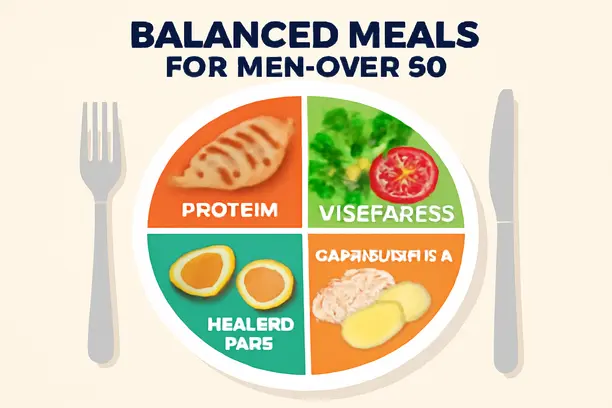
Hand/Plate Portion Guide for Easy Meal Building
For those who prefer not to count calories, use your hand and plate as natural guides:
- Protein: Palm-sized portion (1–2 per meal)
- Vegetables: Two fist-sized portions or half the plate
- Carbohydrates: One cupped handful (smaller portions for weight loss/diabetes)
- Healthy fats: Thumb-sized portion (olive oil, nuts, cheese)
Adjust portions based on your hunger, activity level, and goals. This simple method supports balanced eating without constant tracking Source: FitSero.
Weekly Menu Template for Busy Men Over 50
- Monday–Friday: Repeat simple breakfasts and lunches—oatmeal, eggs, Greek yogurt; salads or leftovers for lunch.
- Dinners: Grill, bake, or roast different proteins with a variety of vegetables. Freeze healthy soups for easy, low-effort meals.
- Snacks: Prep pre-cut veggies, nuts, fruit, or single-serve yogurts in advance.
- Weekend: Try new recipes or batch-cook soups and stews for the week.
Tip: Cook double portions at dinner for next-day lunches or use slow cookers for convenience.
For more ideas, visit our healthy family meals for weight loss—many are adaptable for men over 50.
FAQ: Diet for Men Over 50
Should men over 50 take dietary supplements?
Supplements may be helpful for men over 50 who have trouble getting enough vitamin D, B12, or calcium from food. However, whole foods should remain the foundation. Speak with your doctor before starting any supplements, especially if you take prescription medications.
Is alcohol safe on a diet for men over 50?
Moderate alcohol intake—up to one drink daily—may fit some diets such as Mediterranean, but excess can raise blood pressure and interfere with medications. Always discuss your alcohol intake with your healthcare provider if you have heart or liver concerns or take prescription drugs.